
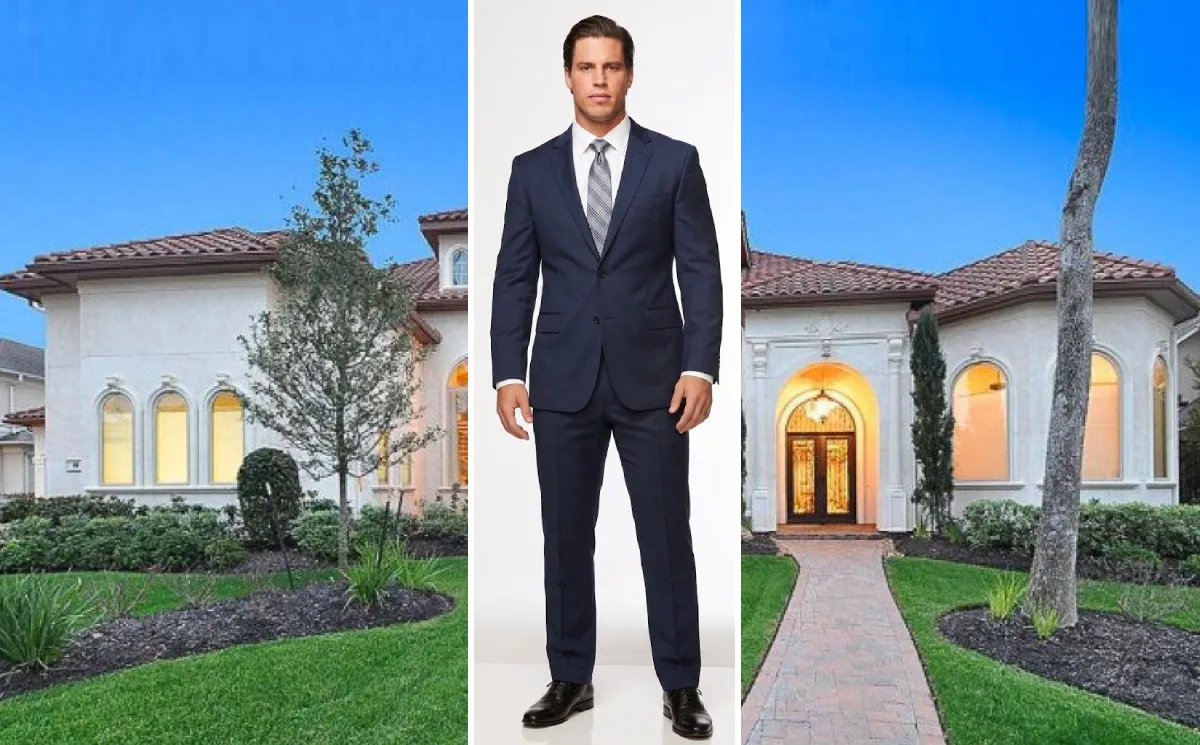
Brian Cushing spent a decade punishing ball carriers for the Houston Texans. Between those Sundays, he made two significant real estate moves in the Houston area — each one revealing something about where he was in life at the time. A young first-round pick buying big. Then a father of three boys choosing location over square footage.
Here’s what both Brian Cushing houses looked like, what made each one notable, and why the shift from one to the other tells a smarter story than most NFL players’ property portfolios.
Who Is Brian Cushing?
Selected 15th overall in the 2009 NFL Draft, Brian Cushing became an immediate starter at inside linebacker for the Houston Texans. His rookie season was electric — he earned NFL Defensive Rookie of the Year honors after a dominant campaign that included four interceptions, over 130 tackles, and recognition as AFC Defensive Player of the Week twice.
He played with a physical edge that made him one of the most feared linebackers in the AFC. Injuries, though, shaped the middle and later chapters of his career. A torn ACL ended his 2012 season, and another serious knee injury cut short 2016. Despite the setbacks, Cushing remained a fixture on Houston’s defense for nearly a full decade.
Off the field, Cushing married Megan, whom he met while both attended the University of Southern California. She played soccer there. The couple started a family during his playing years, and those changes — kids arriving, priorities shifting — directly drove the real estate decisions covered below.
His personal background also connects to a deep commitment to military families. His father served as an intelligence officer during the Vietnam War, and his mother was born in a Nazi forced labor camp in Germany. That family history led him and Megan to establish the Brian Cushing Foundation, which provides resources and experiences to Houston-area veterans and their families.
The Missouri City Waterfront Estate: Brian Cushing’s First Texas Home
Location and Community
Shortly after the draft, Cushing purchased a stunning Mediterranean-style residence constructed in 2007 within the Sienna Village of Waters Lake subdivision in Missouri City, Texas. The community sits southwest of Houston — a gated, master-planned development with controlled access, landscaped common areas, and waterfront settings along a private lake system. The address was 26 Commanders Cove — a fitting name for a linebacker’s starter home.
Size, Layout, and Key Figures
The property came in at approximately 7,109 square feet and carried a list price of $1,575,000. That’s roughly four times the size of a typical American single-family home. The floor plan includes five spacious bedrooms and six full bathrooms, offering generous space for the growing family. For a 22-year-old fresh off the draft board, it was an ambitious purchase — but a calculated one for someone banking on a long NFL career.
Exterior and Architecture
Stone and stucco construction, a tiled roof, and large windows across the facade define the exterior. The design follows a clean Mediterranean language without veering into over-the-top territory. A first-floor veranda and a second-floor covered balcony both face the pool and lake.
That outdoor pool serves as the property’s signature visual element. It features near-infinity edges, creating the impression that water flows directly into the lake behind the house. A connected spa serves double duty — aesthetic appeal and practical recovery space for a professional athlete logging weekly NFL punishment. A three-car garage rounds out the exterior without disrupting the home’s proportions. From the street, the property reads as substantial but restrained — a luxury build inside a gated community, not a mansion screaming for attention.
Interior: Ground Floor
A marble-lined grand foyer opens into formal living and dining areas. The kitchen boasts high-end integrated appliances, stainless steel fixtures, and granite countertops throughout. A breakfast area and den sit adjacent to the kitchen and face the veranda and pool, tying indoor living directly to the outdoor spaces.
The ground-floor master bedroom spans nearly 500 square feet with vaulted ceilings in the attached bath. Placing the master suite downstairs was a practical choice for a professional athlete who needed quick access to recovery amenities without navigating stairs after brutal practice sessions.
Upper Level: Entertainment Spaces
Upstairs, the home moves from comfortable to genuinely impressive. A media room and game room sit perched above the foyer, with balcony views overlooking the lake and backyard pool. The game room offers a full competition-grade setup. The media room goes further — a proper in-house theater with a wet bar, theater-style seating, and a projection system rather than just a large television, so no need to leave the entertainment space to grab a drink. The covered second-floor balcony connects directly to both rooms, giving the upper level an indoor-outdoor flow that mirrors the veranda arrangement downstairs.
Technology and Security
The home operated on a Crestron automation system — professional-grade technology that manages lighting, climate, audio, video, and access control from a unified interface. This isn’t consumer-grade smart home equipment but the same platform found in high-end commercial and luxury residential builds across the country. Multiple surveillance cameras surrounded the property to ensure security. For a recognizable professional athlete in the Houston market, the combination of gated community access and in-home surveillance was less a luxury than a practical necessity.
Wine Storage
A dedicated wine vault — climate-controlled for long-term storage — sets this property apart from standard luxury builds that settle for a wine rack or refrigerator. A proper vault regulates humidity and temperature precisely enough to age bottles over years, not months.
Why Did Brian Cushing List the Missouri City Home?
In January 2013, Cushing put the Missouri City property on the market at approximately $1.3 million. The timing drew attention because his 2012 season had ended with a torn ACL, and some observers read the listing as a sign of uncertainty about his future in Houston.
The real reasons were more mundane — and more relatable. Cushing and Megan had a newborn and their family continued to grow (they now have three boys). Missouri City sits roughly 30 minutes from central Houston, and that suburban distance became a logistical burden for a young family. His contract was also approaching expiration after the 2013 season, which gave the couple reason to reassess where they wanted to plant roots. The Texans’ official website publicly delisted his role on the defense and his expected return from injury, pushing back against speculation that the listing signaled an exit. The family eventually de-listed the Missouri City home before selling, and the Cushings moved on to a different property.
The West University Place Home: Brian Cushing’s Second Chapter
A Shift in Priorities
In May 2014, with their family expanding to three boys, Cushing closed on a home in West University Place for $2.2 million. Known locally as “West U,” the area is an independent city surrounded by Houston — one of the most affluent residential communities in the greater Houston area.
Property Details
The three-story home spans 5,435 square feet with four bedrooms and five and a half bathrooms. Smaller than the Missouri City property, but the trade-off is deliberate: West U swaps suburban sprawl for proximity to Houston’s urban core, the Texas Medical Center, and Rice University.
The home represented new construction at the time of purchase. The listing showed only floor plans and an exterior sketch when the Cushings committed — meaning they bought the property before it was fully built. That’s a strong signal of trust in both the builder and the neighborhood’s long-term value.
Interior features include a chef’s kitchen, formal living and dining rooms, a library or study, a game room, a wine cellar, and a spiral staircase connecting all three floors. An elevator shaft also runs through the structure — the builders designed it to activate later rather than installing it immediately. It’s a forward-thinking architectural detail that adds long-term usability without inflating the initial build cost.
Why West University Place?
The move from Missouri City to West U reflects a clear recalibration. Missouri City offers more land, lower density, and larger homes at lower prices per square foot. West U offers smaller footprints but significantly higher land value, top-rated public schools, walkable streets, and direct access to Houston’s cultural and commercial center. For a family with three young children and a career anchored in central Houston, the math was straightforward. Less space, better location, stronger long-term investment.
Brian Cushing’s Real Estate Timeline
- 2009: Purchased the Missouri City waterfront estate before his rookie season — approximately 7,109 sq ft, listed at $1,575,000
- 2013: Listed the Missouri City property for approximately $1.3 million following his ACL injury; later delisted
- 2014: Purchased the West University Place home for $2.2 million — approximately 5,435 sq ft, new construction, three-story traditional
The progression tells a familiar story: a large suburban estate bought on the energy of a new NFL contract, then a deliberate move to a tighter, more strategic property once family life demanded it.
What Brian Cushing’s Real Estate Choices Say About NFL Players and Home Ownership
Most NFL players make their first major home purchase within months of being drafted — often before they fully understand the local market or have a clear sense of where they’ll want to live long-term. Cushing followed that pattern in 2009 with the Missouri City buy.
What separates his story from the cautionary tales is the pivot. Brian didn’t stay in a home that no longer fit his family. He didn’t sell into a weak position after injury. He held the Missouri City property through uncertainty and made the move to West U when the timing worked. The second purchase was smaller but smarter — better location, better positioned for long-term appreciation, and more closely matched to his family’s daily reality. That shift from a statement home to a strategic one is a more disciplined approach than many professional athletes manage. It’s the kind of real estate thinking that typically shows up only after someone has been through the first purchase and learned what actually matters.
Where Is Brian Cushing Now?
Since retiring from the NFL six years ago, Brian Cushing has stayed active in the Houston community. The Brian Cushing Foundation continues its work supporting military families — hosting events like Operation Holiday Hope, which treated veterans and their families to holiday dinners and shopping sprees. He’s also planned the development of “Cushing’s Corner” at the Michael E. DeBakey Veterans Affairs Medical Center, a dedicated space for families of veterans receiving hospital treatment.
His personal life has carried its share of weight as well. In 2024, he marked the first anniversary of his mother’s passing with a deeply personal tribute on social media, reflecting on the bond between a mother and son and the void her absence left in his family.
Conclusion
The Brian Cushing house story is really two properties. The Missouri City waterfront estate defined his early years in Houston — a 7,000-plus square foot Mediterranean build with a private pool, lakefront views, a home theater, a wine vault, and a full Crestron automation system. It remains the more visually dramatic of the two and the property most associated with his name in Texas real estate circles.
The West University Place home is the quieter, more calculated move. Less square footage, better zip code, and a clear recognition that location and livability matter more than raw space — especially when young kids enter the picture.
Both properties were premium purchases in exclusive communities. Both were outfitted at a level that matched his professional standing. But the second one was the smarter investment, and it shows a level of real estate awareness that separates Cushing’s story from the many NFL cautionary tales of oversized purchases in the wrong neighborhoods.
