
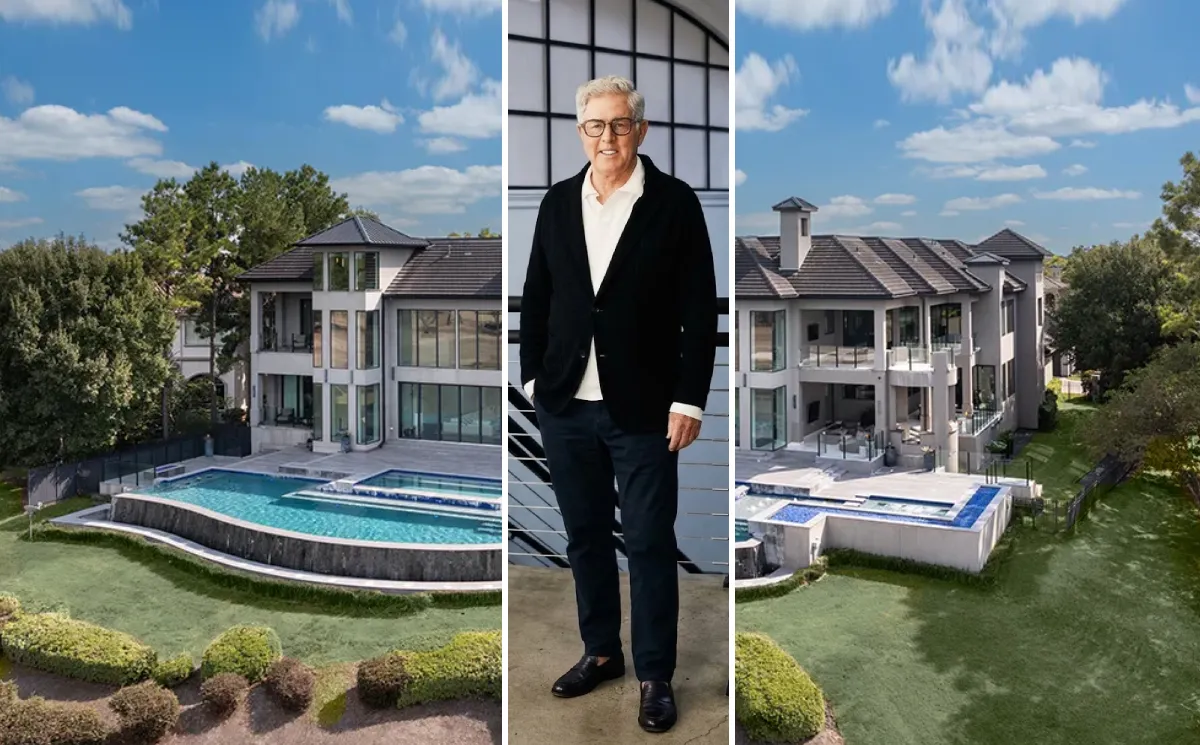
Estimates of Jay Schottenstein’s net worth range from $1.5 billion to $2.7 billion, built across decades in retail, real estate, and private equity. He’s the driving force behind American Eagle Outfitters and a sprawling business empire that touches fashion, footwear, and property development across North America.
But Schottenstein doesn’t just collect companies. He collects some of the most strategically placed luxury properties in the country — and the Jay Schottenstein house portfolio tells a story that goes far deeper than square footage and price tags.
From a $21.6 million Manhattan penthouse inside one of fashion’s most prestigious residential buildings to a Miami Beach home base where South Florida’s business elite congregate, each property reveals something about how one of America’s wealthiest retail figures thinks about wealth, location, and long-term positioning.
Jay Schottenstein’s Historic Columbus Mansion
Walk into Madison Avenue — one of Manhattan’s most exclusive residential addresses — and take a private elevator to a full-floor penthouse that spans 4,530 square feet. That’s the Jay Schottenstein house experience in New York City, and it landed him in early 2025 for $21.6 million.
Five bedrooms. Five bathrooms. A private elevator that opens directly into the residence. The layout is designed for someone who values both grand entertaining and quiet privacy — a balance that’s surprisingly hard to find in Manhattan luxury real estate.
The real story, though, is the price. Schottenstein closed 13% below the original $25 million asking price. In a market where ultra-luxury Manhattan condos routinely sell at or above list, that kind of discount speaks to either exceptional negotiating skill, shifting market conditions, or both. Most likely both.
The Giorgio Armani Residences aren’t ordinary high-end condos. Every detail — from the lobby finishes to the rooftop amenity spaces — carries the unmistakable Armani design philosophy: restrained elegance, muted palettes, and materials that feel expensive without announcing it. For a man whose retail brands generate billions in revenue annually, the fit makes sense. Fashion isn’t just his business; it’s the lens through which he evaluates nearly everything, including where he lives.
The building also places Schottenstein at the intersection of Madison Avenue’s luxury retail corridor and Manhattan’s broader financial ecosystem. For someone who splits time between retail operations, board meetings, and investor relations, the location alone justifies the premium.
Miami Beach: The Primary Residence
While Manhattan serves as Schottenstein’s business hub in the Northeast, his primary residence sits on Sheridan Avenue in Miami Beach. The property measures 3,786 square feet with four bedrooms and four bathrooms — considerably more modest in footprint than the Manhattan penthouse, but that’s by design.
This is where Schottenstein actually lives day to day. It’s his home base between board meetings, quarterly earnings calls, and the kind of high-level deal-making that defines his calendar. The modern architecture and coastal setting provide something a Manhattan penthouse can’t: the psychological reset that comes with ocean proximity and year-round warmth.
Miami Beach has steadily attracted America’s business leadership class, driven by Florida’s tax advantages, the region’s growing financial infrastructure, and a lifestyle proposition that’s hard to match. Schottenstein’s decision to establish his primary residence here aligns with a broader migration pattern among high-net-worth individuals who’ve discovered that proximity to Wall Street no longer requires living in Manhattan.
The property’s interior reflects a preference for understated luxury — sophisticated without being showy, comfortable without sacrificing quality. It’s the kind of home that works equally well for an intimate dinner with business partners or a quiet Sunday morning before the week’s demands take over.
Key Biscayne: The Investment Play
Here’s where the Jay Schottenstein house strategy shifts from lifestyle to investment math.
In December 2024, Schottenstein and his wife listed their Key Biscayne penthouse for $34 million. They’d purchased the property in 2007 for $5 million. That’s a potential return of nearly seven times the original investment over 17 years — numbers that would make most real estate professionals envious.
Key Biscayne occupies a unique position in South Florida’s luxury market. It’s an island community just off the coast of Miami, offering exclusivity and privacy that the mainland can’t replicate, while remaining close enough to Brickell’s financial district and Miami Beach’s social scene. Properties here don’t come to market often, and when they do, they attract serious buyers.
Schottenstein’s decision to list at $34 million — during a period of softening in some luxury segments — suggests confidence in the island’s enduring appeal among ultra-high-net-worth buyers. Whether the property sells at ask, above, or slightly below, the return on a $5 million initial investment represents the kind of patient, location-driven wealth creation that defines Schottenstein’s broader approach.
The Empire Behind the Properties
You can’t fully appreciate the Jay Schottenstein house portfolio without understanding the business machinery that funds it.
Schottenstein serves as CEO and Chairman of American Eagle Outfitters, a brand that generates over $5 billion in annual revenue. His 2023 CEO compensation from American Eagle alone totaled $16.8 million — and that’s just one income stream among many.
Beyond American Eagle, his influence extends to Designer Brands Inc. (the parent of DSW), Schottenstein Stores Corporation, and a real estate development operation through Schottenstein Property Group, which manages approximately 80 retail properties. He also holds significant private equity interests through American Signature and other ventures.
How did Jay Schottenstein build this kind of wealth? It traces back to family roots. His great-grandfather Ephraim Schottenstein opened a retail shop on South Parsons Avenue in Columbus, Ohio, in 1917. Over four generations, the family expanded from that single storefront into one of the most diversified retail and real estate empires in the country.
That generational context matters. Schottenstein didn’t stumble into wealth — he inherited a business philosophy built on long-term thinking, calculated risk, and an understanding that retail and real estate have always been intertwined. The properties aren’t trophies. They’re extensions of a worldview shaped by over a century of family enterprise.
Beyond Houses: The Full Lifestyle Portfolio
At Schottenstein’s level, the houses are just one component of a broader lifestyle infrastructure.
His private jet — a Gulfstream G550 registered as N720JS — enables the kind of multi-city schedule that running several public companies demands. Morning in Columbus. Afternoon in New York. Evening in Miami. Commercial aviation simply can’t support that rhythm at the executive level.
Then there’s the yacht, christened “Just J’s” — a vessel that serves as both a personal retreat and an extension of his professional life. In South Florida especially, yacht meetings and waterfront dinners are genuine business tools, not just leisure activities.
These assets aren’t decorative. They’re functional components of an operating infrastructure that keeps a multi-billion-dollar retail empire running across time zones and market cycles.
| Asset | Details | Primary Function |
|---|---|---|
| Armani Residences Penthouse | 760 Madison Ave, NYC — $21.6M, 4,530 sq ft | NYC business base |
| Miami Beach Residence | Sheridan Ave — 3,786 sq ft | Primary home |
| Key Biscayne Penthouse | Listed at $34M (purchased 2007 for $5M) | Investment property (on market) |
| Private Jet | Gulfstream G550 (N720JS) | Multi-city business travel |
| Yacht | “Just J’s” | Recreation and private meetings |
The Strategy Behind Every Purchase
What separates Schottenstein’s real estate approach from typical ultra-wealthy property collecting is intentionality. Every property serves a specific role in a broader geographic and business strategy.
1. Manhattan
Manhattan provides access to financial markets, fashion industry networks, and the investor community that funds his retail ventures. The Armani Residences location on Madison Avenue puts him literally steps from the fashion ecosystem that built his fortune.
2. Miami Beach
Miami Beach offers the tax advantages, lifestyle quality, and increasingly sophisticated business infrastructure that make it the preferred home base for executives managing national and international operations.
3. Key Biscayne
Key Biscayne (before listing) represented the investment layer — a property purchased at the right time in the right location, held patiently, and positioned for a sale timed to maximize returns.
This three-market approach — business hub, lifestyle base, investment vehicle — mirrors the diversification philosophy that defines Schottenstein’s corporate strategy. He doesn’t concentrate risk in a single market, brand, or asset class, and his real estate portfolio reflects that same discipline.
Columbus: Where It All Began
For all the glamour of Manhattan penthouses and Miami Beach estates, the foundation of the Schottenstein empire remains in Columbus, Ohio. The family’s connection to the city stretches back over a century, and Columbus continues to serve as a central node in their business operations.
The Jay and Jeanie Schottenstein Foundation, established in 1985, has directed significant philanthropic investment back into the community, including a $2 million endowment to The Ohio State University for cardiovascular sciences research. It’s a reminder that for families like the Schottensteins, wealth creation and community investment aren’t separate activities — they’re part of the same long-term vision.
Schottenstein himself has spoken publicly about the mindset that drives his decisions. “You’ve got to be an optimist. You can’t run a good retail operation without being a good optimist,” he told Women’s Wear Daily in 2024. That optimism — the willingness to invest during uncertain periods and hold through market fluctuations — defines both his business leadership and his real estate timing.
What Comes Next
With the Key Biscayne penthouse on the market and the Manhattan penthouse freshly acquired, Schottenstein appears to be consolidating his portfolio around two core markets: Miami for daily life, New York for business.
This consolidation makes strategic sense. Managing properties across too many markets introduces complexity without proportional returns. Two primary locations — both with strong long-term fundamentals and direct relevance to his business interests — provide the right balance of lifestyle quality and operational efficiency.
Given Schottenstein’s history of market timing and his property group’s experience managing roughly 80 retail properties, future moves could include deeper investment in commercial real estate or expansion into new geographic markets. He’s shown a consistent pattern of buying before peaks and selling with conviction — a skill set that translates directly from retail inventory management to property portfolio management.
The Jay Schottenstein house portfolio is ultimately a reflection of how one of America’s most successful retail figures thinks about wealth. It’s not about collecting the most expensive properties or making headlines with splashy purchases. It’s about placing the right assets in the right markets at the right time — and having the patience to let the strategy compound over decades.
For anyone studying how the ultra-wealthy approach real estate, Schottenstein’s portfolio offers a clearer lesson than most: the best property investments aren’t about price. They’re about positioning.
