
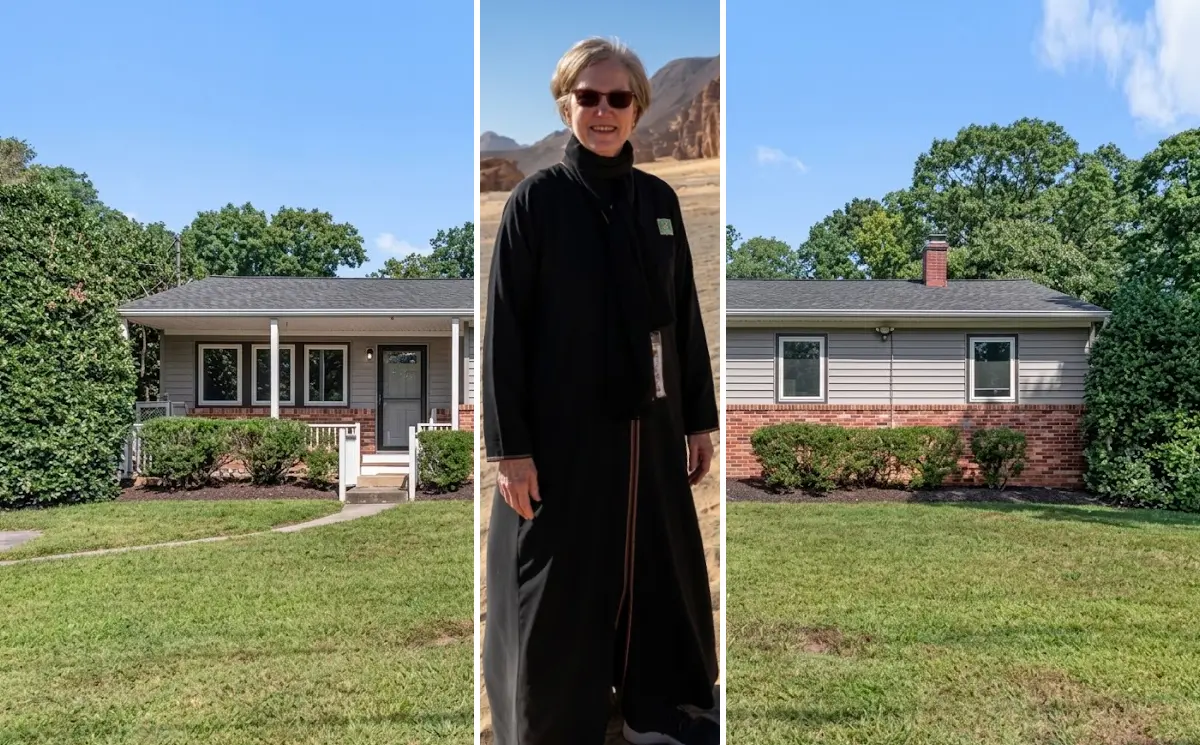
Karen Elliott House spent decades at the Wall Street Journal, one of the most scrutinized institutions in American media. Her real estate portfolio, by contrast, has never been scrutinized at all — because nobody can find it.
The Pulitzer Prize-winning journalist and former publisher of the Journal has built an extraordinary career spanning international reporting, media leadership, and academic research at Harvard. Yet when it comes to where she actually lives, the trail goes completely cold.
- No property listings.
- No magazine features.
- No leaked addresses.
In an era when public figures increasingly turn their homes into content, House has done something far more difficult: she’s made hers disappear.
Quick Facts
| Born | December 7, 1947, Matador, Texas |
| Education | B.A., Journalism, University of Texas at Austin |
| Career at WSJ/Dow Jones | Reporter (1974) → Foreign Editor (1984) → President, Dow Jones International (1995) → Publisher, Wall Street Journal (2002–2006) |
| Pulitzer Prize | 1984, International Reporting (interviews with Jordan’s King Hussein) |
| Current role | Senior Fellow, Belfer Center for Science and International Affairs, Harvard Kennedy School |
| Board roles | RAND Corporation (former Board Chairman); Council on Foreign Relations; Trilateral Commission; Asia Society |
| Books | On Saudi Arabia (2012); The Man Who Would Be King: Mohammed bin Salman and the Transformation of Saudi Arabia (2024) |
| Known residence | Princeton, New Jersey (per publisher author bios and published interviews) |
| Residence amenities/features | Not publicly documented — no verified source describes the property itself |
Who Is Karen Elliott House?
For someone who spent her professional life under bright lights, Karen Elliott House’s ability to vanish from public curiosity is almost ironic. She rose through the Wall Street Journal‘s ranks as a foreign correspondent covering Middle Eastern affairs with a depth that earned her the Pulitzer Prize for International Reporting. She was named publisher of the Journal in 2002, becoming one of the most powerful figures in American journalism.
After stepping down from the publisher role in 2006, House didn’t retreat into obscurity. She became a senior fellow at Harvard Kennedy School’s Belfer Center for Science and International Affairs, where she continues working on energy policy, Saudi Arabian geopolitics, and international security. Her 2012 book, On Saudi Arabia, became a widely cited resource on the Kingdom’s internal politics and remains a standard reference for anyone studying the region.
This is a person with deep credentials in media, policy, and global affairs. And yet her home life is a complete blank.
The Address That Doesn’t Exist
Try to find Karen Elliott House’s residence. Celebrity property databases return nothing. Real estate blogs have no entries. Social media searches produce zero relevant results. No photographer has captured her walking into a home. No interior designer has boasted about a commission. The information simply isn’t there.
What can reasonably be inferred? Her long tenure at the Journal‘s New York headquarters suggests deep roots in the Northeast. Her Harvard position likely connects her to the greater Boston-Cambridge corridor. Karen’s extensive Middle Eastern career could indicate international property interests — London is common among journalists with strong Gulf-region ties — but there’s nothing concrete to confirm any of it.
That total absence of data isn’t accidental. Property records, tax assessments, and casual social media posts have made residential information nearly impossible to hide in 2025. Maintaining this level of anonymity takes deliberate effort — and for House, that effort appears to be a priority.
Why the Walls Stay Up
The privacy isn’t whimsical. It’s functional.
House’s career put her in rooms most journalists never reach. She conducted sensitive interviews with Middle Eastern leaders, covered volatile geopolitical conflicts, and maintained source relationships that depended on absolute discretion. Journalists working at that level understand that personal exposure creates risk — not just for themselves, but for the people who trust them with information.
That risk profile hasn’t diminished in retirement. Her work at Harvard’s Belfer Center involves international security research, nuclear policy discussions, and relationships with government officials and intelligence professionals across multiple countries. Making her home address publicly discoverable would be unnecessary at best and a genuine security liability at worst.
Former Dow Jones executives also carry institutional knowledge that makes them long-term targets. Corporate espionage, competitive intelligence gathering, and political retaliation are realistic concerns for people who’ve spent decades inside a major media organization with global reach. Residential anonymity is one of the few personal protections that remains entirely within her control.
Why Karen Elliott House Skips the Celebrity Property Circuit
Most public figures in media and entertainment treat property as an extension of their brand. Homes get photographed, featured in magazines, and packaged into social media content. Real estate becomes another platform for visibility — and sometimes another revenue stream.
Ben Affleck’s property transactions generate tabloid coverage whether he wants them to or not. Every purchase, sale, or renovation becomes public knowledge within days. For someone in entertainment, that level of exposure might be tolerable or even useful. For a former Wall Street Journal publisher whose credibility depends on seriousness and discretion, it would be damaging.
House’s refusal to participate in the celebrity property game isn’t shyness. It’s a strategic decision grounded in how her professional reputation actually works. The people who take Karen Elliott House seriously — policy experts, international relations professionals, fellow journalists — aren’t swayed by an impressive address. If anything, a featured luxury home would undercut the intellectual authority she’s spent decades building.
That calculus stands in stark contrast to someone like Dolly Parton, whose warmth, openness, and connection to specific places — her Tennessee roots, Dollywood, her rural upbringing — are inseparable from her public identity. For Parton, visibility is the brand. For House, invisibility is.
What Her Silence Reveals About Smart Wealth
There’s something instructive about Karen Elliott House’s approach, even for people who don’t share her security concerns or professional context.
The modern assumption is that success should be displayed — that a prestigious address or a high-profile property transaction validates the person behind it. House’s career pushes back against that idea. She’s accumulated influence, wealth, and intellectual authority over five decades without ever showing anyone where she keeps her front door key. The silence hasn’t cost her a thing.
Her properties — whatever they are, wherever they sit — likely represent a significant portion of her overall wealth. Someone with her grasp of global economics and energy markets would presumably invest in real estate thoughtfully. New York and Boston alone have appreciated enormously over her career arc. But the specifics remain her own business, which is exactly how she wants it.
Properties that can’t be easily tied to a specific owner also behave differently in the market. No inflated celebrity premium, no targeted theft risk, no speculators gaming valuations around a famous name. Whether House designed this outcome intentionally or simply lived according to her generation’s norms, the financial upside is real.
For anyone building a career in policy, journalism, or institutional leadership, the takeaway is straightforward: you don’t owe the public a view of your living room. The most durable reputations are built on professional substance, not lifestyle exposure. Karen Elliott House figured that out a long time ago, and her invisible real estate portfolio is the quietest proof imaginable.
