
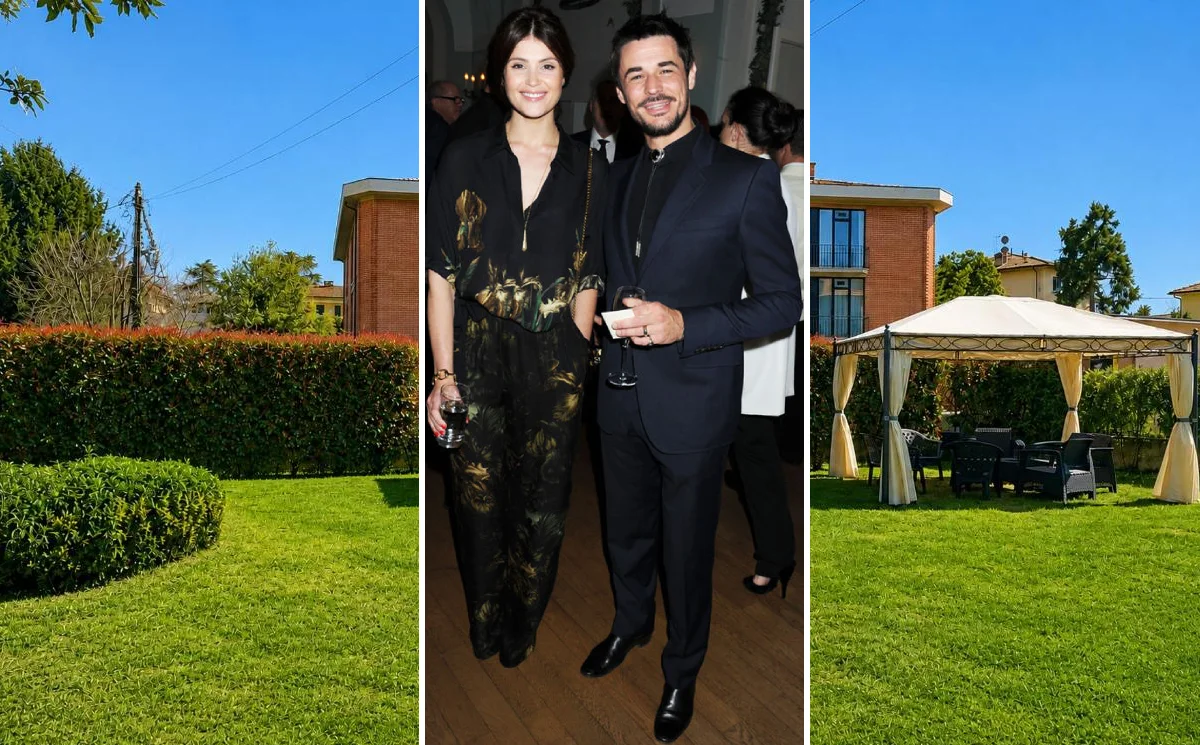
You probably know the name Stefano Catelli from tabloid headlines about his marriage to British actress Gemma Arterton. But behind the celebrity footnote sits a fashion professional with over 25 years of international experience — someone who’s shaped global sales strategies for some of the most respected contemporary brands in Europe.
Today, Catelli serves as Director of Wholesale at Nieuway, a London-based retail consultancy, where he leads the relaunch of the firm’s sales agency division. His career path — from early retail roles to senior sales leadership in Paris, Milan, and London — offers a case study in how quiet professionalism can build lasting influence in an industry that rewards spectacle.
While no formal “Stefano Catelli House” brand exists, the principles underpinning his work form a distinct philosophy worth examining. This article explores his career, his approach to fashion business, and the lessons embedded in a trajectory that prioritizes substance over celebrity.
From Retail Floor to International Sales Director
Catelli’s career didn’t begin in a corner office. Like many fashion professionals who reach senior positions, he built his expertise from the ground up — starting in retail and progressively moving into management, brand strategy, and international sales leadership.
Over more than two decades, he’s held senior roles at three notable companies:
| Company | Focus | Key Contributions |
|---|---|---|
| Club 21 | Global luxury retail | Early career foundation in high-end fashion distribution and retail operations |
| Four Marketing | Brand agency & wholesale | Led global sales strategies; developed international client relationships |
| Holzweiler | Scandinavian contemporary brand | Instrumental in shaping global sales strategy and expanding international presence |
What stands out across these roles isn’t any single flashy moment — it’s the consistency. Catelli built showrooms in Paris, Milan, and London, cultivated long-term retail partnerships, and delivered sustainable, measurable growth for every brand he represented. In an industry that often chases trends, he focused on infrastructure.
The Stefano Catelli House Philosophy: Five Principles
Though “Stefano Catelli House” isn’t a registered brand or company, the phrase works as shorthand for a set of business principles that run through his career. Think of it less as a label and more as an operating system for fashion management.
1. Specialization in High-End Contemporary
Catelli didn’t try to be everything to everyone. He carved out a specific niche: high-end contemporary brands with international ambitions. This specialization allowed him to develop deep knowledge of a particular market segment — premium brands positioned between luxury and accessible — and become a trusted name within it.
2. Cross-Market Fluency
Operating across Paris, Milan, and London requires more than a passport. Each fashion capital has its own buyer culture, aesthetic expectations, and relationship norms. Catelli’s ability to navigate all three — and to help brands expand into new markets — reflects a cultural fluency that can’t be learned from a textbook.
3. Relationship-Driven Sales Strategy
Rather than transactional deal-making, Catelli’s approach centers on cultivating strong, lasting client relationships. In wholesale fashion, where buyers and brands work together season after season, trust matters more than any single order. His collaborative, open approach has been a defining trait throughout his career.
4. Showroom as Strategic Tool
Building showrooms in three major fashion cities isn’t just a logistics exercise — it’s a strategic decision about how a brand presents itself to the trade. Catelli understood that the physical space where buyers encounter a collection shapes their purchasing decisions. These environments became extensions of each brand’s identity.
5. Privacy as Professional Asset
In a world where fashion executives increasingly become personal brands, Catelli’s low-profile approach is distinctive. He doesn’t maintain a public social media presence or court media attention. His reputation lives in industry circles — built through results rather than visibility.
A New Chapter at Nieuway
In 2025, Catelli took on a new challenge: joining Nieuway as Director of Wholesale, leading the relaunch of the consultancy’s sales agency division. Nieuway, founded by retail veterans Darren Skey and Kashia Wolf-Christensen, operates as a collective of industry professionals offering brand building, positioning, sales strategy, and retail execution services.
The move signals a shift from working inside individual brands to advising across multiple clients. Nieuway’s model — pairing deep retail expertise with personalized brand strategies — aligns naturally with Catelli’s skill set. As the firm puts it, their mission is “to ensure brand longevity by offering access to experts and tailoring personalised plans for each project.”
For Catelli, the role represents an opportunity to apply his cross-market knowledge and brand development experience at a broader scale, helping multiple brands navigate international wholesale simultaneously.
The Personal Side: Fame by Association
Catelli’s marriage to actress Gemma Arterton in June 2010 brought him a level of public attention his professional career never sought. The couple married in a private ceremony in the village of Zuheros in Andalucia, Spain, before a small gathering of family and friends.
They had started dating in 2009, and Catelli proposed at the Download music festival that same year. Arterton later described the relationship in personal terms: “I remember going home the night after I met him and writing in my diary that I’d met the man I’m going to marry.”
The couple separated in November 2012, and their divorce was finalized in 2015 at London’s Central Family Court. Throughout the process and its aftermath, Catelli maintained his characteristic discretion — never speaking publicly about the relationship or leveraging the connection for professional gain.
Arterton herself reflected on the split with composure: “It was a wonderful time and I have nothing bad to say about it. Even if they don’t last, relationships can enrich your life in some way.”
Italian Roots, International Reach
Born in Italy around 1973, Catelli’s professional identity blends Italian sensibility with international experience. While specific details about his upbringing remain private, his Italian background likely informs certain foundational values that surface in his career choices:
- Emphasis on quality and craftsmanship over volume and speed
- Appreciation for brand heritage as a commercial asset, not just a marketing angle
- Understanding of design traditions that shape European fashion
- Comfort with a slower, more deliberate approach to brand building
These aren’t uniquely Italian traits, but they’re deeply rooted in Italian fashion culture — and they align with the high-end contemporary segment where Catelli has built his expertise.
What Fashion Professionals Can Learn
Catelli’s trajectory offers practical lessons for anyone building a career in fashion management:
- Find your lane and go deep. Catelli didn’t try to be a designer, a journalist, and a brand consultant simultaneously. He identified high-end contemporary wholesale as his domain and committed to it for over two decades.
- Build real relationships, not a follower count. His network of buyers, brand partners, and industry contacts was built through in-person work, consistent delivery, and trust — not through social media presence.
- Think internationally from the start. Working across multiple fashion capitals early in his career gave Catelli a perspective that single-market professionals often lack. Understanding how buyers in Paris differ from those in London or Milan is a genuine competitive advantage.
- Let results speak. In an industry where self-promotion is often mistaken for competence, Catelli’s career proves that doing excellent work — reliably, over time — still builds a reputation that matters.
- Stay adaptable. The move from brand-side roles to a consultancy model at Nieuway shows willingness to evolve without abandoning core expertise.
The Metaphorical “Stefano Catelli House”
If we were to imagine a Stefano Catelli House as a real entity — a consultancy, a brand, a school of thought — it would likely be built on these foundations:
- The foundation: Two decades of hands-on experience in international wholesale, with deep knowledge of how brands actually reach consumers through retail partnerships.
- The structure: Cross-market expertise spanning the fashion capitals of Europe, with the ability to translate a brand’s creative vision into viable commercial strategy across different buyer cultures.
- The aesthetic: Understated, sophisticated, and commercially sound. Not trend-chasing, but trend-informed. Not flashy, but unmistakably premium.
- The ethos: Discretion, reliability, and long-term thinking in an industry that often rewards the opposite.
This framework doesn’t exist as a formal entity — but it does describe a recognizable archetype in the fashion industry. The professionals who operate this way rarely become famous, but they’re often the ones brands call when they need to scale internationally or restructure their wholesale approach.
Where Does Stefano Catelli Go From Here?
With his role at Nieuway representing a new phase in his career, Catelli appears focused on applying his experience across a portfolio of brands rather than within a single company. His expertise in building showrooms, developing cross-market sales strategies, and cultivating retailer relationships positions him well for the consultancy model.
Whether his future includes launching an independent venture, expanding his role at Nieuway, or taking on advisory positions with emerging brands, the foundation is solid. Over 25 years of international fashion experience — with proven results at brands like Holzweiler, Four Marketing, and Club 21 — provides a platform that few in the industry can match.
The Stefano Catelli House may never exist as a physical storefront or a registered trademark. But as a shorthand for a particular approach to fashion business — strategic, relationship-driven, internationally minded, and quietly effective — it already has a meaning within the industry. And that kind of reputation doesn’t need a logo.
