
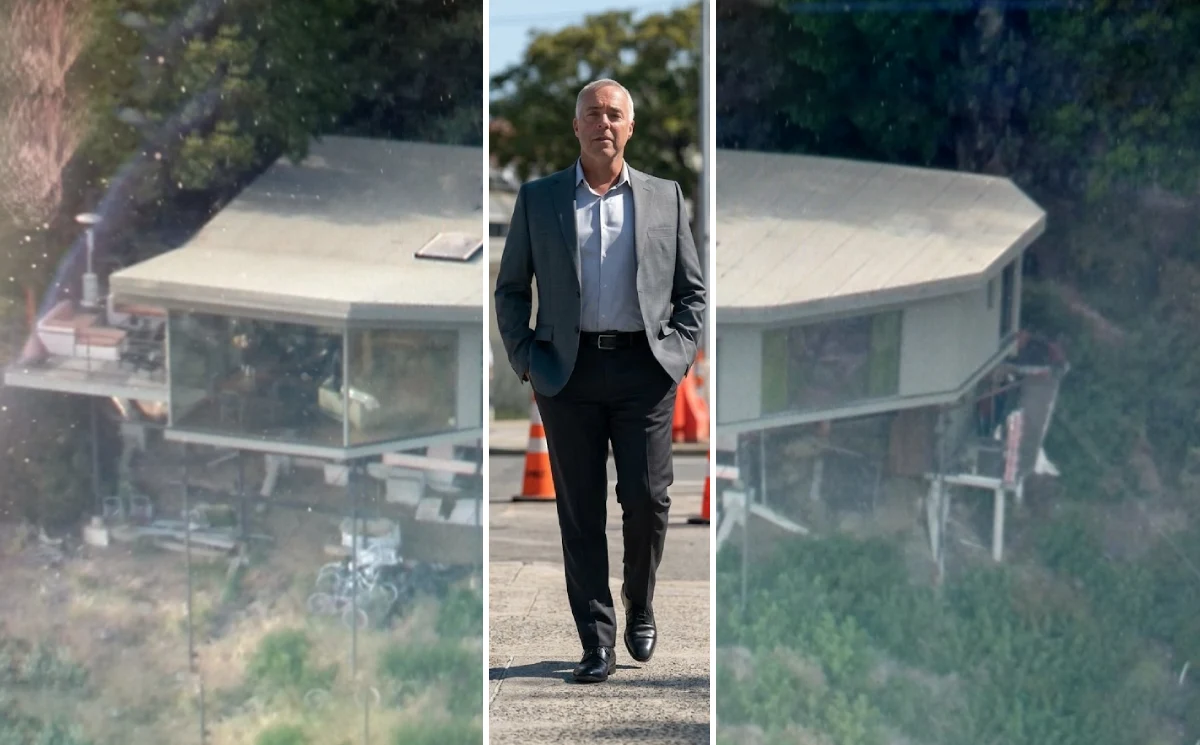
Some fictional homes are forgettable — generic sets dressed up with props and pushed to the background. The Harry Bosch house is the opposite. Perched in the Hollywood Hills on Blue Heights Drive, it has become one of the most recognizable residences in modern crime fiction, thanks to Michael Connelly’s bestselling novels and the Amazon Prime series Bosch (2014–2021) and its spinoff Bosch: Legacy (2022–2025).
What makes a detective’s house memorable enough that fans track it down in real life? It starts with architecture that actually feels like it belongs to the person living inside it.
Architecture and Design: Wood, Glass, and Hillside
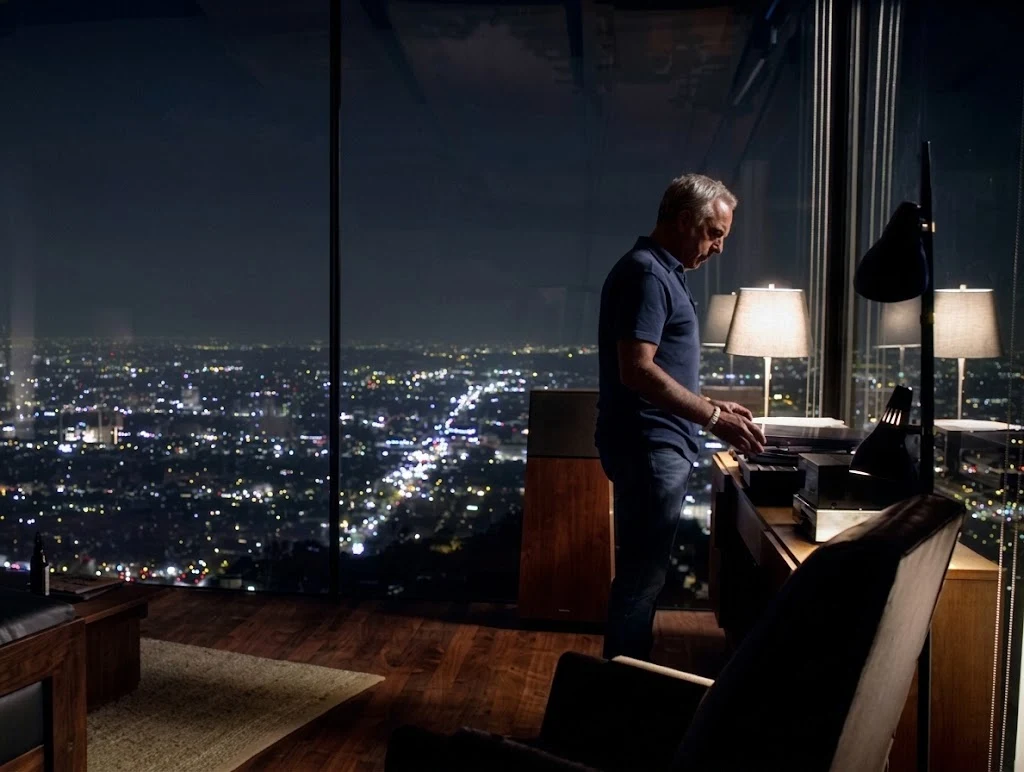
The Harry Bosch house is contemporary hillside architecture done right. Wood and glass dominate the exterior, with clean geometric lines that follow the natural slope of the terrain rather than bulldozing through it. There’s no grand entrance, no columns, no sprawling motor court. The design is restrained — a single-story structure that sits quietly into the hillside and lets the views do the heavy lifting.
At roughly 1,500 to 2,000 square feet, the home is modest by Hollywood Hills standards. The open-concept layout connects the kitchen, dining, and living areas into a single flowing space, which makes the compact footprint feel larger than the numbers suggest. Every window placement appears deliberate — positioned to frame the city below while drawing in natural light from the California sun.
The interior leans minimal: dark tones in the bedroom, curated artwork on the walls, and an overall palette that avoids anything ornamental. This isn’t a house designed for magazine spreads. It’s a working person’s home, and that intentionality is exactly why it reads as authentic on screen.
The Location: Hollywood Hills West
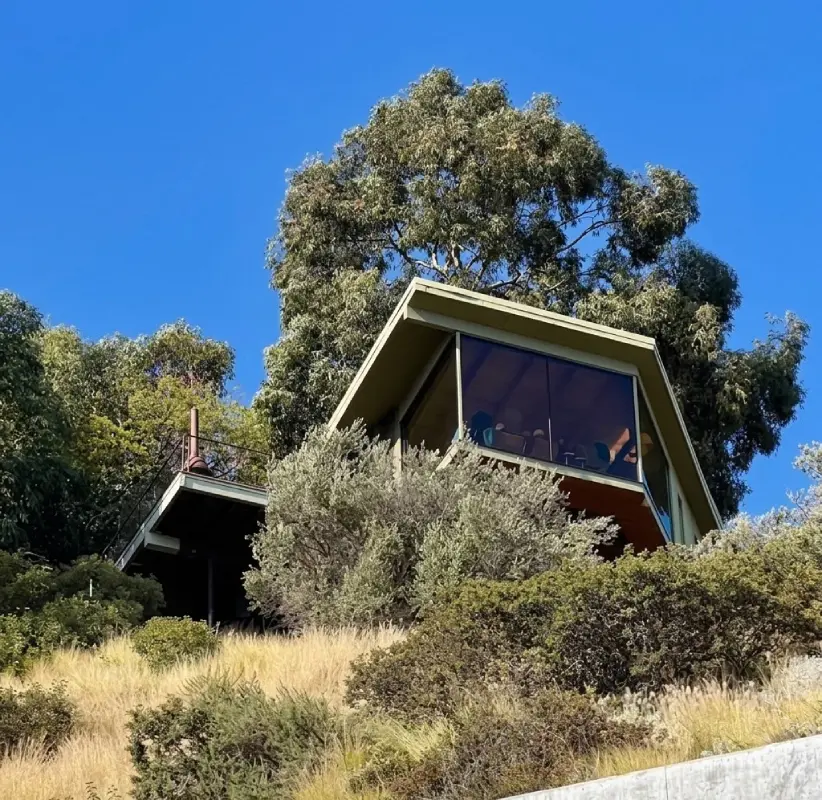
The house sits in Hollywood Hills West, one of Los Angeles’ most desirable hillside neighborhoods. Properties here trade privacy and panoramic views for proximity — you’re close enough to Downtown LA and Hollywood for a working detective’s commute, but removed enough to feel like a separate world.
Comparable hillside homes in this area typically list between $2 million and $3.5 million, depending on lot size, view orientation, and renovation quality. The real estate market in Hollywood Hills West has remained strong thanks to limited hillside inventory and consistent demand from entertainment professionals who prize seclusion over square footage. It’s a location that appreciates steadily rather than swinging with market cycles.
For Bosch — a detective who works long, irregular hours and values solitude — the neighborhood makes narrative sense. He doesn’t need a sprawling estate. He needs a place where he can stand at a window at 2 a.m., look out over the city lights, and think through a case. The house provides exactly that.
Why the House Works as Character Development
Michael Connelly has spoken about how deliberately he chose Bosch’s home. The house isn’t a random setting — it’s a window into who Harry Bosch is. A detective who could probably afford flashier digs but chooses a modern, functional, single-story home with great views and minimal clutter. That tells you something about the character before he says a single word.
The dark, cocoon-like bedroom suggests someone who compartmentalizes — who needs to shut the world out to recharge. The home office stacked with case files and books blurs the boundary between work and personal life, because for Bosch, there isn’t much separation. The peaceful backyard garden — simple, unfussy, more meditation space than entertainment zone — reflects a man who processes complexity through quiet.
On the Amazon series, the production team treated the house as a storytelling device, not just a backdrop. Camera angles emphasize the isolation. Night scenes use the city lights through the windows to create atmosphere. The house becomes a visual shorthand for the character’s inner life: modern, controlled, surrounded by beauty he can see but rarely stops to enjoy.
How the Property Evolved Across the Series
In Connelly’s novels, Bosch acquired the Blue Heights Drive property after a financial windfall tied to a high-profile case — a narrative detail that makes the purchase believable for a civil servant’s salary. The detective’s income alone wouldn’t comfortably cover a Hollywood Hills mortgage, so the backstory grounds the fiction in something close to real-world economics.
Across the books and the television adaptation, the house has remained remarkably consistent. Bosch doesn’t flip properties, renovate obsessively, or talk about upgrading. That consistency is a character trait as much as a plot device. He’s a man who commits — to cases, to principles, and apparently to a single address.
The Amazon series made one notable shift: the on-screen house became significantly more visually striking than many readers had imagined from the books. Connelly’s descriptions are spare — enough to sketch the essentials but leaving room for interpretation. The show’s production design leaned into the modernist aesthetic, and the result became the definitive version for millions of viewers.
Impact and Fan Recognition
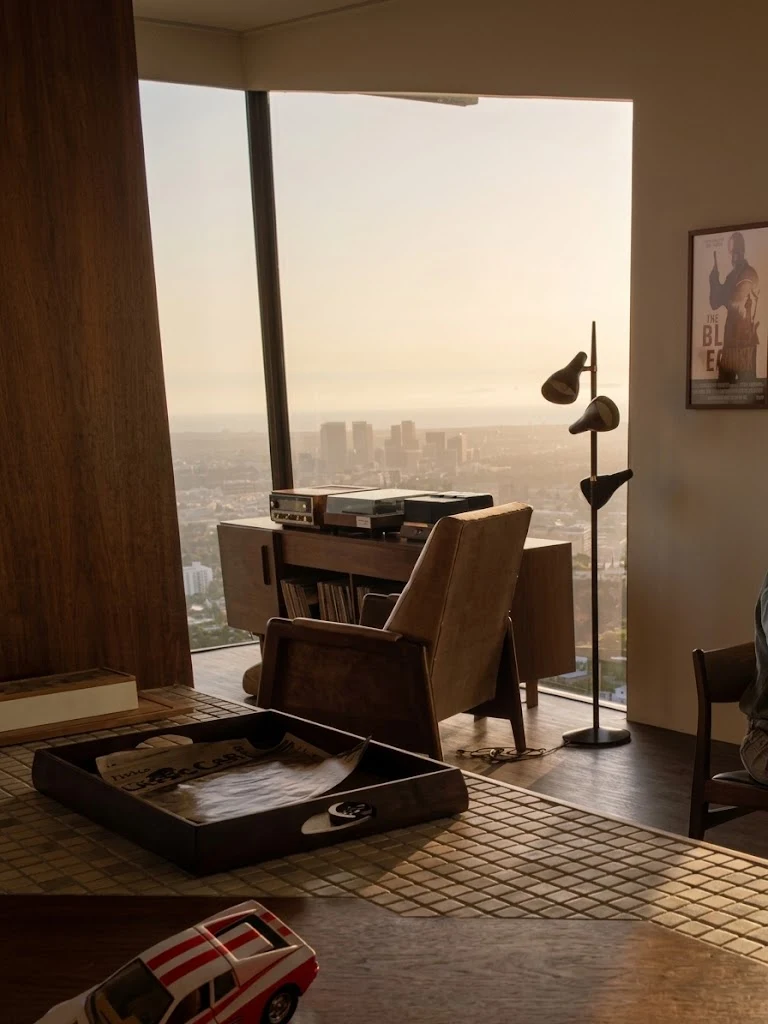
The Harry Bosch house has taken on a life outside the fiction. Architecture and design blogs regularly feature it as an example of successful hillside modernism — a house that respects its topography and earns its views through thoughtful siting rather than brute-force construction. The property represents a counterpoint to the mega-mansions that dominate celebrity real estate coverage: proof that restraint can be more memorable than excess.
Fans of the series have made the house an informal landmark, with online discussions dissecting everything from the floor plan to the artwork choices. That level of engagement speaks to the quality of the production design — when audiences notice and care about a character’s living space, the design team has done something right.
The house also resonates because it feels achievable in a way that most on-screen homes don’t. Nobody’s replicating a 30,000-square-foot Bel Air estate. But a well-designed single-story home with good views, quality materials, and a clean aesthetic? That’s aspirational without being absurd. It’s the rare fictional home that makes you think, “I could see myself living somewhere like that.”
The Harry Bosch House as a Real Estate Lesson
There’s a practical takeaway buried in the fiction. Bosch’s single-property approach — one excellent home, no portfolio of investment properties — runs counter to standard celebrity real estate strategy but aligns with what many financial advisors actually recommend for non-investors. Concentrate your housing budget on a primary residence you genuinely love, in a location with strong long-term fundamentals, and resist the urge to chase diversification for its own sake.
Hollywood Hills West fits that model. Limited buildable land keeps inventory tight. The entertainment industry provides a deep pool of high-income buyers. And the views, obviously, aren’t going anywhere. Properties in this pocket of the Hills have consistently outperformed broader LA averages over the past two decades.
For a fictional detective, it’s smart real estate. For real-world buyers watching from the couch, it’s a reminder that the best property decisions often look modest from the outside.
The Harry Bosch house endures as a piece of fiction and a piece of architecture because both sides got it right — Connelly wrote a home that tells you who his character is, and the show’s designers built a version worth remembering. At Blue Heights Drive, the house doesn’t compete with its owner. It complements him. And that’s exactly what good design should do.
