
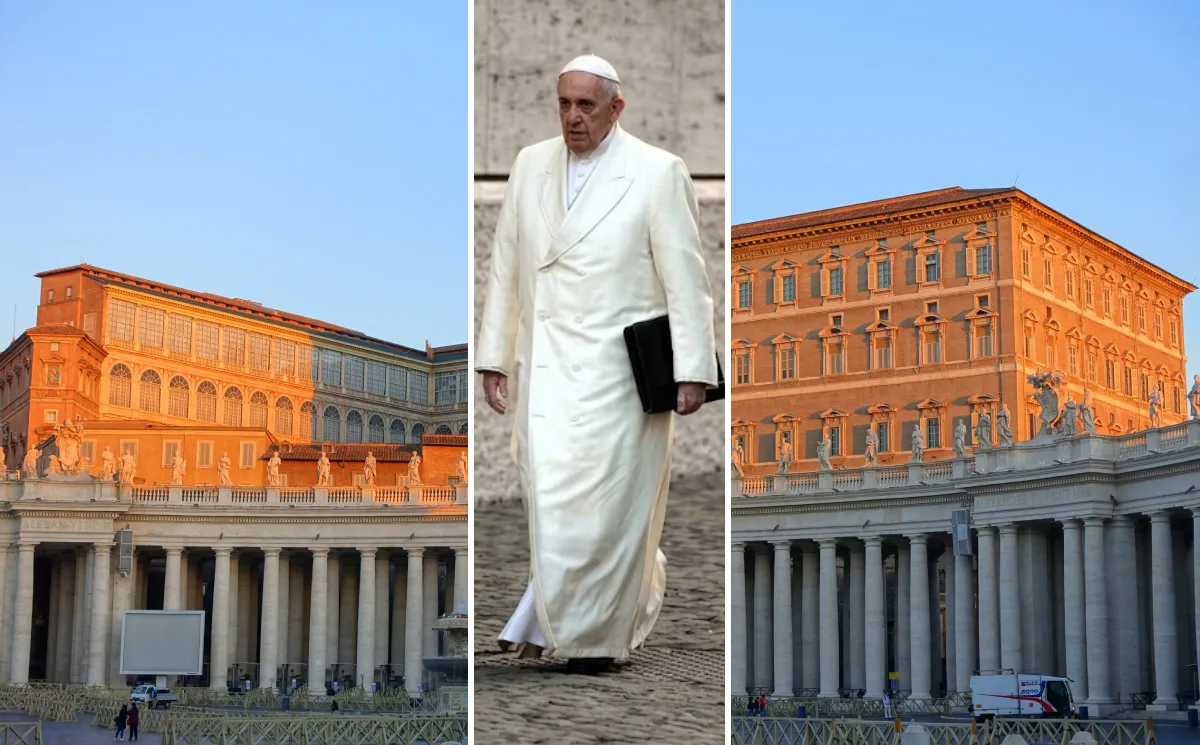
What if the most powerful spiritual leader on Earth chose to live in a simple guest room instead of a palace? That’s exactly what Pope Francis did.
His home wasn’t the grand Apostolic Palace where popes had lived for centuries. It was Suite 201 at Casa Santa Marta—a modest room in a Vatican guesthouse. And honestly, it’s inspiring to look back at how Pope Francis refused to move away from his simple lifestyle, even after becoming pope. That choice said more about the man than any throne ever could.
Here’s the story behind Pope Francis’ house, inside Suite 201 at Casa Santa Marta—and why he never left it, right up until he died in 2025.
What Is Casa Santa Marta?
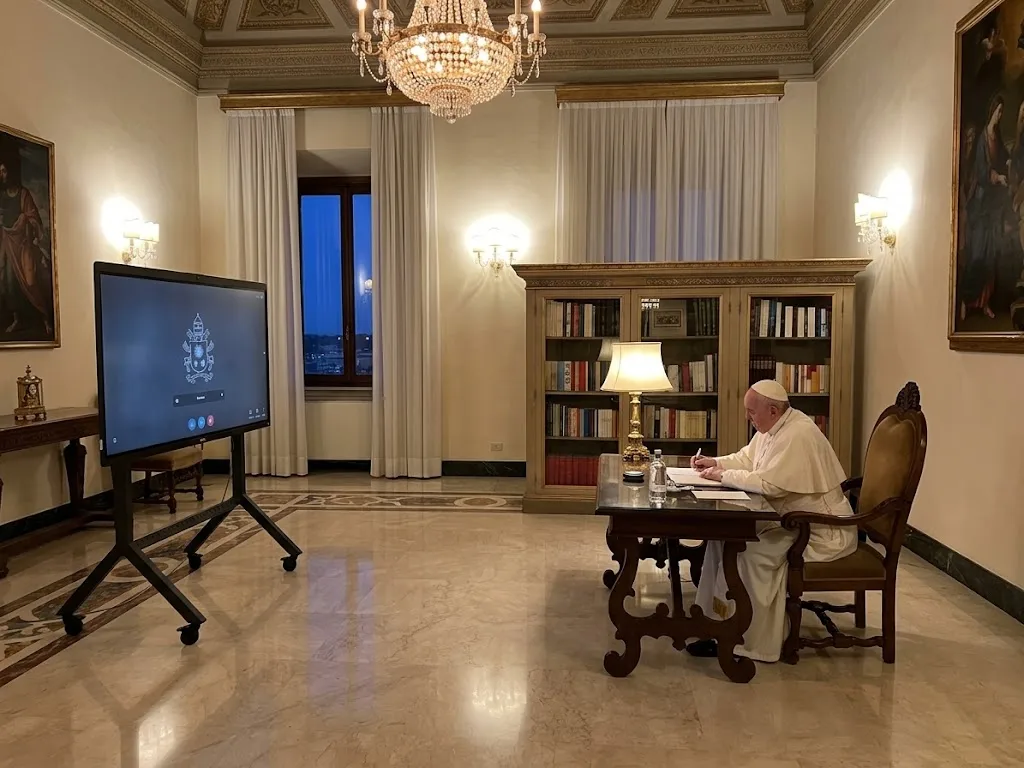
Casa Santa Marta—officially called Domus Sanctae Marthae—sits on the edge of Vatican City, right next to St. Peter’s Basilica. It’s a guesthouse. Not a palace. Not a historic papal residence. Just a functional building where visiting clergy and cardinals stay when they’re in Rome.
The building itself dates back to 1996, commissioned by Pope John Paul II and named after Martha of Bethany. It wasn’t built with popes in mind at all—John Paul II wanted a more comfortable place for cardinals to stay during conclaves, after living through the cramped, un-air-conditioned makeshift rooms of the old Apostolic Palace during two elections of his own. Today the Daughters of Charity of Saint Vincent de Paul run the place, which holds 106 suites and 22 single rooms across five floors.
Since 2013, it’s been something more. It became the home of Pope Francis—not the papal apartments in the Apostolic Palace where nearly every pope before him had lived.
Why would a pope choose a guesthouse over the Apostolic Palace? The answer reveals a lot about his priorities.
The Architecture and Design of Casa Santa Marta
Walk into Casa Santa Marta, and the first thing you’d notice is what’s missing. No marble floors. No frescoed ceilings. No gold trim.
The building is five stories of practical, understated design. It has:
- Individual suites and rooms for guests
- A main dining room where residents eat together
- Several small chapels for prayer and Mass
- Common areas for meetings and conversation
Compare that to the Apostolic Palace—a sprawling complex of more than 1,000 rooms spanning roughly 1.7 million square feet, home to world-famous art and centuries of history. The papal apartments themselves sit on the palace’s third floor, a suite that includes a private chapel, offices, and staff quarters for every pope since St. Pius X moved in back in 1903.
The contrast is intentional. Casa Santa Marta was built for comfort and community, not grandeur.
Breaking Centuries of Tradition
This decision wasn’t just unusual. It was radical.
For over a century, popes had lived in the Apostolic Palace. The papal apartments were expansive, ornate, and isolated. They were also a symbol of the papacy’s power and prestige.
Pope Francis rejected all of that—and it wasn’t a sudden change of heart once he got the job. As Archbishop of Buenos Aires, Jorge Mario Bergoglio had already turned down the grand Bishop’s Palace in favor of a simple apartment, where he reportedly cooked his own meals. The papacy didn’t create his taste for simplicity; it just gave it a much bigger stage.
What really surprised people was how plainly he explained the decision. In a 2013 interview, he described the papal apartment itself as “old, tastefully decorated and large, but not luxurious”—the problem, he said, was that it worked “like an inverted funnel,” spacious inside but with an entrance so narrow that people could only reach him “in dribs and drabs.” As he put it, “I cannot live without people. I need to live my life with others.”
Inside Suite 201: Features and Amenities
So what was actually inside the Pope Francis house?
Spoiler: It wasn’t fancy.
During the conclave that elected him, Francis was assigned Room 207 by lot, the same way every cardinal-elector is housed. Once he became pope, he moved down the hall to Suite 201—a two-room space of roughly 538 square feet. The sitting area held a desk, a bookcase, a couple of chairs, a sofa, and a simple crucifix, while the adjoining bedroom was almost monastic: a dark wooden bed, a wardrobe, a nightstand, and fluorescent lighting that gave the whole suite an institutional feel he never seemed bothered by.
A few personal touches gave the room its character. A standing wooden crucifix and a small statue of Our Lady of Luján—the patroness of Argentina, Uruguay, and Paraguay—sat inside. Just outside the door stood a statue of Saint Joseph, where he would leave written prayer requests, along with two Swiss Guards who rotated day and night shifts.
Privacy and Functionality
Here’s the thing—even though Casa Santa Marta is a communal building, Pope Francis still had privacy when he needed it.
His suite was his sanctuary. He could work, rest, and reflect without interruption. But when he wanted company, he just walked downstairs.
He celebrated Mass in the guesthouse chapel. He ate in the main dining room. He met with visitors in common areas.
It was a balance between community and solitude. And it seemed to work perfectly for him.
Daily Life in the Pope Francis House
What did a typical day look like for Pope Francis at Casa Santa Marta?
It was more routine than you might think.
Meals and Community
Pope Francis ate with everyone else. Cardinals. Visiting clergy. Staff. He didn’t have a private dining room. He sat at the communal tables and talked with whoever was there.
This wasn’t just about humility. It was about staying connected. He heard stories. He learned about people’s lives. He stayed grounded.
Work and Meetings
His suite served as a workspace. He met with advisors there. He made calls. He handled church business.
He also used the guesthouse’s common areas for informal meetings. This kept him accessible in ways previous popes weren’t.
During Papal Conclaves
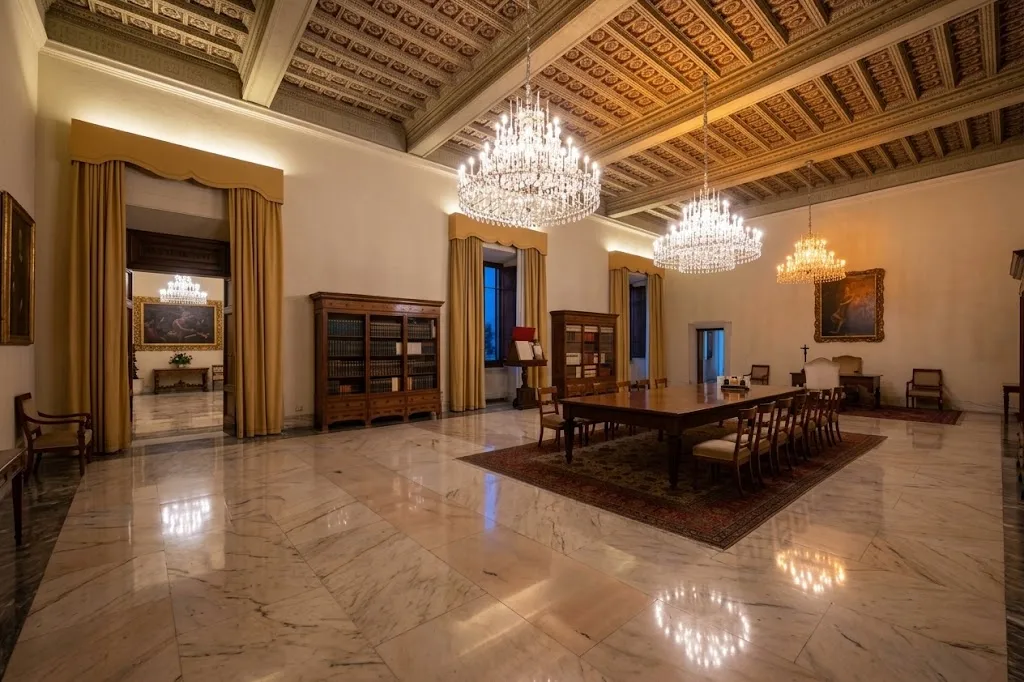
When cardinals gather to elect a new pope, they stay at Casa Santa Marta. The building was designed for exactly this purpose, after Pope John Paul II grew frustrated with how uncomfortable the old conclave arrangements were for elderly cardinals.
Cardinal electors need privacy and security during the conclave. Casa Santa Marta provides both. The building is sealed off, Wi-Fi is blocked, and phones, radios, and televisions are disconnected—the Vatican even hands out old-fashioned alarm clocks since most cardinals can no longer rely on their phones to wake them up. Communication with the outside world is restricted so the cardinals can focus entirely on the election.
Fun fact: Pope Francis stayed in Casa Santa Marta during the 2013 conclave that elected him. He never moved out. The building was used again for the 2025 conclave that followed his death—this time with a record 133 cardinal-electors, so many that the Vatican had to house the overflow in a nearby annex, Santa Marta Vecchia.
Spiritual Significance of Casa Santa Marta
There’s something profound about a pope choosing to live in a guesthouse.
Casa Santa Marta wasn’t just a building. It was a statement about what mattered to him.
The Chapel and Daily Mass
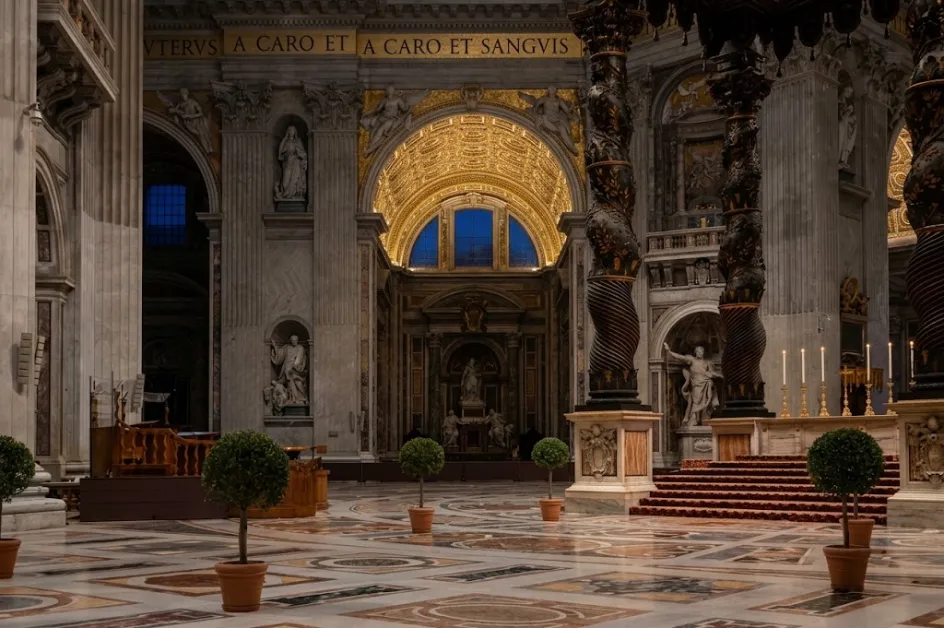
Pope Francis celebrated Mass in Casa Santa Marta’s chapel nearly every morning. Sometimes alone. Sometimes with guests.
These small, intimate services were a world away from the grand papal Masses at St. Peter’s Basilica. But they were just as meaningful—maybe more so.
Why doesn’t Pope Francis live in the Apostolic Palace?
He chose to live in Casa Santa Marta to maintain a simpler, more communal lifestyle. The Apostolic Palace felt isolated, and he preferred to live among people rather than apart from them.
Is Suite 201 open to the public?
No. Casa Santa Marta is not open to the public. Pope Francis’ former residence and the rest of the guesthouse remain private areas within Vatican City.
Final Thoughts: A Pope’s Home, A Powerful Message
Pope Francis passed away on April 21, 2025, inside the same modest suite he’d called home for twelve years, having never once moved into the grander quarters waiting for him across the Vatican.
Pope Francis’ house inside Suite 201 at Casa Santa Marta was never impressive by worldly standards. No grand halls. No priceless art. No luxurious furnishings.
But that was exactly the point.
In choosing this humble suite over the Apostolic Palace, Pope Francis made a statement that resonated far beyond Vatican City. He showed that simplicity isn’t weakness. That community matters more than isolation. That a leader can be powerful without being distant.
So, what do you think? Would you have chosen a palace or a guesthouse in his shoes?
Want to learn more about Vatican life? Check out our guide to St. Peter’s Basilica and the secrets hidden inside.
