
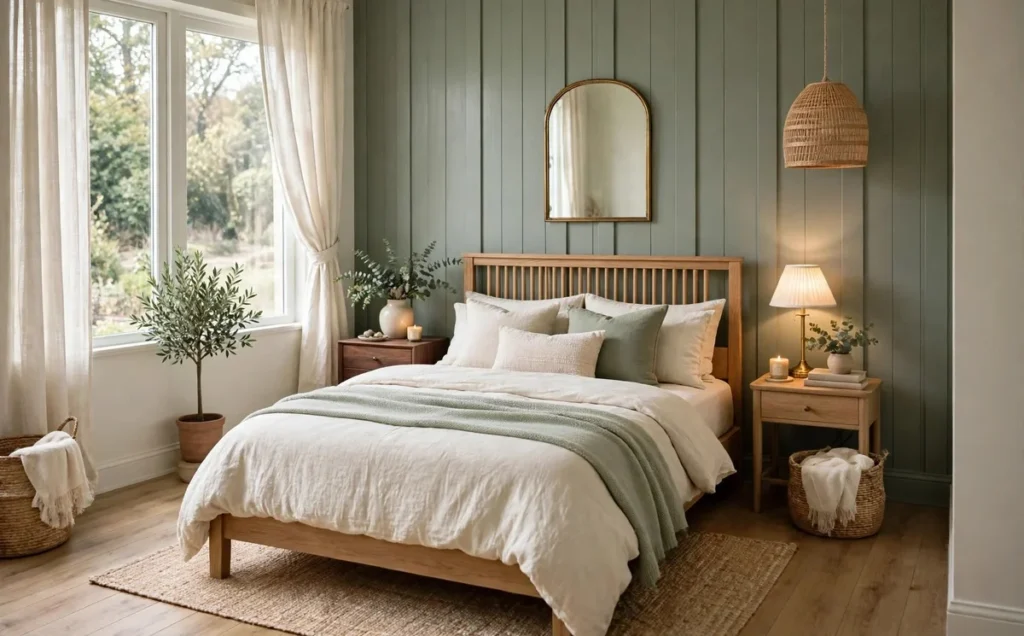
Sage green sits between gray and green. It is soft, slightly dusty, and easy to live with, which is why it has become one of the most popular bedroom colors. It works with wood, white, black, brass, and terracotta, and it never feels loud at bedtime. The one catch is undertone: depending on the paint and the light in your room, sage can lean yellow and warm, or gray and cool.
These 15 ideas show how to use it, from paint and bedding to the colors that sit best beside it.
1. Paint All Four Walls Sage
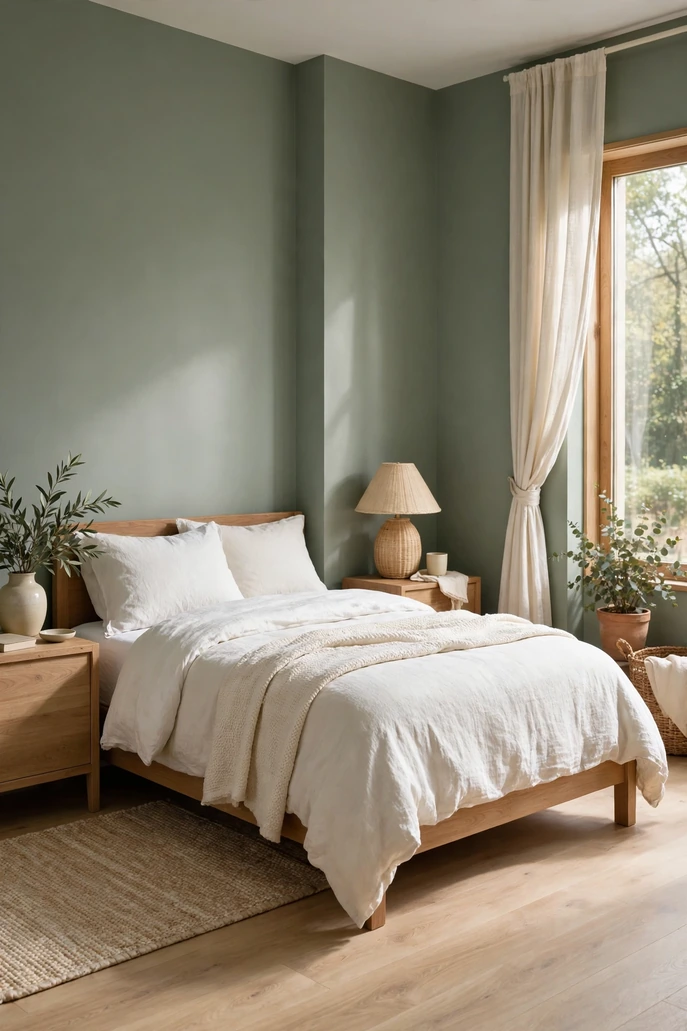
Painting the whole room is the most direct way to get the look, and it makes the room feel enclosed in a good way. Sage reads differently at different times of day, soft and gray-green in the morning and deeper in the evening, so it is worth choosing it in the light you actually use the room. Keep the trim and ceiling a warm white so the walls look like a color and not like a shadow.
Think of it as choosing a mood rather than a color. If you want to wake up in a room that feels like a quiet garden, full sage walls will do that more convincingly than any accessory. If that much green makes you hesitate, keep reading: several ideas below use sage in smaller doses.
Shades to sample:
- Sherwin-Williams Clary Sage (SW 6178) has a slight yellow undertone, so it reads warmer
- Benjamin Moore Saybrook Sage (HC-114) belongs to the Historical Colors collection
- Sherwin-Williams Evergreen Fog is another sage regularly used in bedrooms
Tip: Paint a large sample patch on two walls and look at it in the morning and under your bedside lamp before you commit.
2. Pair Sage with Crisp White
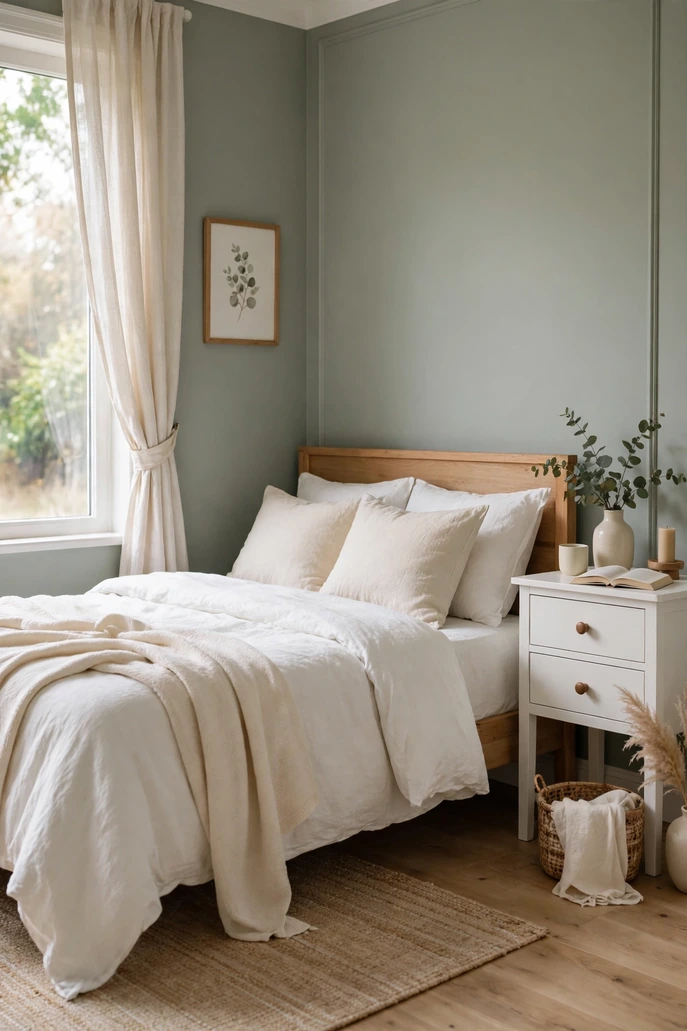
White is the easiest partner for sage because it makes the green look cleaner and fresher. White bedding, white curtains, and white trim give the room a light, spa-like feel without adding another color. This pairing suits small bedrooms best, because the white keeps the sage from closing the room in.
Picture a sage wall in good morning light with a white duvet in front of it: the green looks fresher and the white looks brighter. That quiet back-and-forth is why designers keep returning to this pairing, and it is hard to get wrong.
Formula: Sage walls, white trim, white bedding, one wood piece for warmth.
3. Warm It Up with Natural Wood
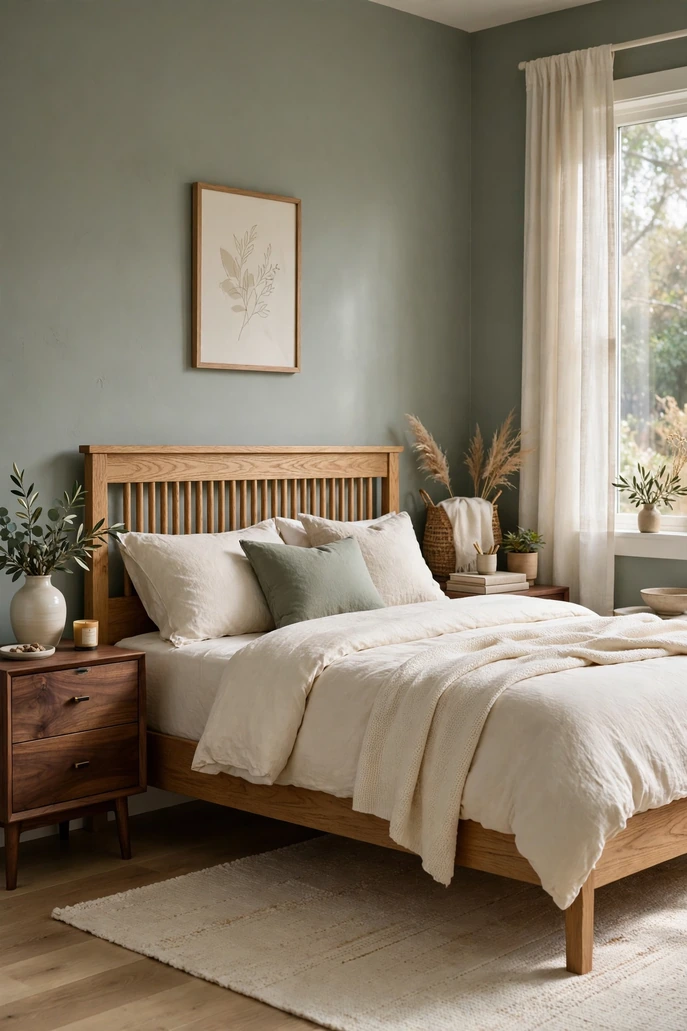
Wood is sage’s natural partner. Oak, walnut, and ash bring warmth that stops the green from feeling cold, and the grain adds texture to a smooth painted wall. A wooden bed frame or a pair of wooden nightstands is enough; you do not need every piece to be wood. Choose one or two tones and repeat them so the room looks planned.
The best test is to touch the room, not just look at it. Sage walls feel soft and a little cool, while a wooden nightstand or headboard adds the part of the room that feels warm under your hand. Try to include at least one wooden surface you will use every day.
Effort level: Low. This is a furniture swap, not a renovation.
4. Try a Sage Accent Wall Behind the Bed
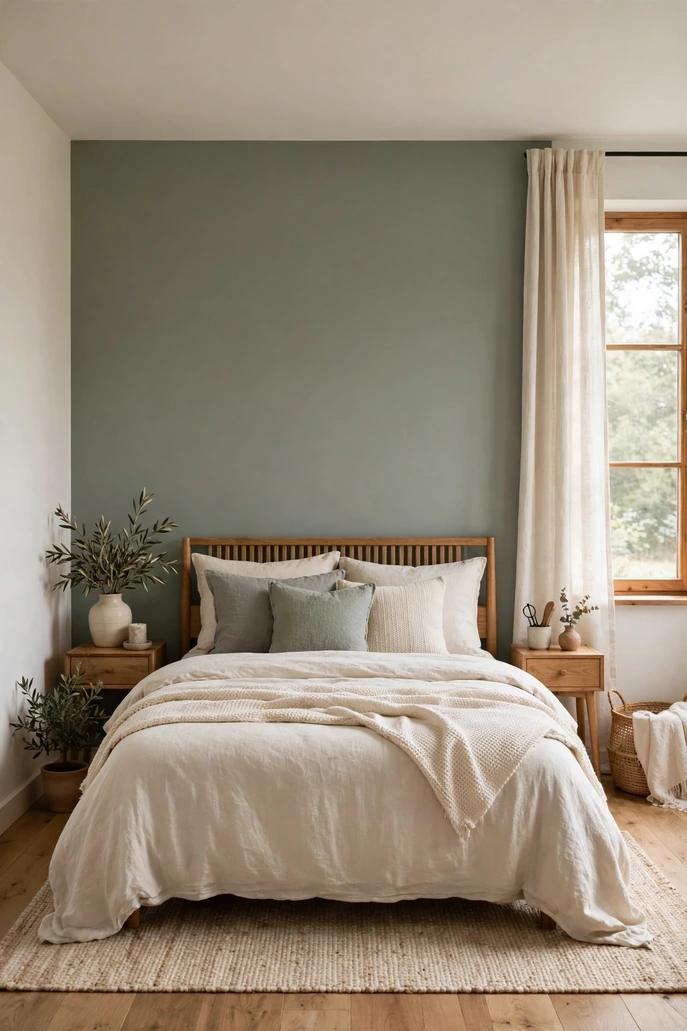
If you are not ready to paint the whole room, one sage wall behind the headboard gives the bed a backdrop and makes it the focal point. Choose the wall you see first when you walk in, and keep the other three walls in a warm white or a pale greige so the sage has room to breathe.
An accent wall is also a good way to find out whether you like living with sage before you commit the whole room. If you still love it after a month, extending it to the other walls is easy, and if not, repainting one wall is a small job.
Why it works:
- It costs less paint and less time
- It frames the bed without darkening the room
- It is easy to repaint if you change your mind
5. Add Board and Batten in Sage
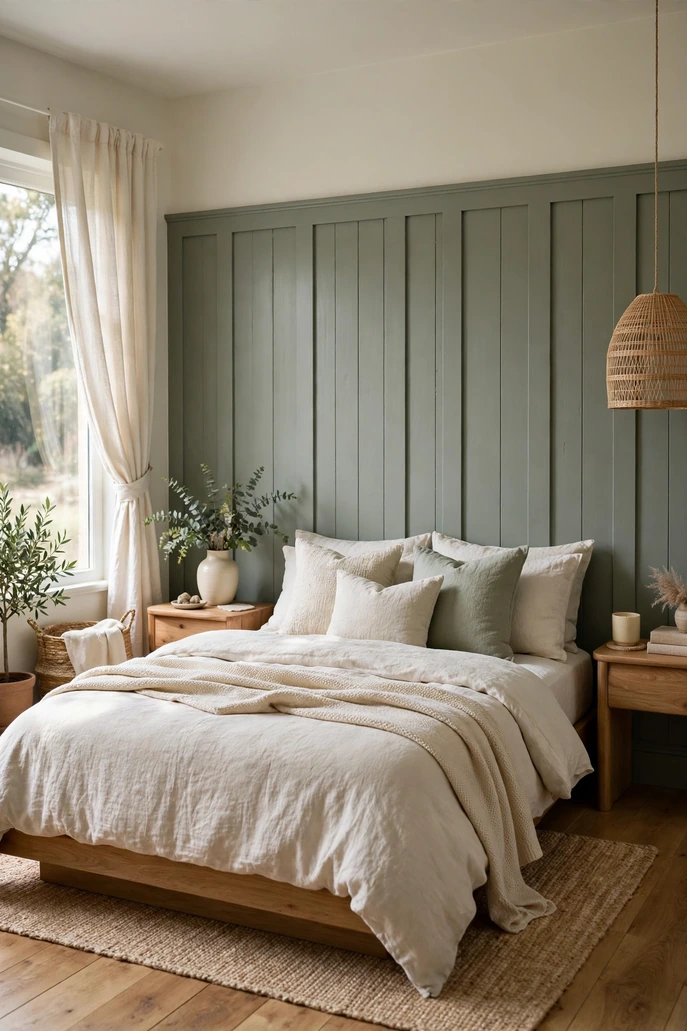
Board and batten is a wall treatment made of vertical boards and thin strips, and painting it in sage adds shadow lines and a crafted feel. It works well behind a bed or up to chair height around the room. Painting the panels and wall in one color keeps it calm, while the raised lines give the flat color texture.
Paneling solves a practical problem too: the lower half of the wall takes the bumps from beds and chairs, and a durable painted finish is easier to wipe than flat wall paint. It is a pretty detail that quietly protects the wall.
Effort level: Medium. It needs measuring, cutting, and caulking, so allow a weekend.
6. Combine Sage with Terracotta
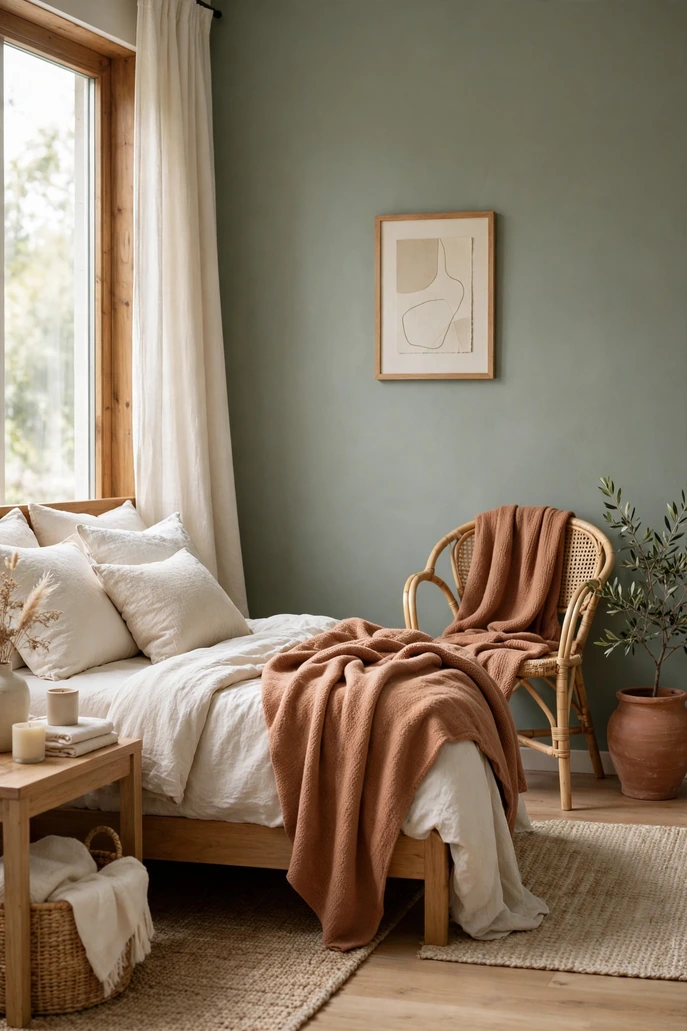
Sage and terracotta sit opposite each other in tone, green against warm orange-brown, and together they feel earthy and Mediterranean. Use terracotta in small amounts: a throw, a clay lamp base, a planter, or a rug with rust tones. The warm accent stops the sage from looking flat.
Imagine the room at golden hour, when a terracotta throw and a clay lamp pick up the low sun. That glow is why this combination works so well in west-facing rooms, where the evening light is warm.
Rule: Let sage be the main color and terracotta the accent, roughly nine to one.
7. Add Brass or Gold Hardware and Lamps
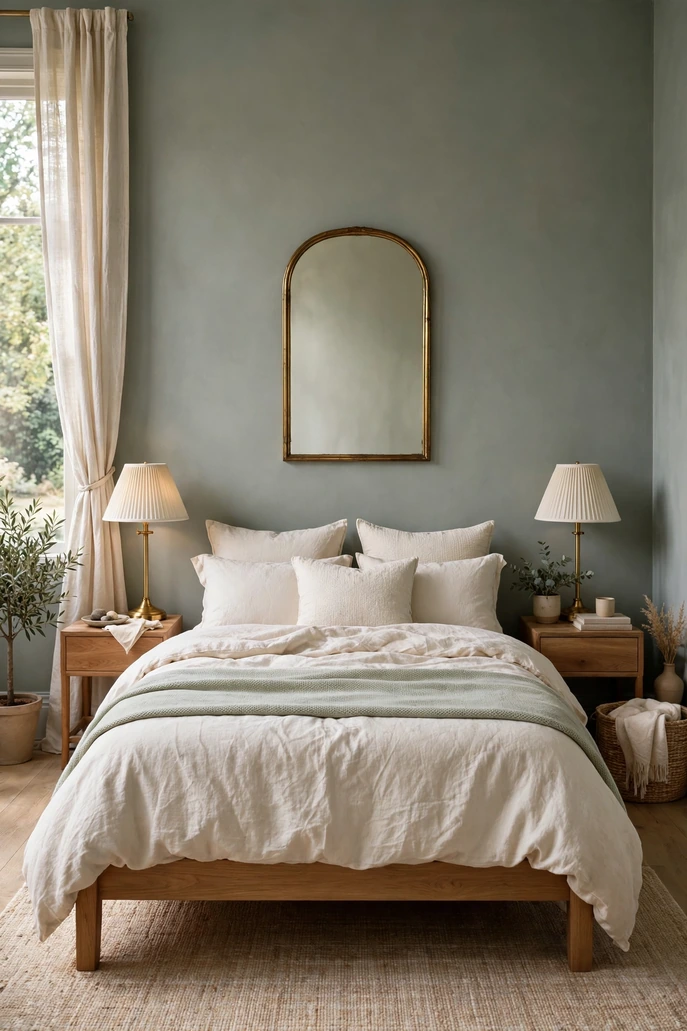
Brass and soft gold look good against sage because the metal glows warmly on a muted green. A brass bedside lamp, a framed mirror, or a set of drawer pulls adds a little shine to a matte wall. Choose aged or brushed brass over bright polished gold, which can look too formal against a natural color.
A small amount of metal goes a long way. If you only change one thing, swap a lamp base or a mirror frame. The shine shows up most in the evening, when the lamps are on, and the sage wall looks deepest.
Where to use metal:
- Table lamps and wall sconces
- Drawer pulls and door handles
- A mirror frame or a picture frame
8. Start with Sage Bedding on Neutral Walls
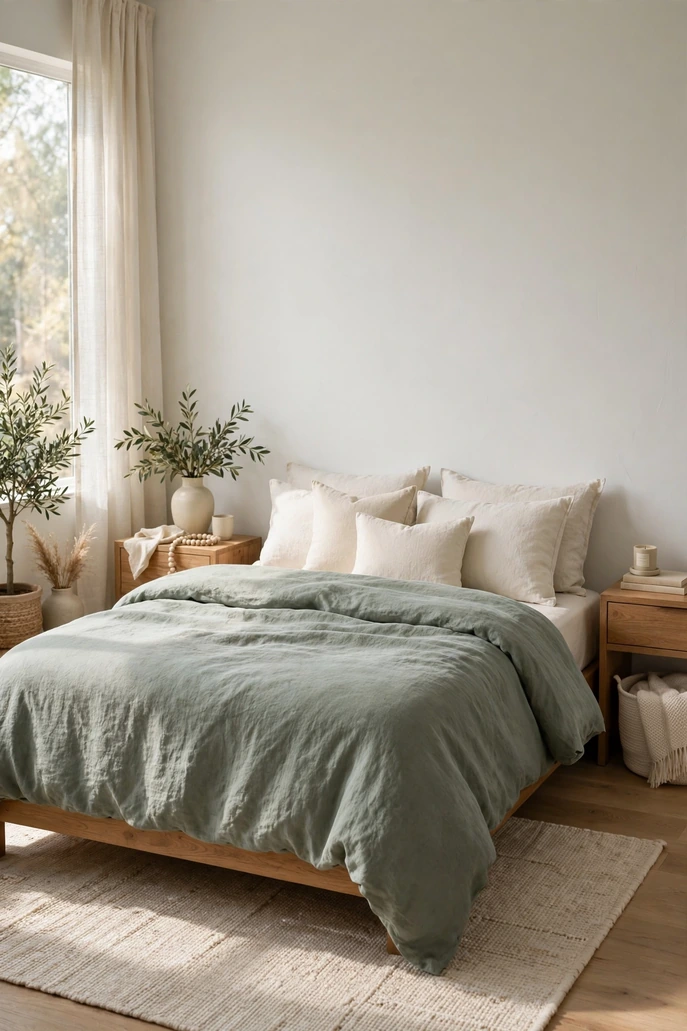
If you rent or you want a low-commitment trial, use sage on the bed. A sage linen duvet cover or quilt against white or cream walls gives you the color without paint, and you can swap it for another color later. Linen suits this look because its slightly rumpled texture adds depth to a soft color.
This is also the safest way to test shades. Hold a few swatches or a folded duvet in a candidate color up to the bed before you paint, and you will see how sage behaves in your own light before you spend on a gallon.
Effort level: Very low. It is one purchase and no tools.
9. Choose a Sage Velvet Headboard
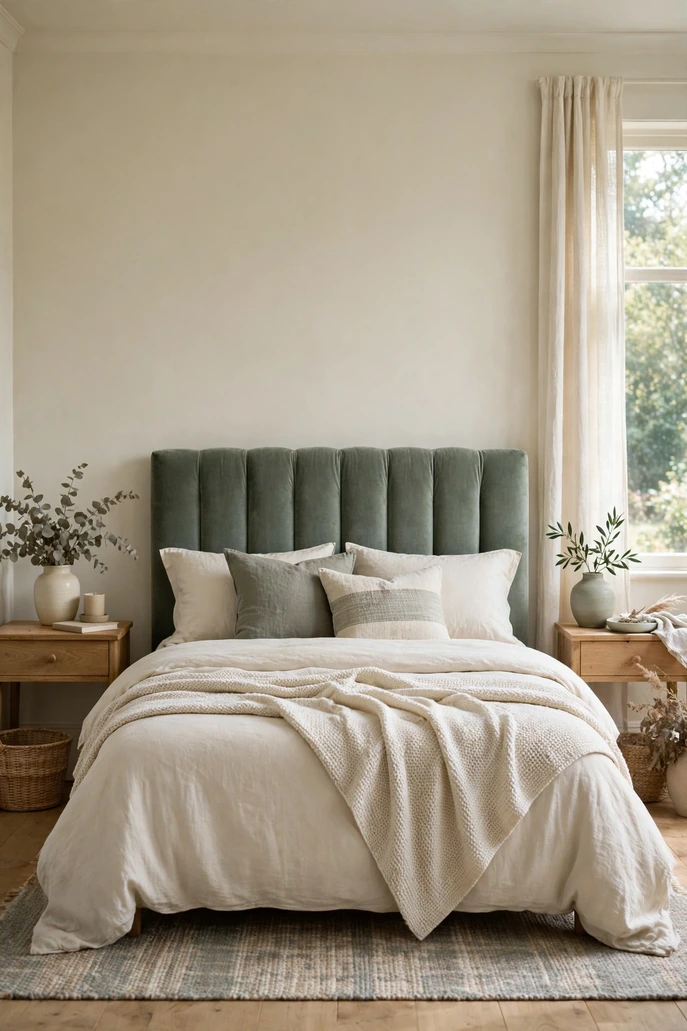
A velvet headboard gives sage a richer, deeper look because velvet catches the light, and the pile makes the color look darker where it lies one way. It also frames the bed as the main feature of the room. Keep the walls light so the headboard stands out.
Velvet’s pile means the color shifts slightly as you move around the room, lighter from one side and deeper from the other. It is a subtle effect that makes the headboard look richer in person than it does in a flat photo.
Tip: If you cannot replace the bed, a fabric-wrapped board or a headboard slipcover can imitate the look.
10. Hang Sage Linen Curtains
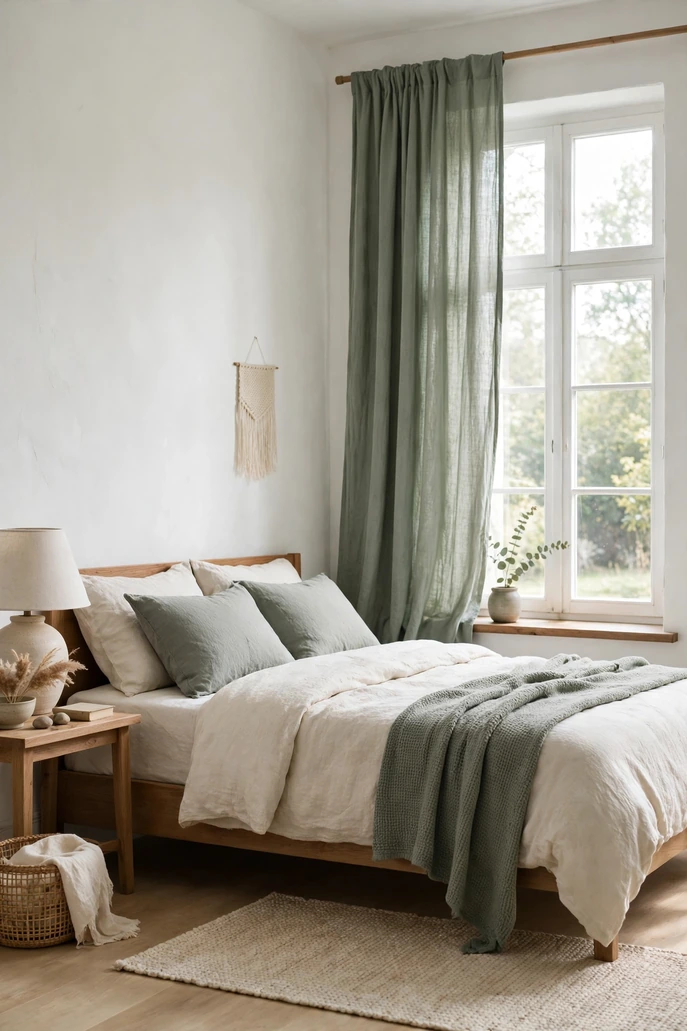
Curtains are a gentle way to bring in color at a large scale. Floor-length linen in sage softens the light that comes through the window and ties in with any plants outside. Hang the rod close to the ceiling so the curtains make the window look taller.
Curtains are the largest piece of fabric in most bedrooms after the bed, so changing them changes the whole feel. Sage linen also looks good when the window is open, and the fabric moves slightly in the breeze.
Pairing: Sage curtains work with white walls, cream walls and light wood floors.
11. Sharpen It with Black Accents
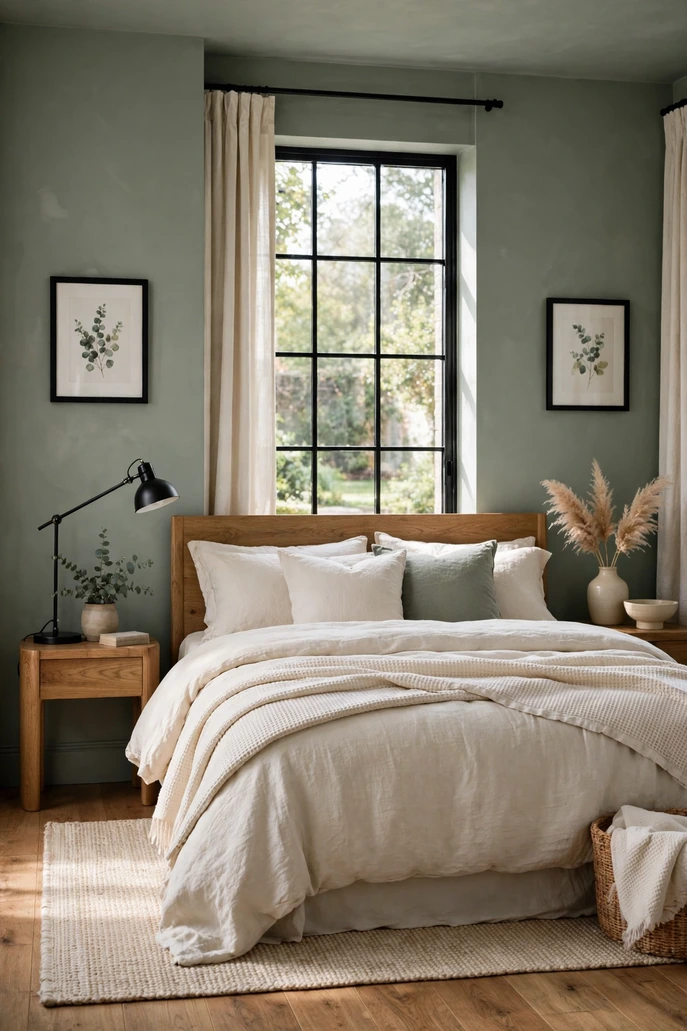
Black adds contrast and a modern edge, and it stops sage from feeling too sweet. Keep black to thin lines and small objects: picture frames, a metal bedside lamp, a window frame, or a bed with a slim iron frame. One or two black pieces are enough.
A useful trick is to squint at the room. If the black pieces look like a balanced scattering, you have the right amount, and if one corner looks heavy, move a black item to the opposite side.
Rule: Repeat black at least twice in the room so it does not look like an accident.
12. Soften It with Blush Pink
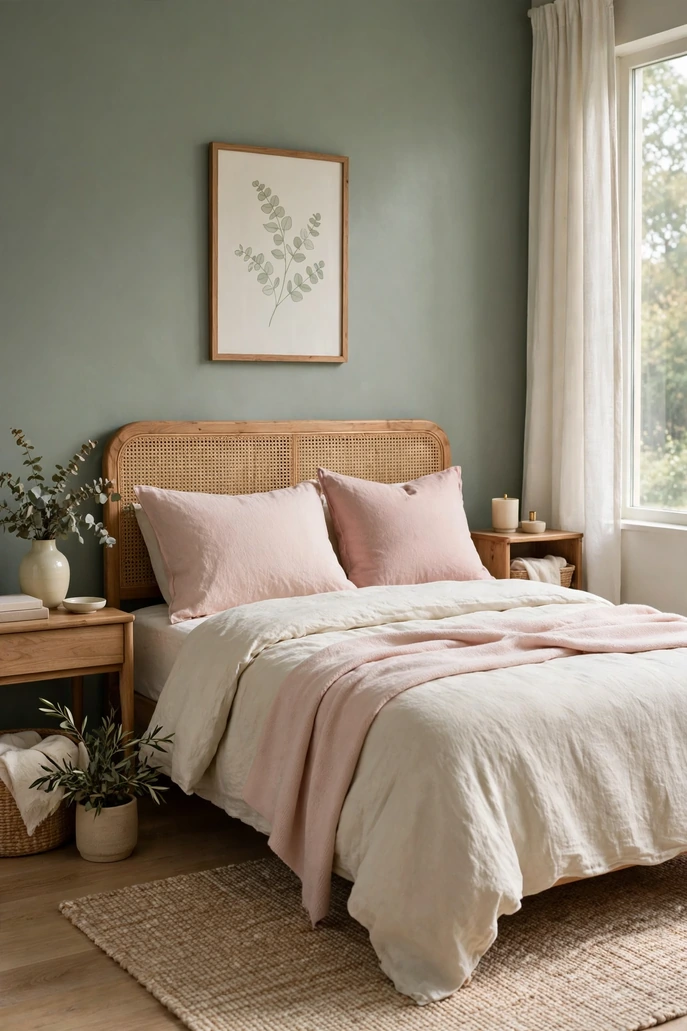
Sage and blush pink are a classic romantic pairing because pink is the softer cousin of the complementary red that sits opposite green. Use blush in textiles: a throw, a pair of pillows, or a lampshade. The two colors together feel gentle and feminine without being sugary.
If pink feels too sweet, try a warm apricot or a pale clay instead. They sit in the same soft, warm family and keep the room gentle without the sugary edge.
Keep it balanced:
- Choose a dusty pink, not a bright one
- Use blush in two or three small items
- Add cream to link the two colors
13. Bring In Plants and Botanical Art
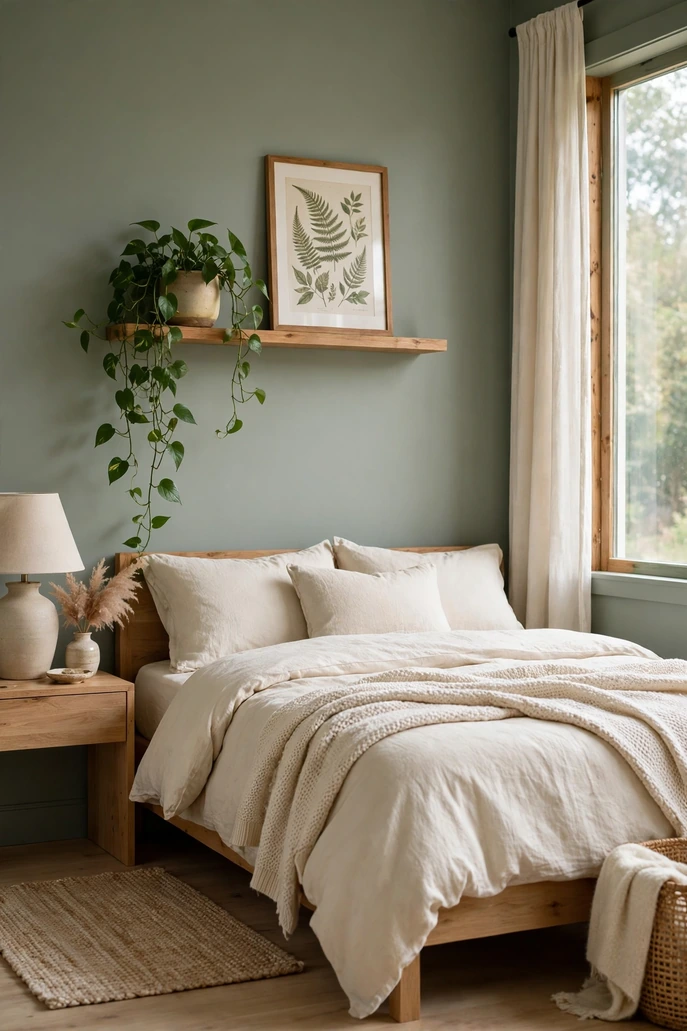
Sage looks like a leaf, so plants and botanical prints feel natural in the room. A trailing plant on a shelf, a branch in a vase, or a framed botanical print echoes the wall color and adds life. In a bedroom, choose low-maintenance plants that tolerate low light.
Plants also help with scale. A sage wall can read as one flat surface, and a tall plant or a trailing vine breaks it up and adds a living layer at different heights.
Tip: Check each plant for safety if you have pets before placing it by the bed.
14. Layer Cream Rugs and Textured Fabrics
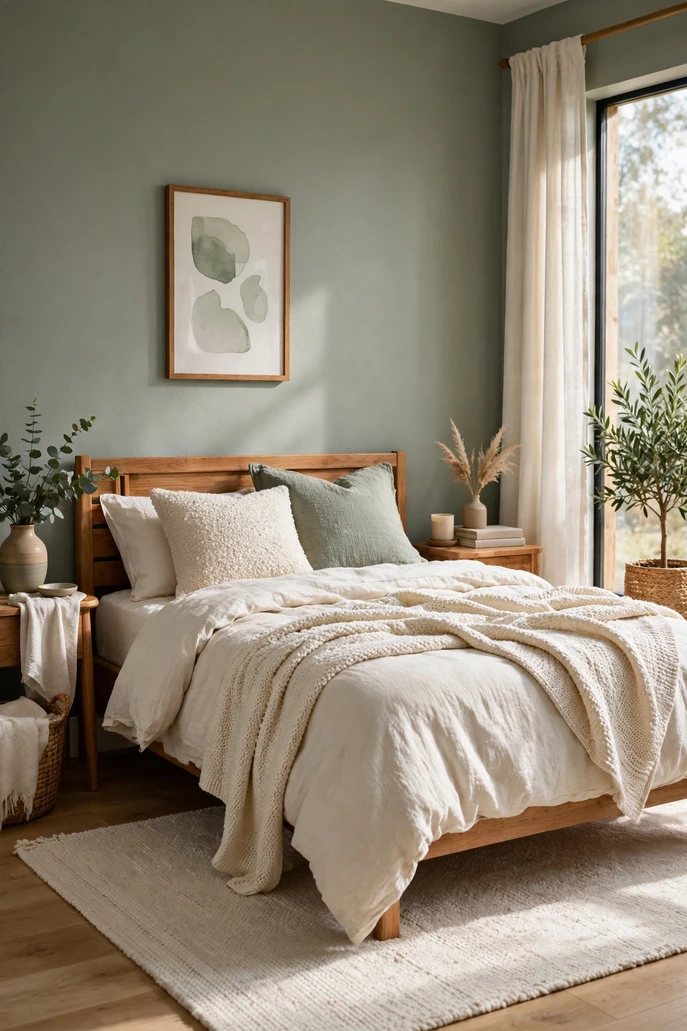
Sage is a flat, muted color, so texture does a lot of the work. A cream wool rug, a bouclé pillow, and a chunky knit throw add depth without adding color. Cream is warmer than white, and it blends with sage better than a stark white does.
Close your eyes and run your hand over the bed: rough linen, soft wool, nubby bouclé. A room that is pleasant to touch holds attention longer than one that is only pleasant to look at.
Formula: One rug, one bouclé or knit piece, one linen piece.
15. Paint the Built-Ins or Closet Doors Sage
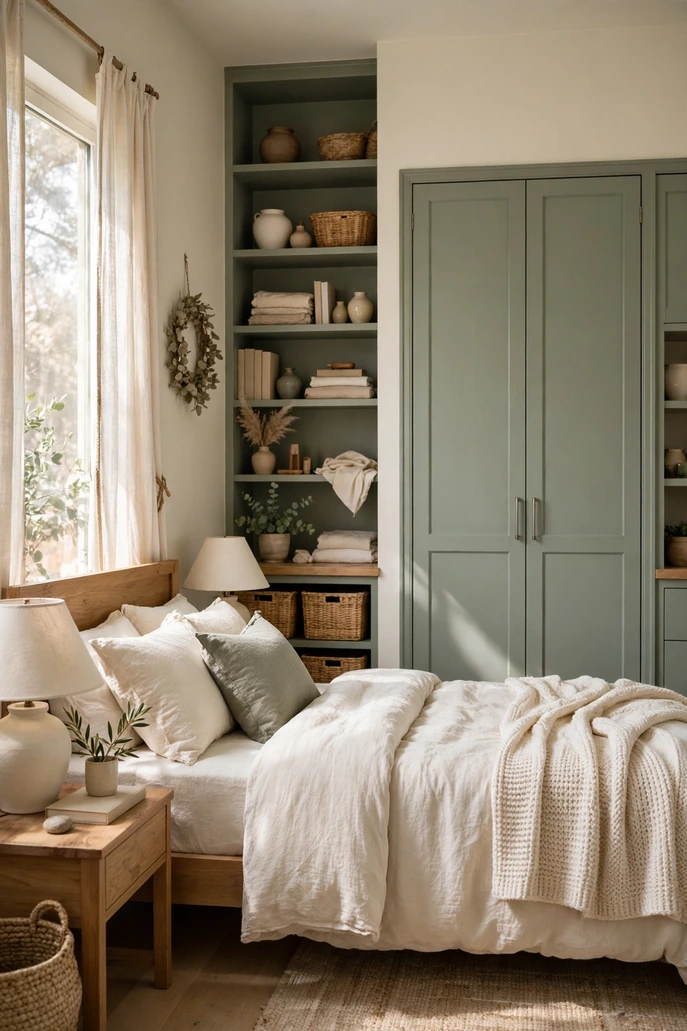
You can use sage in a smaller dose by painting the wardrobe doors, a built-in shelf unit, or a dresser. This gives the room a color anchor without wrapping every wall. It also hides bulky storage by blending it with the paint, which helps a small bedroom feel calmer.
This is also a gentle way to try sage if you only want to commit a small amount of paint. A painted wardrobe or dresser is easy to repaint later if your taste changes.
Tip: Use a durable, scrubbable paint on doors and furniture, because they are touched more than walls.
How to Choose Your Sage
If you want the quickest and cheapest change, start with bedding (idea 8) or curtains (idea 10). If you want a more permanent change, paint the walls (idea 1) or one accent wall (idea 4). If your room is small, pair sage with white (idea 2). If you want warmth, use wood, terracotta, or brass (ideas 3, 6, and 7). Always sample the shade in your room before you buy a whole can.
Sage is forgiving once the undertone is right, so pick one idea, live with it for a week, and add the next only if the room asks for it.


1 thought on “15 Sage Green Bedroom Ideas”