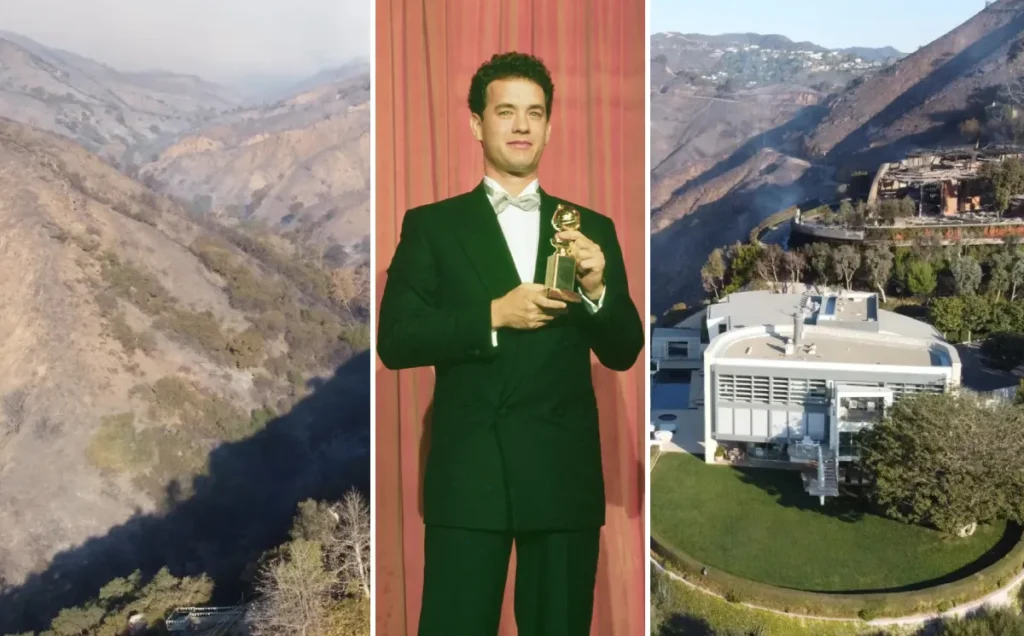
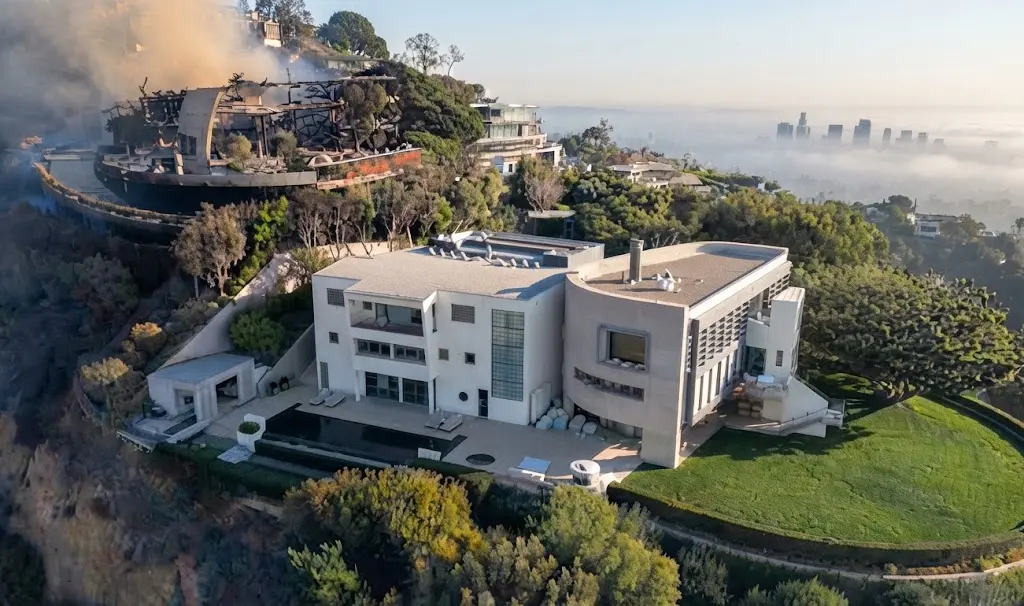
The cliffside Pacific Palisades mansion owned by Tom Hanks and Rita Wilson has long been a symbol of understated Hollywood success. But in early 2025, the property became a national symbol of something else entirely: improbable survival. After the catastrophic Palisades Fire destroyed more than 6,800 structures, aerial photos showed the Hanks‑Wilson compound standing intact and defiant amid a moonscape of ash.
The near‑miss was so dramatic that Hanks himself later addressed it on national television. “In memoriam… for the house that didn’t burn down,” the actor deadpanned during SNL50: The Anniversary Special, earning knowing laughter from an audience aware of how close the couple came to losing everything.
Beyond the headlines, this moment caps a deeper story about architecture, a changing climate, and the brutal new economics threatening California’s most desirable neighborhoods.
Two Palisades Houses, One Architectural Evolution
The 1929 Spanish Villa: Where They Began
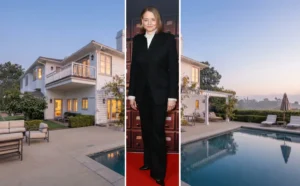
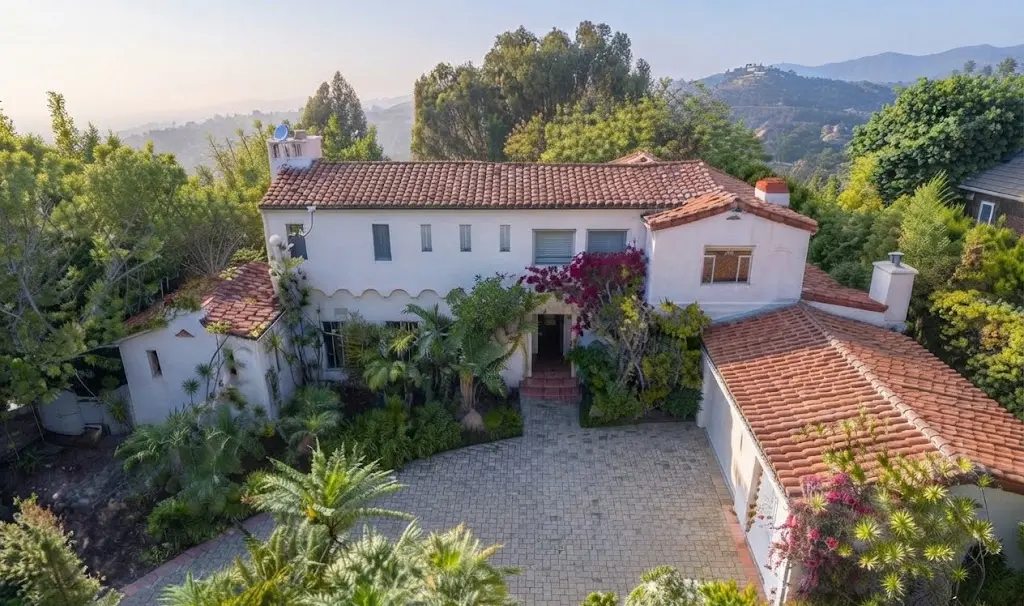
The couple’s first home in the neighborhood was a charming Spanish‑style villa, originally built in 1929. They purchased it as newlyweds, drawn to its warm character and handcrafted detail. After more than two decades of family life there, they sold the Wallace Neff‑designed property in 2014 for approximately $5 million. It was a home that belonged to a different era of Southern California — romantic, intimate, and full of decorative character.
The Modern Cliffside Compound: A Private Family Fortress
When Hanks and Wilson purchased their current estate in 2010, they moved toward something architecturally distinct. The main residence features a sleek limestone exterior that gives the property a clean, contemporary presence on the hillside. Rather than Mediterranean revival motifs, the design relies on natural materials and modern lines that let the ocean setting speak for itself. The aesthetic is refined without feeling cold — a balance that suits the couple’s well‑documented warmth.
The estate spans approximately 14,500 square feet across four bedrooms and five bathrooms. What exists today is less a single house than a private compound, with the main residence, guest quarters, and outdoor areas spread comfortably across the hillside. High ceilings and oversized windows pull in natural light and frame panoramic Pacific views, while the layout prioritizes flow between indoors and out — a hallmark of California residential architecture at its best.
- Architectural Style
- Spanish Revival (Wallace Neff)
- Size
- Charming 4‑bedroom footprint
- Character
- Warm, historic, ornate detail
- Fate
- Sold to a new owner
- Architectural Style
- Modern, limestone‑clad
- Size
- Approx. 14,500 sq. ft., 4 beds / 5 baths
- Character
- Sleek, open‑plan, ocean‑view focused
- Fate
- Survived the 2025 Palisades Fire
Living Spaces Designed for Family, Not Flash
Warm‑toned wood, natural stone, and a neutral palette layered with personal art and collected objects define the main living areas. Multiple fireplaces anchor the gathering spaces, and the open flow between the living room, dining area, and kitchen reflects a preference for relaxed entertaining over stiff formality. French doors and covered loggias connect interior rooms to terraces and gardens, allowing the house to breathe in a way that takes full advantage of the mild coastal climate.
Private Quarters and Entertainment
The primary suite includes a private sitting area, a fireplace, and a bathroom designed as a personal spa. Walk‑in closets and dressing areas accommodate a wardrobe that spans red‑carpet premieres to casual weekends at home. Additional bedrooms serve family members and visiting guests. A dedicated home theater caters to Hanks’ lifelong passion for cinema, and the compound includes a private gym that eliminates the need for off‑site workouts — a practical necessity for someone whose face is recognized everywhere.
An Anatomy of Survival: How the House Withstood the Palisades Fire
In January 2025, the Palisades Fire erupted and tore through the neighborhood with terrifying speed. Fueled by dry conditions and hurricane‑force Santa Ana winds, the blaze destroyed more than a thousand structures and forced approximately 180,000 residents to evacuate. It was one of several concurrent fires that struck the greater Los Angeles area that week, creating a cascading crisis across the region.
The Tom Hanks house made national news when photographs revealed it had narrowly survived the flames — a remarkable near‑miss given the scale of destruction surrounding it. The fire behavior that day was driven largely by flying embers, which can ignite homes from over a mile away. While no single factor guarantees survival, fire‑resistant building materials, clean rooflines, and defensible space around the structure likely played a role in helping the home endure while others were lost.
The Hilltop Destroyed: What Happened Next Door
The mansion situated directly above the Hanks’ property on the hillside was destroyed by the blaze. Staggering aerial images showed the Hanks‑Wilson estate standing intact amid scorched earth and leveled neighboring homes. The contrast underscored the razor‑thin margins that determine which houses survive a wildfire.
“The neighborhood I grew up in is burning to the ground rn. Pray for the Palisades.” — Chet Hanks
While Tom and Rita had purchased the current property when Chet was already an adult, the family’s broader history in Pacific Palisades — including their earlier Spanish‑style home — gave the loss a deeply personal dimension.
The Price of Resilience: The New Calculus of Luxury Real Estate
The survival of the Tom Hanks house isn’t just a story of luck; it’s a case study in the immediate financial whiplash following a disaster. The property’s value trajectory now tells a cautionary tale of California’s housing crisis.
From $9M Purchase to $26M Valuation — and Back?
When Hanks and Wilson acquired their current parcel in 2010, they paid approximately $9 million. Over the next 14 years, extensive custom development transformed it into a private compound, with pre‑fire estimates pegging its value at $26 million. That number represents a peak achieved in a fundamentally different market. Today, that valuation is theoretical. Here is the financial timeline the couple navigated:
- 2010: Purchased the land for $9 million and began major construction.
- 2014: Sold their original 1929 villa nearby for approximately $5 million, consolidating family life at the new compound.
- January 2025: The property survives a firestorm that erased billions in neighborhood value, but its “just‑survived” status makes it unsellable and unappraisable in the immediate term.
- 2026 and beyond: Future value will depend entirely on community‑wide rebuilding, fire mitigation infrastructure, and the return of an insurance market that can underwrite a hillside home.
The Insurance Nightmare: California’s Uninsurable Hills
The most significant threat facing the Hanks’ mansion isn’t the next fire — it’s the collapse of the insurance market that used to protect it. In the years leading up to the 2025 fires, major insurers had already stopped writing new policies in California and were non‑renewing thousands of existing ones, particularly in high‑risk zones like the Pacific Palisades. The fire dramatically accelerated this exodus.
Homeowners in the Palisades are now largely forced into the California FAIR Plan, a state‑mandated insurer of last resort that offers limited coverage at a high cost. A FAIR Plan policy typically covers the dwelling structure for fire but requires a separate “wraparound” policy for liability, theft, and other perils. The combined cost for an estate of this value would likely run deep into six figures annually — with no guarantee of full replacement coverage. This single issue, more than any flame, may determine the future of who can afford to live in these hills.
California FAIR Plan
A state‑mandated, privately funded fire insurance pool. It covers properties that cannot find insurance on the private market, often at a higher cost and with less comprehensive coverage than a standard homeowner’s policy.
Beyond the Palisades: The Full Hanks Real Estate Portfolio
The Pacific Palisades mansion is the Hanks‑Wilson family’s flagship property, but it’s far from their only address. The couple has maintained additional real estate that serves different purposes — weekend escapes, family retreats, and complete changes of scenery.
- Pacific Palisades, CA: Primary residence since 2010. A custom cliffside compound that blends privacy with ocean views.
- Northern California: Quiet retreat properties used for extended family gatherings and as a counterpoint to the Los Angeles pace.
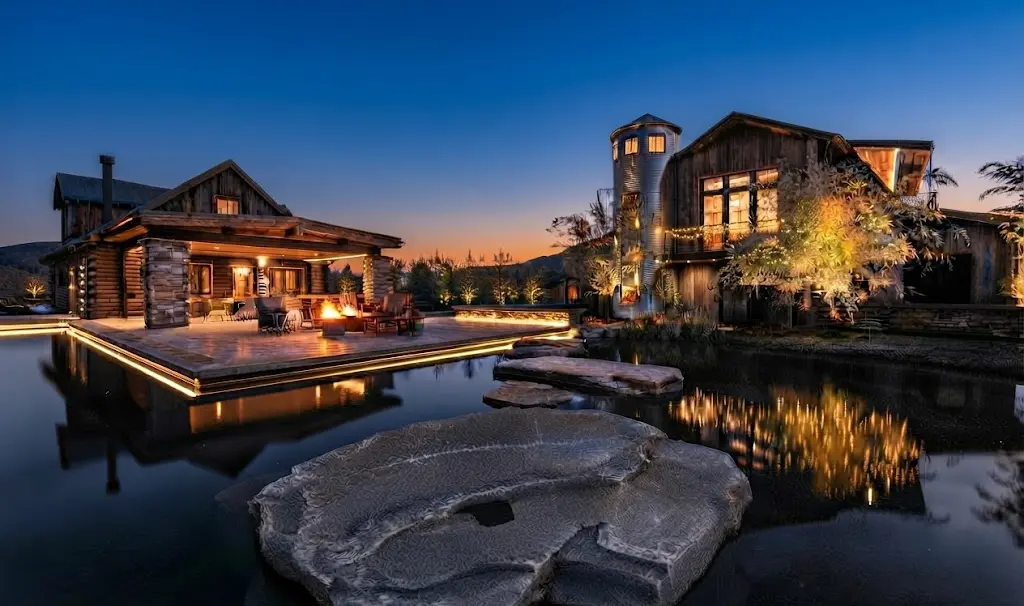
- Sun Valley, Idaho: A mountain home in an area long favored by Hollywood figures seeking anonymity and outdoor recreation. Here, Hanks can enjoy the outdoors with a level of freedom that coastal celebrity life rarely permits.

Conclusion
For years, the Tom Hanks house was defined by its architecture, its views, and the private life it sheltered. After the 2025 fire, it stands for something harder and more honest. The home is no longer just a real estate trophy or a celebrity showpiece — it is a survivor in a landscape that has been radically altered. Its future, like that of the entire Palisades, is tied to questions no view can answer: how to build back, how to insure against an angrier climate, and whether the simple idea of a dream home must now include the possibility of losing everything.
In that sense, the most impressive thing about the house isn’t its limestone facade or its ocean horizon. It’s that it still stands, and that the family inside still calls it home.