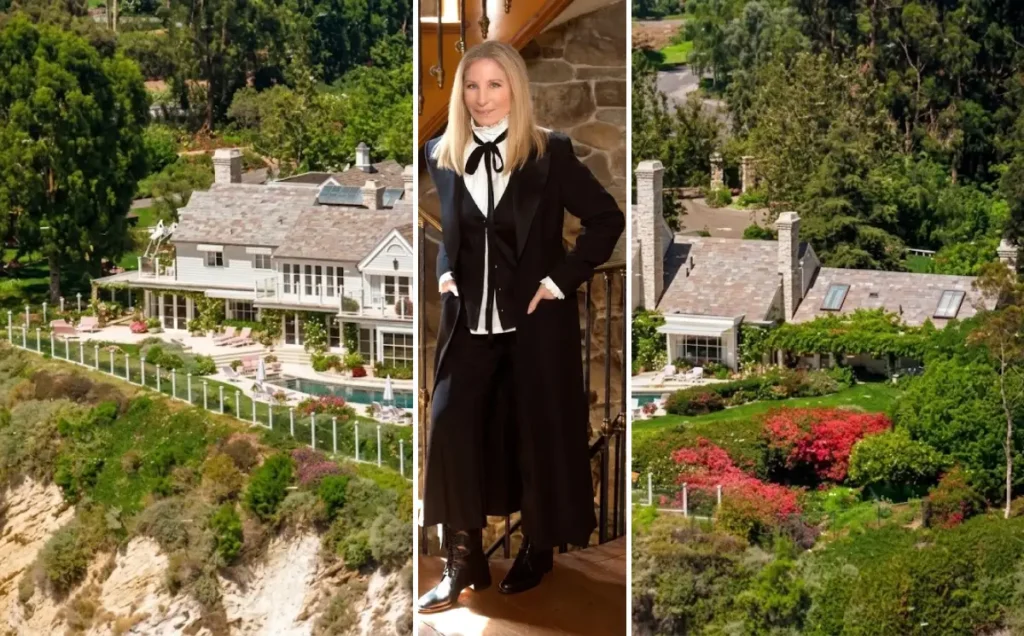
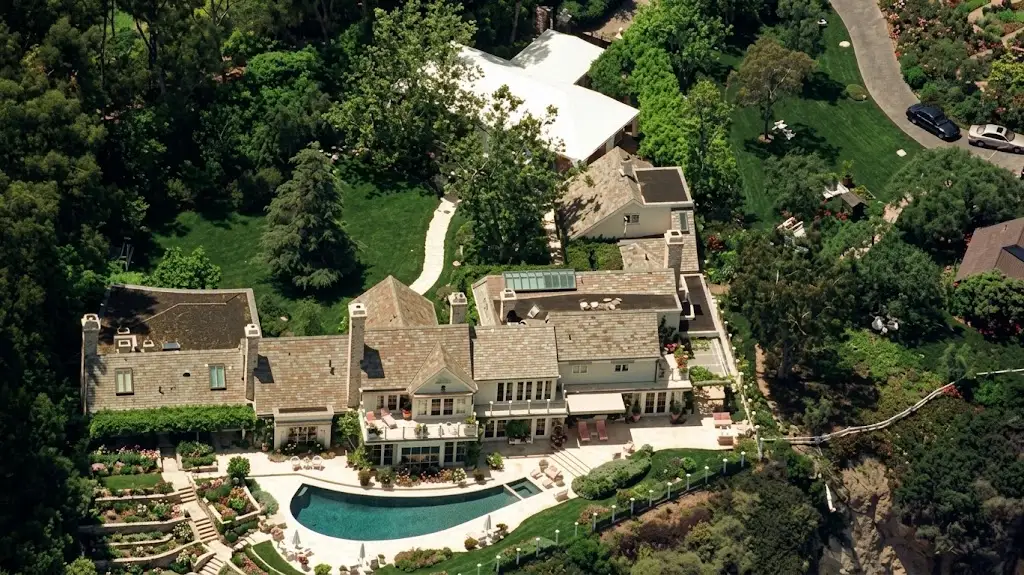
Perched on a Malibu cliff, Barbra Streisand’s dream house looks out over the Pacific that stretches like an endless blue carpet. It isn’t just a celebrity address — it’s one of the most thoughtfully built private estates in California. Streisand bought the roughly three-acre compound in the 1990s and has refined it ever since. It represents something rare: a world-famous artist bringing the same obsessive perfectionism to her home that she brings to every recording session and film set.
Streisand documented her design philosophy in her 2010 book My Passion for Design, offering rare insight into the mind behind the property. She guards her privacy fiercely — no magazine spreads, no reality TV tours — so what we know comes from that book, occasional interviews, and real estate analysis. And what we know is impressive. 2025 estimates place the estate’s value between $100 and $150 million, making it one of the costliest private homes in all of Malibu.
Here’s what makes the place worth that number — and why it tells you more about Barbra Streisand than any biography could.
Barbra Streisand’s Malibu Estate
| Owner | Barbra Streisand |
| Location | Malibu, California (clifftop, Pacific-facing) |
| Purchased | 1990s |
| Size | ~3 acres |
| Structures | Main house, primary guest house, “the barn,” music studio, screening/archive building |
| Architectural style | New England coastal (main house) |
| Estimated value (2025) | $100–150 million |
| Notable features | Antique furniture collection, Art Nouveau–inspired shop vignettes in the barn, ocean-view dining terrace (seats 24), private music studio |
| Recent upgrades | Smart-home systems (2024), enhanced security (2024), sustainable irrigation/rainwater collection |
| Design chronicled in | My Passion for Design (2010) |
Architecture and Design: No Trendy Minimalism Here
Forget the glass-and-steel boxes that dominate luxury California real estate. Streisand’s main residence takes its cues from New England coastal architecture: white clapboard siding, black shutters, pitched roofs. It looks like someone plucked it from a New England shoreline and set it gently onto the Pacific bluffs. The effect is disarming — formal without being stiff, classic without feeling dated.
The estate isn’t a single mansion, either. Garden pathways link a compound of connected buildings, almost like a miniature private village. Each structure serves a purpose: guest quarters, a music studio, her legendary “barn.” But they all speak the same architectural language. You move between them through landscaped walkways rather than sterile hallways, and every transition frames a different view of the coastline.
Streisand drove the design personally. She worked with architects but made countless decisions herself, from window placement to hardware finishes. In My Passion for Design, she describes a long wait: eleven years passed between first seeing the main house and finally buying it. That patience says as much about her design instincts as any finished room does. Her influences trace back to some of America’s most celebrated craftsmen — furniture makers and architects like Greene and Greene, Gustav Stickley, and Charles Rennie Mackintosh. Their emphasis on honest materials and handmade detail shows up throughout the property. “I want to live in a house that feels like me,” she told Architectural Digest. That sentence captures the entire philosophy behind this place. No design team delegated or rubber-stamped these choices. The result feels unmistakably personal — not decorated, but composed.
A Room-by-Room Walk Through the Main House
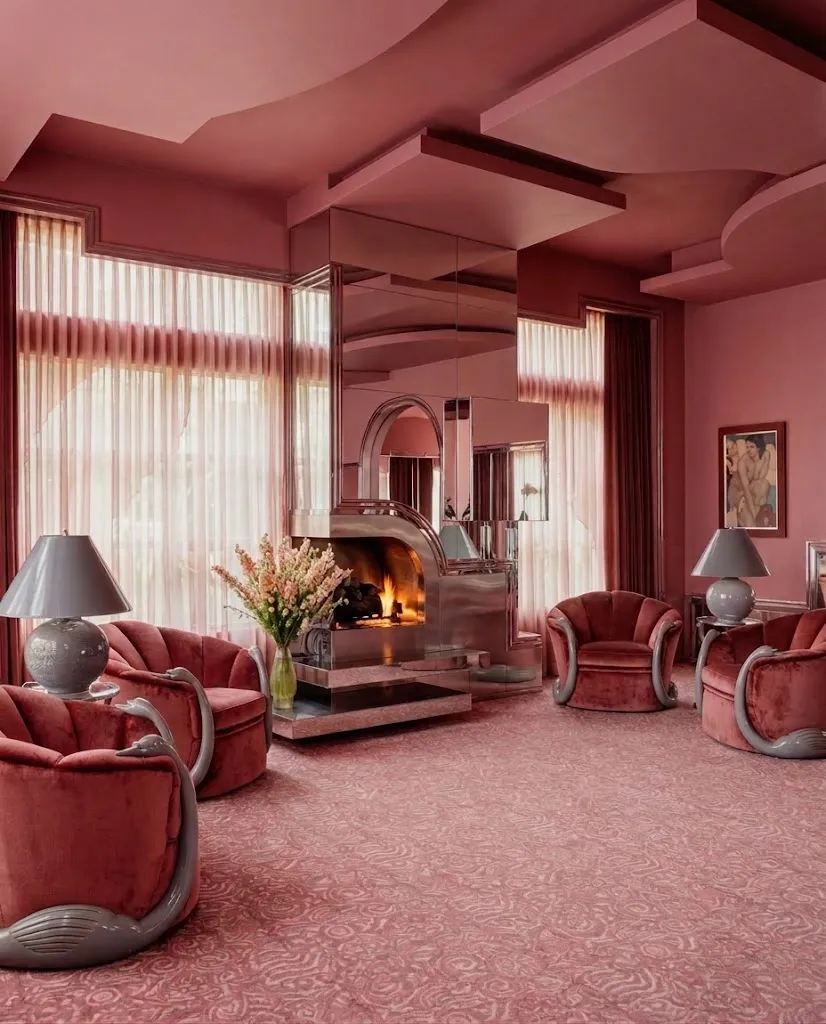
- The living room anchors the main residence with oversized windows that frame the Pacific like living paintings. The seating invites actual conversation, not showpiece posturing — deep sofas, well-worn antiques alongside modern comfort pieces. Streisand has a gift for mixing 18th-century American furniture with contemporary textiles without the room looking like a period exhibit or a furniture showroom. It looks like someone lives here, enjoys it, and has strong opinions about throw pillows.
- The kitchen leans into country aesthetics — think farmhouse warmth with commercial-grade capability hiding behind custom cabinetry. A breakfast nook overlooks the ocean, turning a Tuesday morning coffee into something cinematic. It’s designed for real cooking, not just staging, which tracks with Streisand’s known love of domestic life.
- The primary suite sits in the best position on the property for light, capturing morning sun and late golden-hour glow over the water. Built-in storage keeps the rooms clean and uncluttered. The bathroom features a soaking tub that faces the ocean, because at this level, even self-care comes with a horizon line.
- The home theater seats about 20 but skips the windowless-dungeon approach. Windows with blackout shades let the room double as a bright sitting area between screenings. Given Streisand’s directorial career — The Prince of Tides, The Mirror Has Two Faces — her screening room fittingly feels more like a personal cinema than a private AMC.
2024 updates brought smart-home systems throughout the house: discreet touch panels and voice-activated controls for lighting, climate, security, and entertainment. The technology stays invisible unless you’re looking for it, which is exactly how Streisand wants it.
Grounds, Gardens, and Cliffside Views
The gardens unfold in distinct “rooms,” a design approach borrowed from European estate planning but planted with native California species alongside drought-tolerant ornamentals. Stone pathways connect these zones, and each carries its own mood — some open and sun-drenched, others sheltered and intimate. Streisand has spoken about the streams running through the property in similarly personal terms. She had them built specifically because she finds water soothing, and today it surrounds her on three sides.
The clifftop setting means nearly every outdoor space carries ocean views. Multiple terraces and seating areas catch different angles of light throughout the day. A covered outdoor dining area seats 24 guests with the Pacific as a backdrop — the kind of dinner party setting that makes professional event planners jealous.
The swimming pool sits in a wind-sheltered pocket of the property. Rather than competing with the ocean, it plays a supporting role: clean lines, natural stone decking, no flashy infinity edges or resort-style theatrics. Changing rooms sit nearby, so nobody has to trek back to the main house for a towel.
Streisand has invested heavily in sustainable landscaping in recent years. A high-efficiency irrigation system and rainwater collection infrastructure keep the grounds lush while cutting water waste, a genuine concern in Southern California’s drought cycles. These aren’t performative green gestures. They’re functional systems that maintain three acres of gardens responsibly.
Smaller, private garden spots sit tucked throughout the property — alcoves designed for solitude. The rose garden in particular carries a near-spiritual weight for her. She’s described retreating there simply to slow down and take in the scent of the flowers. It balances the grand views and entertaining spaces with something quieter. A person who spends her working life in front of 20,000-seat arenas needs corners where nobody’s watching.
Collections and Decor: The Antiques Obsession
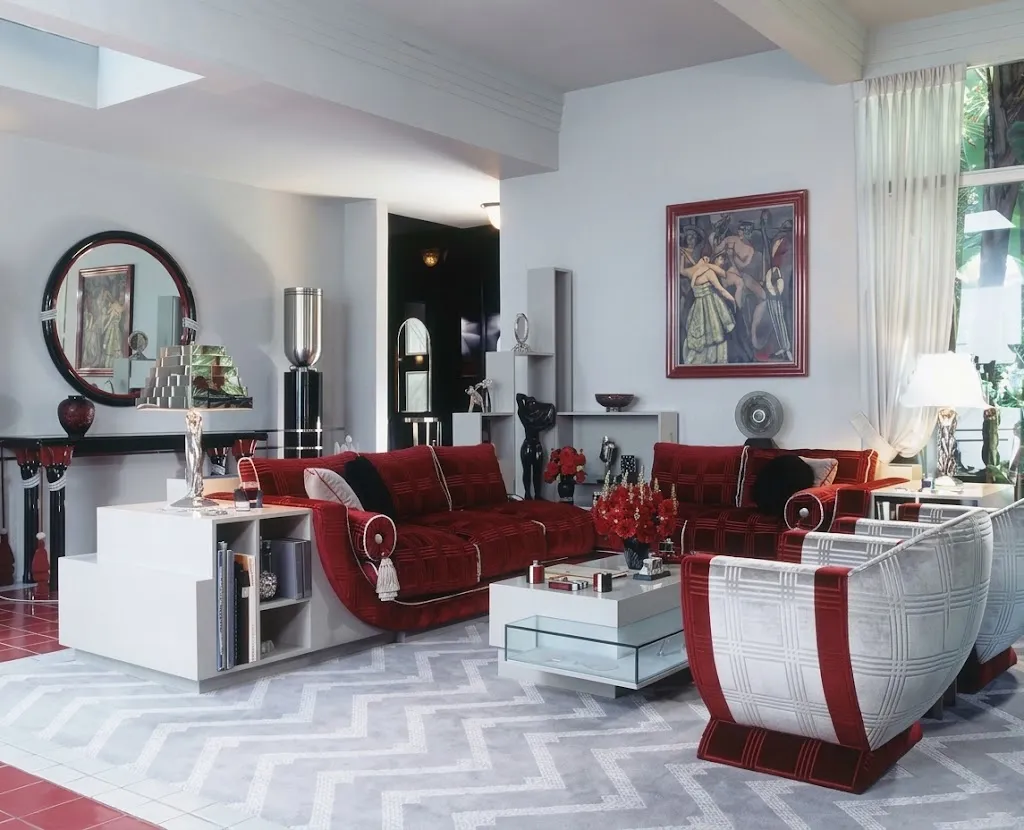
Streisand’s collecting habits are well documented, and the Malibu estate is where those passions live. American folk art fills rooms alongside contemporary paintings, creating conversations between centuries. She doesn’t isolate pieces in temperature-controlled glass cases. She puts them where you can touch them, walk past them, live with them.
Her collection of 18th- and 19th-century American furniture ranks among the finest in private hands. Many pieces carry documented provenance, traced back to historical homes, estate sales, and major auction houses. She values original finishes and authentic construction over pristine restoration, a preference that separates serious collectors from casual decorators.
Where antiques can’t do the job — modern comfort requirements, updated proportions — she commissions custom furniture that mirrors historical forms. These pieces borrow proportions and joinery techniques from period originals. But they add the padding, depth, and ergonomic details that 200-year-old chairs weren’t built to provide.
The color palette throughout leans earthy: ocean blues, sandy neutrals, soft greens. She often has textiles custom-woven to her specifications. Streisand favors monochromatic schemes room by room, layering different textures of the same color rather than mixing prints. She finds that a quieter palette is easier to actually live in and talk over. The effect across rooms feels cohesive without feeling themed — each space has its own character, but nothing clashes.
A more recent shift: since 2023, Streisand has collected work by emerging female artists, adding contemporary energy to rooms dominated by historical pieces. It’s a small but telling detail. Even in her 80s, her eye keeps moving forward.
The Guest Houses, the Barn, and the Studio
The Guest House
The primary guest house stands as a self-contained residence with two bedrooms, a full kitchen, and its own living areas. Guests get real privacy — not a bedroom off the main hallway but a separate building with its own entrance and identity. The architectural style mirrors the main house at a more modest scale. Here, in a room Streisand calls informal, she sometimes sets up a microphone and a music stand to record. She’s mentioned working on songs in this space with artists like Tony Bennett and Barry Gibb, saying she likes having the ocean in view while she sings.
“The Barn”
Then there’s “the barn.” This is probably the most talked-about structure on the property and the one that best reveals who Streisand really is. From the outside, it resembles a traditional New England barn. Inside, it holds a series of miniature themed shops — curated vignettes that display her antique collections as if you were walking down a historic village street. It’s eccentric, deeply personal, and completely delightful. Most celebrities who collect art hide it behind gallery walls. Streisand built a fantasy Main Street instead. The barn theme runs deeper than décor, too. She’s said she’s always loved barns for how American they feel. True to the bit, she keeps hens nearby that lay green eggs, and a small fish pond holds black-and-white fish chosen specifically to match the barn’s red, black, and white color scheme.
The Music Studio
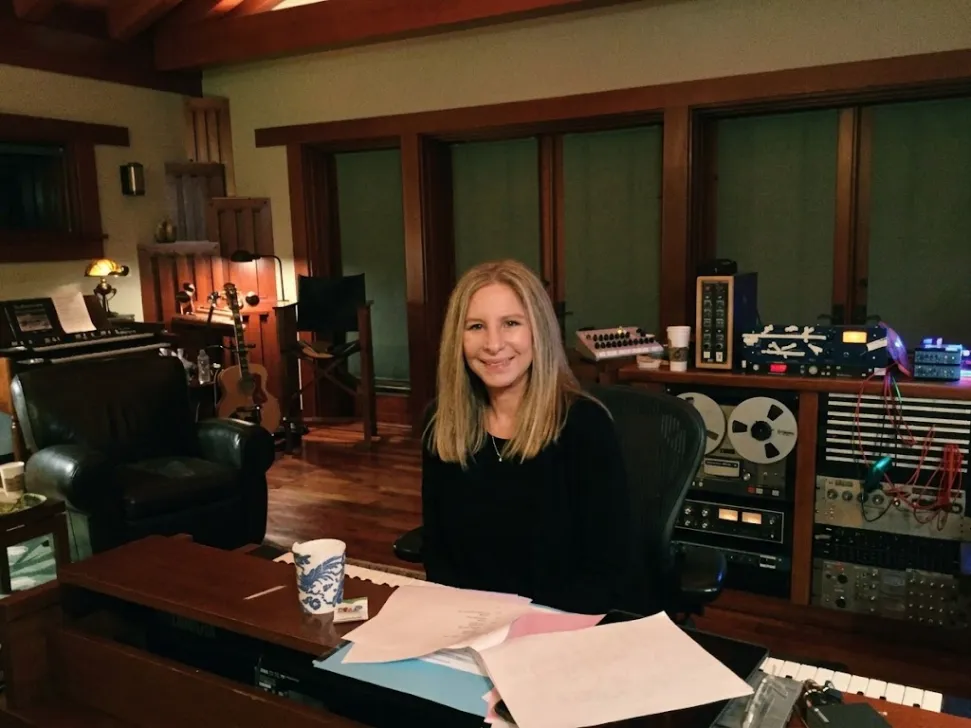
A purpose-built music studio on the property features professional acoustics and recording equipment. She’s used it for sessions on several recent albums, skipping the need for commercial studio bookings. A lounge area accommodates musicians and engineers during long sessions — practical comfort for people who work long hours.
The Screening and Archive Building
A separate screening and archive building offers climate-controlled storage for films, recordings, costumes, and memorabilia spanning her entire career. This isn’t vanity preservation. It’s a serious archival effort that protects irreplaceable cultural materials.
Together, these structures create a self-sufficient world. Streisand can record, screen, entertain, garden, collect, and retreat, all without leaving the property.
Privacy and Security
Privacy isn’t an afterthought here. It’s a foundational design principle. The clifftop position creates natural separation from the beach and neighboring properties. Strategic landscaping blocks sightlines from adjacent lots while preserving Streisand’s own views.
Security infrastructure uses current technology but stays visually invisible. The architecture and plantings integrate motion sensors, cameras, and monitoring systems. A central security station lets staff oversee the full property, and the gated entrance includes a 24-hour guardhouse. All visitors need pre-approval.
A 2024 security upgrade added advanced detection capabilities while reducing the systems’ visual footprint. Streisand also worked with consultants on wildfire protection, an increasingly critical concern for Malibu estates. Measures include enhanced fire detection, private water reserves, and evacuation protocols for both people and irreplaceable collections.
What’s the Estate Actually Worth?
Streisand’s dream house ranks among the most valuable private residences in Malibu. Current valuations hover between $100 and $150 million. A rare combination drives that number: three acres of oceanfront land, multiple architecturally significant structures, world-class collections, and decades of meticulous maintenance.
The size pushes the price into record territory. Most Malibu oceanfront lots cover a fraction of an acre. Three acres on the bluff, with multiple buildings, established gardens, and unobstructed Pacific views, is essentially unfindable on the current market.
Ultra-luxury Malibu properties have held their value even during broader market dips. Several recent sales have crossed the $50 million mark, but nothing comparable to Streisand’s compound has come up for sale. If it ever hit the market, real estate professionals expect it would set a new benchmark for the area.
What the House Says About Barbra Streisand
Long before she could afford any of this, Streisand’s instinct for shaping a space was already there. She’s spoken about her pre-fame years, when she had no money to buy real art. So she’d buy old picture frames and hang them empty on white walls, framing nothing but space because she found it beautiful anyway. That impulse — dressing a room with intention rather than just money — still runs through the Malibu compound decades later.
The compound reads as a physical autobiography. Every room, every collected object, every garden path reflects choices Streisand made personally over the course of decades. It carries the same DNA as her best recordings: exacting taste, emotional intelligence, and a refusal to settle for easy or conventional.
Her deep appreciation for American history and craftsmanship runs through both her music and her home. Traditional American songs sit alongside modern material in her repertoire, just as 18th-century furniture shares space with contemporary art in her living room. The parallel isn’t accidental.
Career memorabilia — awards, gold records, photographs with fellow artists and political figures — appears throughout the house. But the design integrates these pieces rather than displaying them as trophies. Family photos share shelf space with industry artifacts. Professional and personal life aren’t separated here; they coexist naturally.
“My home is my most complete creative statement,” Streisand has said. That line reframes the entire estate. It’s not a purchase or an investment or a status symbol. It’s her most sustained work of art, a three-dimensional self-portrait assembled over 30 years.
Before the Cliffside Compound: Streisand’s Real Estate Journey
The clifftop estate isn’t the first home Streisand poured herself into. It’s the product of decades of trial, error, and increasingly personal design choices across several very different properties.
Her first serious foray into real estate came in 1970, a year after she won the Best Actress Oscar for Funny Girl. She bought a six-story Art Deco townhouse on Manhattan’s Upper East Side. It was a striking building with real architectural pedigree, but she kept it for only two years. That was an early sign that for Streisand, a house had to feel entirely like her own to hold her interest for long.
That instinct played out on a much bigger scale a few years later. In 1973, with then-partner Jon Peters, Streisand began building out a sprawling compound in Malibu’s Ramirez Canyon. She’d own the property for two decades before donating it to the Santa Monica Mountains Conservancy in the 1990s. It grew to include several distinct houses, each reflecting a different chapter of her taste: a rustic main house known, fittingly, as “The Barn“; a Mediterranean-style residence called the Peach House; and a separate Deco House, filled with period Art Deco furniture and Tiffany glass. Architectural Digest eventually featured the Deco House, and Christie’s later auctioned its contents for several million dollars.
Looking back, that earlier chapter foreshadows a lot about the estate she’d eventually build on the bluffs. The same pull toward a barn as a centerpiece structure shows up again. So does the same instinct to let a house hold and display a serious collection rather than store it away, and the same need for a property large and private enough to contain every side of her at once. The Ramirez Canyon years were the rehearsal. The current compound is the finished piece.
How the Malibu Estate Compares to Her Other Properties
Streisand also maintains a New York apartment that keeps her connected to the theater world where she started. The contrast between the two properties is striking. The New York space feels polished, urban, and more contemporary in style — a refined city base rather than a personal universe.
The Malibu estate is where she spends most of her time, especially in recent years. Its scale lets her pursue every interest under one roof: music, film, design, gardening, collecting. No other property in her portfolio has received this level of sustained creative attention — not the brief Manhattan townhouse chapter, not even the elaborate Ramirez Canyon compound that came before it. Of everything she’s owned, this is the one that’s most fully her.
What Happens Next?
Streisand hasn’t publicly discussed long-term plans for the estate. Family ties run deep — her children and grandchildren have spent years enjoying the property. Whether it stays in the family or eventually sells is a private matter.
Her design vision is already preserved, documented in My Passion for Design and in the property itself. Architectural historians have noted its significance as an example of traditional American design adapted for contemporary living, a rare achievement at this scale.
Recent sustainability upgrades — water conservation, wildfire resilience, climate-conscious infrastructure — have also future-proofed the estate against the environmental realities facing coastal California.
Whatever comes next, the compound endures as something unusual in celebrity real estate: a home that’s genuinely about living, not performing. Streisand built a place that reflects who she actually is, not who the public imagines her to be. That’s the rarest feature of all.