

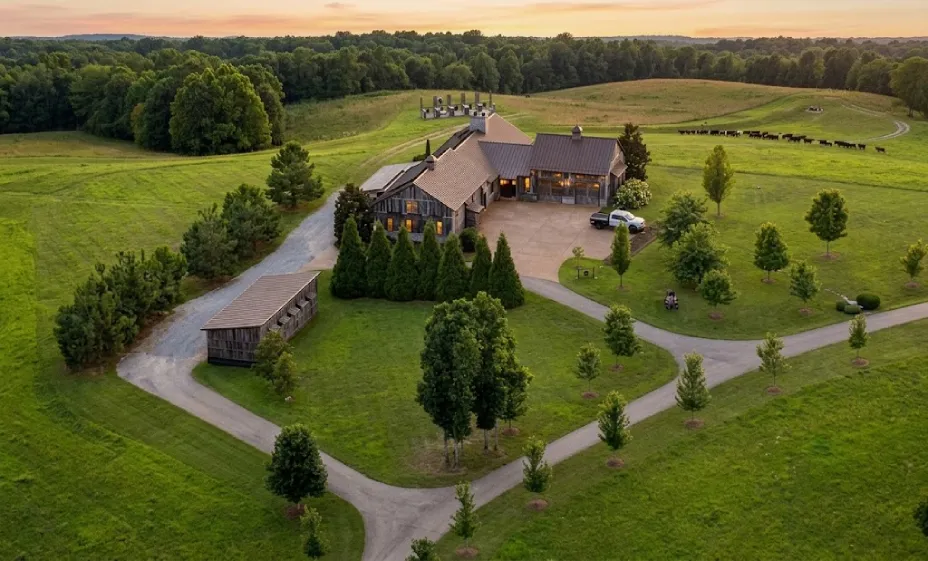
The Carrie Underwood house sits on 400 acres of rolling countryside in Franklin, Tennessee, just south of Nashville. The country star and her husband, Mike Fisher, designed this custom-built modern farmhouse themselves. They bought the land in 2011 for roughly $3 million, spread across two separate transactions. They’ve raised their two sons, Isaiah and Jacob, here ever since moving in back in 2018. A crisp white exterior, warm wood accents, and floor-to-ceiling windows give the place a look that’s part rustic barn, part architectural showpiece.
What makes the home stand out isn’t just its size. It deliberately avoids feeling like a celebrity mansion. High ceilings, neutral tones, and exposed wood beams keep things grounded. A wood-burning fireplace anchors the great room, which doubles as the family’s main gathering spot after a day on the property.
Outside is where the estate really earns the word “farm.” A swimming pool handles Tennessee’s brutal summers. A covered patio hosts family gatherings. The family’s dogs and horses roam open land without ever running out of room. Add in a private lake, mature trees, and gardens that change with the seasons, and it starts to feel less like a backyard and more like its own small world.
Underwood and Fisher picked Franklin specifically for the privacy it offers while staying close to Nashville’s music scene. The area’s hills and open farmland gave them exactly the kind of setting they wanted for raising their kids — quiet, rural, and about as far from a red carpet as you can get while still being twenty minutes from one.
From American Idol Winner to Franklin Farm Owner
Underwood’s path to this property started in 2005, when she won the fourth season of American Idol. That win didn’t just launch a career. It set the tone for the next two decades. Songs like “Before He Cheats” and “Jesus, Take the Wheel” turned her into one of country music’s defining voices, and the hits kept coming from there.
She’s since picked up eight Grammy Awards and released a string of platinum albums. That success eventually funded the 400-acre estate she and Fisher spent years designing. Going from a childhood in Checotah, Oklahoma to owning a farm this size says a lot about how far her career has traveled — though notably, she never really left the farm-girl instincts behind.
Fisher brought his own roots to the partnership. The two married in 2010. Before settling in Franklin, they’d already shared a home in Ottawa during his final playing years — a much different backdrop from the sprawling Tennessee land they’d eventually make their own.
In 2026, Underwood returns for her second season judging American Idol, sitting alongside Luke Bryan and Lionel Richie for the show’s 24th season on ABC. She joined the panel in 2025, replacing Katy Perry, and became the first former Idol winner to sit behind the judges’ table. Her Las Vegas residency, “Reflection,” has also continued drawing crowds, adding another steady stream to a career built on constant reinvention.
The Franklin property reflects both sides of that story — the ambition that built her career and the roots she’s never quite let go of. Plenty of artists at her level buy a mansion in the hills of LA or a penthouse in Nashville. Underwood bought 400 acres and put in a chicken coop.
Inside the Modern Farmhouse
Walk through the front door, and the open floor plan does a lot of the talking. Big windows flood the main living spaces with light. A neutral palette — whites, warm woods, soft grays — keeps every room feeling calm rather than cluttered.
The exterior leans just as hard into the farmhouse identity. A steep gabled roofline, finished in cedar shake shingles, sits above crisp white lap siding — the kind of clapboard look that’s defined Southern farmhouses for generations. A wraparound porch and double-hung windows complete the effect, giving the home a lived-in, welcoming feel before you even step inside. Rather than a single boxy structure, the house unfolds as a series of connected volumes. This breaks up the massive footprint and creates more intimate outdoor spaces between sections.
The great room is the showpiece. Soaring ceilings, exposed beams, and that signature wood-burning fireplace make it the obvious gathering point for the family. The furnishings lean comfortable over formal — this is a house meant to be lived in, not just photographed. Tongue-and-groove paneling carries the exterior’s wood tones inside, tying the whole home together visually.
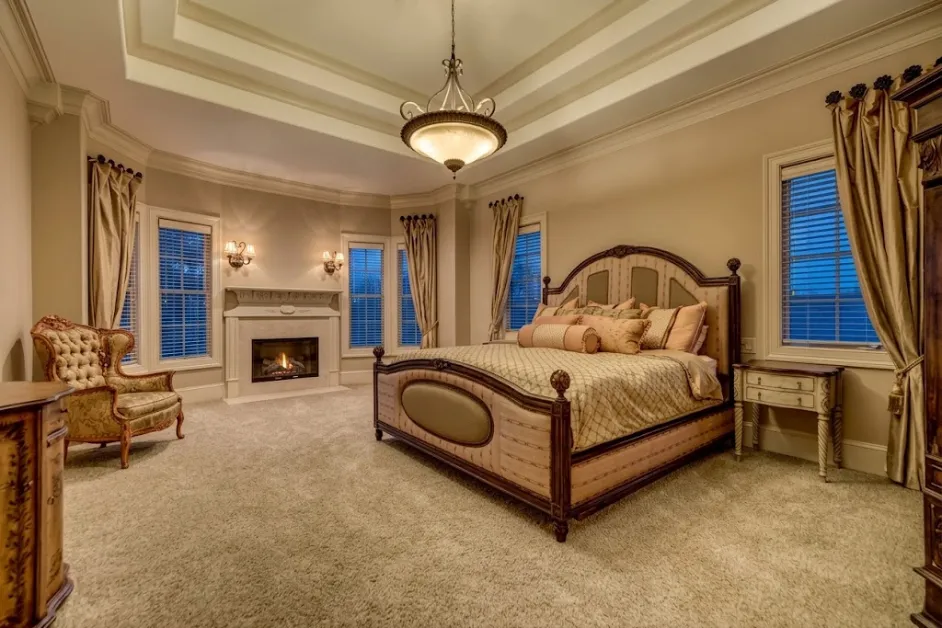
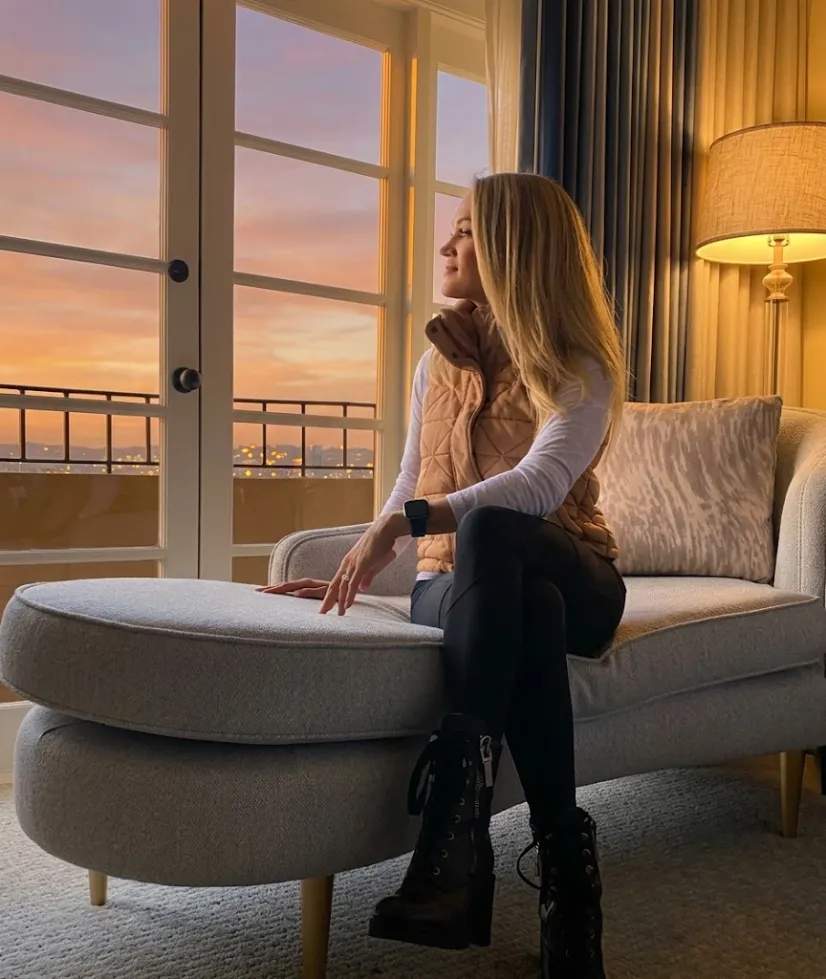
The primary suite functions as a genuine retreat. It includes a spacious bedroom, a walk-in closet fitted with a built-in island (complete with a washer and dryer), and a bathroom finished with heated marble floors — a small but welcome detail during Tennessee winters. Floor-to-ceiling windows open onto a private terrace overlooking the estate, echoing the wraparound porches of traditional Southern farmhouses.
The kitchen ties it all together. Custom cabinetry, a stone backsplash, and a large island give it both function and character. High-end appliances keep it practical for a family that actually cooks. It’s the kind of space built for real use, not just for show.
The Outdoor Living Spaces
With 400 acres to work with, the outdoor areas of the property do a lot of heavy lifting. Rolling hills stretch out in every direction, giving the family a changing backdrop depending on the season — green and lush in summer, gold and quiet in fall.
The pool area suits entertaining as much as relaxing. A patio wraps around it, with enough seating for family meals outside during warmer months. Landscaping keeps the pool blended into the surrounding property rather than looking like a bolted-on addition.
A covered patio handles the rest of the entertaining, giving the family a spot to host regardless of weather. Outdoor cooking setups and fire pits round things out, making the space just as functional for a quiet evening as it is for a bigger gathering.
Then there’s the land itself. A private lake gives Fisher and the boys a spot to fish, something he’s talked about enjoying with his sons. The setup goes well beyond a simple dock — canoes and a fishing boat sit ready at the water’s edge, alongside a large inflatable slide the kids can jump straight into. Mature trees and planted gardens add texture throughout the property, turning what could’ve just been open farmland into something closer to a nature retreat.
A Working, Self-Sufficient Farm
Growing Their Own Food
Underwood and Fisher haven’t just decorated their property to look like a farm. They’ve built one that actually produces food. An orchard on the grounds grows apples and peaches, and the family regularly harvests fruit together during the season. Underwood, who has been vegetarian for years, takes an especially hands-on role in the growing side of things. She tends vegetables, herbs, and even mushrooms alongside the orchard fruit.
In February 2024, the family added a 16-by-28-foot greenhouse to extend their growing season through Tennessee’s colder months. By December of that year, it had already produced its first citrus harvest — mandarins, with limes not far behind. Underwood has shared glimpses of the greenhouse on social media more than once. She’s clearly proud of what it’s turned into, including experiments like Italian tromboncino squash that she’s grown from seed with what she’s cheerfully called a fairly hands-off approach to gardening.
The Animals
A chicken coop supplies fresh eggs daily, something Underwood has said matters to her as a way of knowing exactly where her family’s food comes from. It’s also become a hands-on lesson for Isaiah and Jacob, who help care for the birds. The coop is just one part of a broader menagerie that’s grown over the years. Sheep, ducks, and donkeys now share the land with the horses, each added as the family leaned further into working the property rather than just living on it.
Fisher also surprised Underwood with two cows as a holiday gift. Between the orchard, the chickens, the sheep, the cows, and the horses, the estate has become a genuine working farm — not just a backdrop with animals for photos.
A Celebrity Home That Doesn’t Act Like One
For someone with Underwood’s level of fame, the house is notably restrained. The farmhouse design leans into current architectural trends without losing the traditional elements that make it feel authentic rather than staged.
Natural materials — wood, stone, worn textures — do most of the decorative work. Furnishings favor comfort over formality, and personal touches throughout make it clear this is a family home first and a showpiece second.
Practical details back that up. Mudrooms handle muddy boots after farm chores. Durable finishes hold up to two young boys and daily farm life. Storage sits built in everywhere it’s needed. None of it reads as decorative — it reads as a house that actually gets used.
Privacy is baked into the design too. The remote setting keeps the property naturally secluded. Landscaping blocks sightlines from the road, and security systems give the family peace of mind when they’re traveling for work. It’s what lets them live something close to a normal life despite Underwood’s profile.
Family Life on the Farm
Between touring, recording, and now judging American Idol, Underwood’s schedule doesn’t leave much room to spare. That makes the time she does spend at the Franklin property count for more. The land gives the family plenty to do together, whether that’s farm chores or just sitting outside.
Two Very Different Worlds
The house functions as a genuine reset after the demands of public life. Underwood has described the contrast in fairly blunt terms. She jokes that she goes from feeling like a princess on stage to coming home and getting thoroughly dirty with farm chores — cleaning up after everyone, working barefoot in the kitchen, and not minding a bit of mess along the way. She’s said the two versions of her life feel essentially opposite, and that touring never quite felt like “real life” to her the way home does.
Fisher, a former NHL player who spent his career with the Ottawa Senators and Nashville Predators, shares Underwood’s pull toward this kind of lifestyle. Fishing on their private lake with Isaiah and Jacob is one of the ways he’s described spending time at home. The couple has also talked about splitting the work that keeps a property this size running.
The two have found their own way to balance different relationships with the land itself. Fisher enjoys hunting, and the property includes a rustic hunting lodge for it. Underwood’s vegetarianism and love of animals sit on the opposite end of that spectrum. Rather than clash over it, the couple struck a compromise: Fisher sticks mainly to game he’s hunted himself rather than buying meat. It’s a middle ground that lets both of their values coexist on the same land.
Raising Grounded Kids
For Isaiah and Jacob, growing up here means something different from a typical childhood — feeding chickens, harvesting fruit, learning where food actually comes from. Underwood has been deliberate about keeping that upbringing as ordinary as possible despite her career. She’d rather her sons see her doing everyday mom things — school runs, packing lunches, cooking dinner most nights of the week — than think of her in terms of fame. She’s mentioned feeling genuinely pleased when her older son once described her job simply as “doing laundry,” taking it as a sign she’d managed to keep him a little removed from the spotlight. Despite their parents’ fame, the boys’ day-to-day at the farm sounds a lot like any other kid’s, just with more acreage.
The Money Behind the Property
An estate this size doesn’t come cheap. Underwood’s ability to fund it traces back to several income streams built over two decades. Album sales and streaming royalties form the foundation, with hits from her catalog still generating steady revenue years after release.
Her Las Vegas residency, “Reflection,” has been a major contributor too. It draws large crowds and stands as one of the more successful residencies by a woman in country music. Combined with occasional tours, live performance remains one of her biggest earners.
Television has added another layer. Her role judging American Idol keeps her visible to a broad audience and comes with its own paycheck, on top of the exposure it brings to everything else she does.
Beyond music and TV, the farm itself has quietly become part of her brand. Glimpses of the greenhouse, the orchard, and the animals on social media tie into a broader lifestyle image. That image has helped support endorsements and related business ventures — all of which, together, made a property like this possible in the first place.
Conclusion
The Franklin property isn’t finished evolving. The greenhouse addition in 2024 signaled a real interest in expanding self-sufficient living. It wouldn’t be surprising to see more sustainable features arrive as the family leans further into farm life.
For now, it’s the backdrop for the family’s biggest and smallest moments alike — birthdays, holidays, ordinary weekday evenings. Underwood shares pieces of that life on social media regularly, giving fans a window into a side of her that has nothing to do with the stage.
She’s also said the quiet of the property feeds her songwriting, with ideas taking shape during downtime at home rather than in a studio. That back-and-forth between farm life and performing life seems to be part of what’s kept her music feeling grounded even as her career has grown.
More than anything, the Carrie Underwood house tells the story of someone who never really left her roots behind. From a small town in Oklahoma to 400 acres outside Nashville, it’s a property built less to impress and more to actually live in — which, for a star of her size, might be the more impressive choice.


1 thought on “Carrie Underwood House 2026: Inside Her 400-Acre Farm”
Comments are closed.