
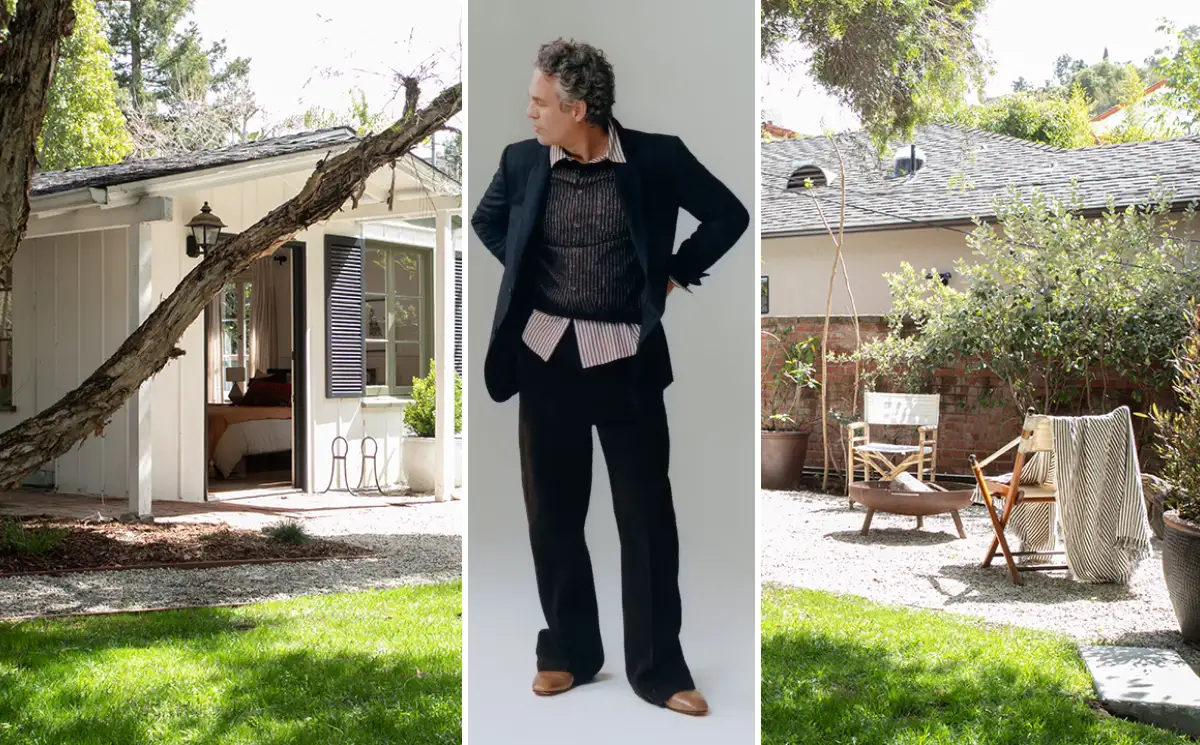
Mark Ruffalo’s Hollywood Hills house is one of those properties that keeps resurfacing in real estate headlines — and for good reason. While the Oscar nominee primarily retreats to his sprawling family farmhouse in New York’s Catskills region with his wife and children, this 1933 West Coast residence served as his sleek LA base during some of the most pivotal years of his career. The three-time Oscar nominee bought this 1933 residence in 2004, lived there through some of the most pivotal years of his career, then sold it to Zooey Deschanel and Ben Gibbard. Since then, the home has changed hands again, been renovated extensively, and returned to the market at nearly double its original sale price.
What makes this particular property worth revisiting isn’t just the celebrity names attached to it. It’s the house itself — a period revival on a half-acre lot with a recording studio, a chef’s kitchen that rivals most restaurants, and the kind of indoor-outdoor California living that people write songs about.
The Property at a Glance
Located in the western section of the Hollywood Hills, just off the Sunset Strip, the home sits behind privacy gates on roughly half an acre of mature landscaping. The main residence measures approximately 2,957 square feet with three bedrooms and three-and-a-half bathrooms.
But the main house is only part of the story. The grounds include a separate guest house with its own bathroom, a dedicated recording studio, and an additional structure that can serve as a playhouse, art studio, or home office. Together, they form a compound that feels tucked away from the city while remaining minutes from Universal Studios and the heart of Hollywood.
Raised garden beds, covered conversation areas, and a pergola-shaded patio extend the living space outdoors. French doors throughout the home open onto front and back gardens, flooding the interior with natural light and reinforcing the connection between inside and out.
Inside the 1933 Architecture
Originally built in 1933, the home carries the hallmarks of a period revival design — the kind of architecture that defined Hollywood’s golden-age estates. Cross-beamed ceilings, polished hardwood floors, and a prominent brick fireplace anchor the living room, which steps down to create a slightly sunken conversation area. It’s a design choice that adds dimension and intimacy without walls.
A few steps up from the living room, the formal dining room features a tray ceiling and its own access to both the front and back patios. The layout encourages flow — guests can drift from the living room to the dining area to the garden without ever feeling boxed in.
The library-study is a standout: a second brick fireplace, built-in bookshelves, and window-lined seating make it the kind of room where you’d actually want to spend a rainy afternoon. There’s even a built-in phone nook, a charming relic of the home’s original era.
The Kitchen and Master Suite — Deschanel’s Renovations
When Zooey Deschanel and Ben Gibbard purchased the home from Ruffalo in 2009, they undertook a series of renovations that significantly elevated the interior — particularly the kitchen and master suite.
The remodeled chef’s kitchen is the home’s showpiece. It includes a Viking refrigerator, a handcrafted La Cornue stove, white marble countertops and backsplash, a long butcher-block center island, and a farmhouse sink. Brass faucets and cabinet hardware give the space a collected, intentional feel. A corner breakfast nook with a built-in banquette sits beside window-lined walls — casual enough for Tuesday morning coffee, polished enough to impress dinner guests.
An attached butler’s pantry provides additional storage and prep space, rounding out a kitchen designed for someone who actually cooks.
The master suite tells a different story. Martinique banana-leaf wallpaper covers the walls in a bold, tropical pattern — the kind of design choice that could go wrong in less confident hands but works beautifully here against the white-painted wood-panel ceiling and crown molding. The master bathroom continues the playful tone with periwinkle blue walls and cabinetry, a deep spa-style marble soaking tub, and a separate glass-fronted shower.
A Sunroom, Studio, and Spaces That Sell the Lifestyle
Beyond the main living areas, the home offers a sunroom with custom banquette seating that looks out onto the gardens. It’s the type of space that blurs the line between a room and a patio — enclosed enough for year-round use, open enough to feel like you’re sitting outside.
The recording studio, housed in a separate structure on the property, proved to be a natural draw for the home’s music-industry owners. Ben Gibbard, frontman of Death Cab for Cutie, had a dedicated creative space steps from his back door. For any musician, producer, or podcaster, that kind of setup is hard to replicate in a standard residential property.
The guest house, meanwhile, maintains the same architectural character as the main residence — no afterthought addition here. It offers visitors genuine privacy while keeping them close to the main gathering spaces.
Ownership Timeline: From Ruffalo to the Present
Mark Ruffalo (2004–2009)
Ruffalo purchased the property in 2004 for $1.65 million. At the time, his career was accelerating — he’d already earned attention for films like You Can Count on Me and Eternal Sunshine of the Spotless Mind, and his years in this home coincided with a run of acclaimed performances leading up to his Marvel casting. He sold the house in 2009 for the same price he paid. For Ruffalo, this Hollywood Hills address was never his only residence but rather a complementary West Coast outpost. He has long balanced his time between multiple properties, most notably keeping his family anchored at their rustic Catskills farmhouse in upstate New York — a starkly different, nature-immersed sanctuary compared to this buzzy Sunset Strip-adjacent compound.
Zooey Deschanel & Ben Gibbard (2009–2015)
Deschanel and her then-husband bought the home from Ruffalo for $1.65 million. They lived there through the early seasons of New Girl and made the renovations that define the home’s current look. After their separation, Deschanel sold the property in 2015 for $2.33 million — a significant return on their investment and renovation costs.
The home returned to the market priced at $2.985 million, listed by Cari Field of ACME Real Estate. The price reflects both the extensive upgrades and the property’s layered celebrity history.
What the Hollywood Hills Market Tells Us
The Hollywood Hills has proven remarkably resilient as a real estate market, even during broader downturns in Los Angeles housing. Limited inventory, strict zoning, and the area’s enduring cultural cachet keep demand consistently high.
Several trends are shaping the neighborhood right now:
- Sustainability matters more than ever. Buyers actively seek properties with solar panels, energy-efficient systems, and sustainable materials. It’s no longer a niche preference — it’s becoming a baseline expectation in luxury listings.
- Smart home integration is standard. Climate control, security, lighting, and entertainment systems that can be managed from a phone are now table stakes rather than upgrades.
- Outdoor living commands a premium. The mild climate and hillside views mean that outdoor kitchens, fire features, and landscaped entertaining areas add real, measurable value.
- Celebrity provenance boosts prices. Homes with a documented history of famous owners consistently attract more interest and higher offers than comparable properties without that backstory.
Ruffalo’s original $1.65 million purchase in 2004, adjusted for the home’s 2015 sale at $2.33 million and subsequent listing near $3 million, illustrates the kind of appreciation that Hollywood Hills properties can deliver — particularly those with architectural distinction and a compelling ownership narrative.
Why This Home Keeps Making Headlines
Plenty of celebrities own houses in the Hollywood Hills. What sets the Ruffalo property apart is its scale and character. This isn’t a 15,000-square-foot mega-mansion designed to impress from the street. It’s a roughly 3,000-square-foot home on a half-acre that prioritizes warmth, craftsmanship, and livability over grandeur.
The 1933 bones give it a sense of history that new construction can’t manufacture. The renovations under Deschanel added modern functionality without erasing the home’s personality. And the compound layout — main house, guest house, studio, and flexible outbuilding — offers the kind of versatility that single-structure homes simply can’t match.
For fans, there’s the appeal of imagining Ruffalo reading scripts by that brick fireplace or Gibbard recording music in the studio out back. For architecture enthusiasts, it’s a well-preserved example of period revival design adapted for contemporary life. And for anyone browsing Hollywood Hills real estate, it’s a reminder that the most compelling properties aren’t always the biggest — they’re the ones with the best stories.
