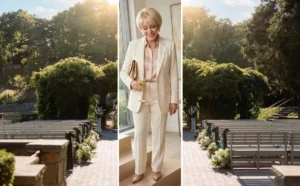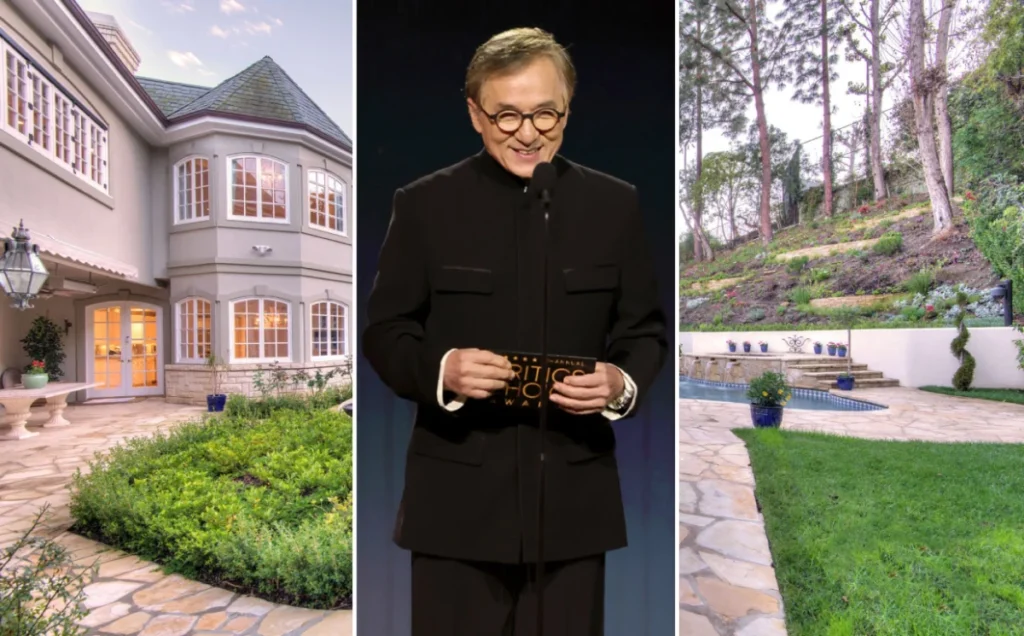
Short answer: Jackie Chan is widely reported to own a mansion in Kowloon Tong, Hong Kong (estimated at about $21 million) and a private hideout inside a converted factory building, but his exact current address is not publicly disclosed. He grew up at Victoria Peak, where his parents worked at the former French Embassy.
Jackie Chan has spent decades leaping off buildings, shattering box office records, and winning over audiences in nearly every language. But when the cameras stop rolling, where does one of the most recognizable people on the planet actually live?
His answer to that question is characteristically unexpected. Unlike most global celebrities who settle into a single sprawling estate, Jackie Chan’s house situation spans childhood memories at one of Hong Kong’s most prestigious addresses, a multi-million-dollar mansion in an upscale residential enclave, and — most famously — a secret hideout concealed inside an old industrial building.
Each property reveals a different layer of a man who has never stopped surprising people.
Growing Up at Victoria Peak: The French Embassy Years
Long before Jackie Chan was a global icon, he was a child living at Victoria Peak — known locally as “The Peak” — the 554-meter summit on Hong Kong Island that has been one of the city’s most coveted addresses for over a century.
His connection to The Peak is deeply personal, not financial. Jackie Chan’s father, Charles Chan, worked as a cook, and his mother, Lee-Lee Chan, served as a housekeeper at the former French Embassy on Barker Road. Jackie spent his first approximately six years living in the embassy compound, growing up in a household of modest means within one of Hong Kong’s most exclusive neighborhoods.
This period of his life is documented in his biographical film Traces of a Dragon: Jackie Chan & His Lost Family, which explores his family’s history, including his parents’ earlier lives and the circumstances that shaped his childhood. The contrast between his family’s humble position within the embassy and the extraordinary career that followed is one of the defining threads of Jackie Chan’s story.
The Peak itself has been associated with prestige and power throughout Hong Kong’s modern history — from colonial administrators to today’s business titans. Properties here routinely command hundreds of millions of Hong Kong dollars, with premium transactions exceeding a billion. The Peak Tram, operating since 1888, was likely part of young Jackie’s daily routine as he traveled to and from school — the same funicular railway that millions of tourists ride each year.
Today, the Peak area includes the Peak Tower, the Peak Galleria shopping center, and a branch of Madame Tussauds, where a Jackie Chan wax figure has stood near the entrance since the museum’s opening year. For fans tracing his footsteps through Hong Kong, Barker Road and the former French Embassy remain essential stops — quiet landmarks of a story that began with a boy from a poor family living in the shadow of one of the city’s grandest addresses.
The Kowloon Tong Mansion
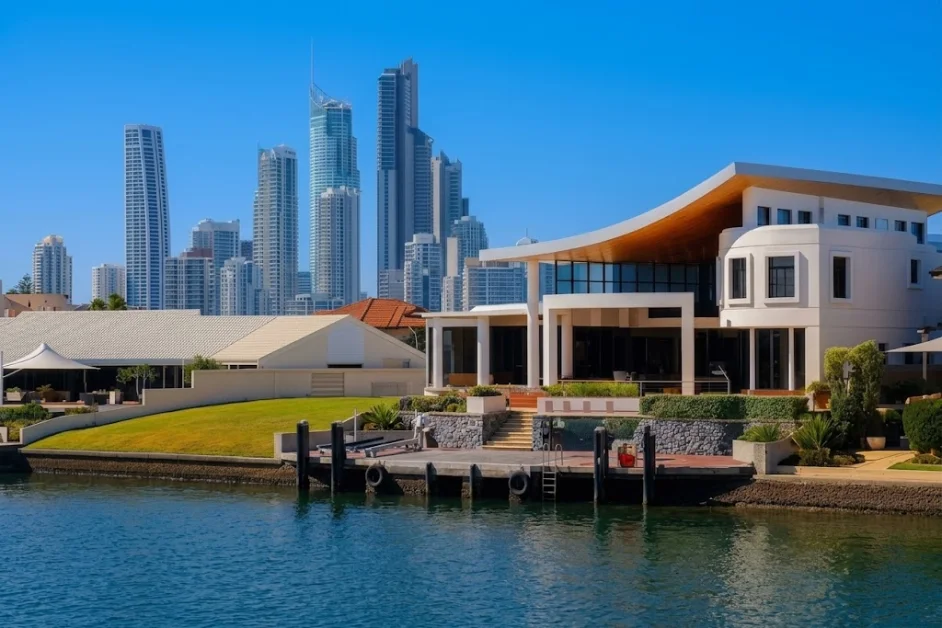
As Jackie Chan’s career accelerated from Hong Kong cinema to international superstardom, his residential needs evolved. For many years, he was widely reported to own a luxury mansion in Kowloon Tong, one of Hong Kong’s most desirable residential neighborhoods on the Kowloon side. The property was estimated at approximately $21 million.
Kowloon Tong occupies a distinctive position in Hong Kong’s real estate landscape. Quieter and more residential than the skyscraper-studded waterfront, it offers space and privacy that the dense vertical city rarely allows — making it a natural fit for someone who values both seclusion and proximity to the heart of the action.
Chan also maintained business offices on Waterloo Road in Kowloon Tong, making the neighborhood a hub for both his personal and professional life. The combination of a private residence and working offices in the same area reflects how seamlessly Jackie Chan has historically merged his personal identity with his professional ambitions — both rooted firmly in Hong Kong.
The Kowloon Tong mansion represented a more conventional expression of celebrity luxury: spacious, private, and set within an established residential enclave. But for someone with Jackie Chan’s appetite for the unconventional, a traditional mansion was never going to be the whole story.
The Secret Factory Hideout
The most remarkable property in Jackie Chan’s portfolio is one that most people — including many Hong Kong residents — don’t even know exists. Tucked inside an old, unassuming factory building in a Hong Kong industrial district, Jackie Chan created what has been described as a private, Batman-inspired hideout.
From the exterior, the building gives nothing away. It looks like exactly what it once was: a working industrial space, indistinguishable from the warehouses and workshops around it. Inside, however, the multi-level property has been transformed into something extraordinary:
- Hidden rooms concealed behind mirrors and walls — spaces that are invisible until activated, turning an already unusual property into something that feels genuinely cinematic.
- A two-story underground wine cellar — an elaborate subterranean space that speaks to Jackie Chan’s appreciation for fine living.
- A fully equipped gym — because even as he’s stepped back from performing at his physical peak, Jackie Chan has never stopped training.
- Private offices and workspaces — allowing him to conduct business away from public attention and the constant recognition that follows him everywhere else in Hong Kong.
- A cavernous play and entertainment area — an enormous recreational space that reflects his famously playful personality and love of surprises.
The factory hideout serves a very specific purpose: it lets Jackie Chan move through Hong Kong as an anonymous figure, completely shielded from the tourist attention and fan recognition that would follow him at any conventional luxury address. In a city where his face is recognized instantly, the ability to disappear behind the facade of an industrial building is the ultimate luxury.
It’s also perfectly in character. The man who built a career on doing the impossible — performing stunts that insurers refused to cover, choreographing fight scenes that redefined action cinema — chose a home that defies every expectation of how a global celebrity lives. The hidden rooms, the concealed entrances, the secret spaces behind mirrors — they echo the kinds of elaborate set pieces Jackie Chan has built his films around. His real life, it turns out, mirrors his cinematic persona more closely than anyone might have guessed.
Interior Design and Personal Collections
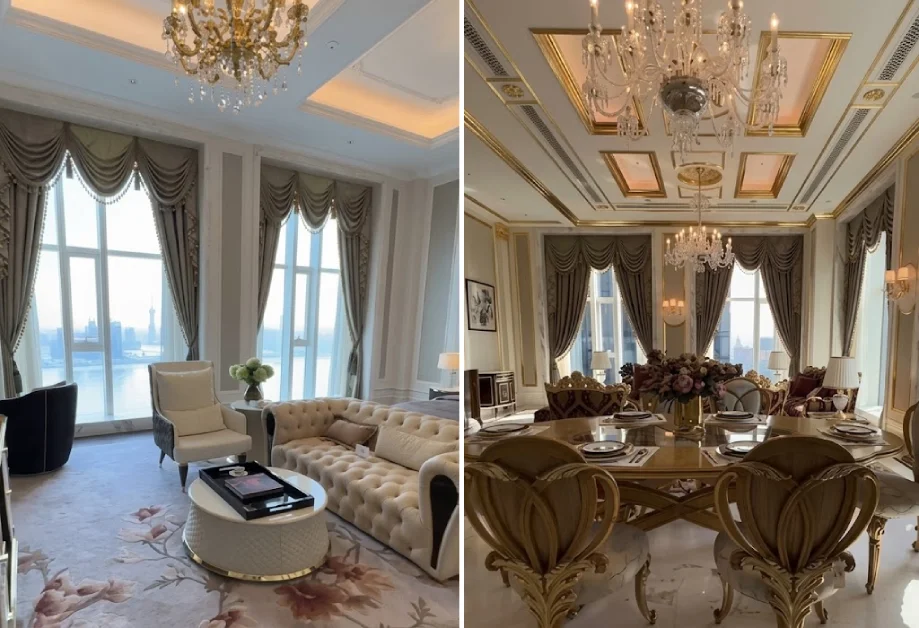
Details about the interiors of Jackie Chan’s properties have surfaced gradually through media appearances, interviews, and glimpses in documentaries over the years. Across his various spaces, a consistent design philosophy emerges: a fusion of traditional Chinese craftsmanship and contemporary sensibility.
Jackie Chan is a passionate collector of Chinese art, antiques, and architectural elements. His living spaces reportedly feature:
- Antique Chinese wooden doors and screens — salvaged historical pieces that serve as functional architectural elements rather than museum displays, each with its own provenance and story.
- Chinese sculptures and carvings — spanning various dynasties, integrated throughout the living spaces rather than confined to glass cases.
- Film memorabilia — props, costumes, and personal items from a career spanning over 150 films, curated to trace the arc of one of cinema’s most remarkable careers.
The layout of his spaces is said to follow Feng Shui principles — the ancient Chinese system of spatial arrangement designed to promote harmony and positive energy flow. This is consistent with Jackie Chan’s well-documented respect for traditional Chinese culture, which shows up in everything from his public speeches to his charitable work. The flow between rooms, the placement of furnishings, and the orientation of key areas reportedly all reflect this philosophy.
Several additional personal touches have been reported across his properties:
- A private cinema — fitting for a man with one of the most extensive filmographies in action cinema, reportedly equipped with professional-grade sound and projection.
- A martial arts training space — customized for Jackie Chan’s acrobatic fighting style, reflecting a lifelong commitment to physical discipline.
- Expansive kitchen and dining areas — Jackie Chan is known for his love of cooking and hosting large gatherings of friends, family, and colleagues.
What makes his collections stand out isn’t just their monetary value — it’s how personally meaningful each piece appears to be. Jackie Chan has spoken publicly about his desire to preserve Chinese cultural artifacts that might otherwise be lost. His properties serve as a private extension of that mission, housing pieces of history that he has chosen to protect rather than display for profit.
Rumors have also circulated about additional hidden rooms and concealed spaces within his various properties. Given what’s known about the factory hideout, these claims carry a bit more weight than typical celebrity real estate speculation — and knowing Jackie Chan’s well-documented love of surprises, they’re not hard to believe.
The Warehouse: Preserving China’s Architectural Heritage
Beyond his residences, Jackie Chan owns a converted warehouse in Hong Kong dedicated to an extraordinary passion project: the preservation of ancient Chinese architectural fragments.
The collection reportedly includes entire wooden structures — traditional houses, pavilions, and ceremonial buildings — that Jackie Chan purchased and preserved rather than see them demolished or left to deteriorate. Some pieces are said to date back centuries. He has reportedly spent years and significant personal resources acquiring and restoring these artifacts, representing one of the most significant known private efforts at Chinese architectural preservation.
This is not casual collecting. It’s a sustained, deliberate campaign to save physical pieces of Chinese cultural history — the kind of structural craftsmanship that modernization has steadily erased across mainland China. The same discipline and relentless dedication that defined his film career extends directly into this preservation work.
The warehouse should not be confused with the factory hideout. While both are unconventional properties in industrial settings, they serve entirely different purposes: the hideout is a private retreat, while the warehouse is essentially a rescue operation for China’s architectural heritage. Together, they reveal a man whose off-screen life is driven by the same intensity and sense of purpose that made him famous on screen.
More Than Private Property
Jackie Chan’s properties occupy an unusual position in Hong Kong’s cultural landscape. They’re private spaces that carry public meaning.
For many Hong Kong residents, Jackie Chan represents the best of what their city can produce — a self-made talent who conquered Hollywood without abandoning his identity. His deep roots in Hong Kong — from his childhood at Victoria Peak to his business operations in Kowloon Tong to his secret retreat in the industrial district — send a clear message about his connection to the city that raised him. He could live anywhere. He chose to stay.
The biographical arc is striking. A boy whose parents worked as domestic staff at a foreign embassy grew up to become one of the most recognized human beings on the planet — and rather than trading Hong Kong for Los Angeles, he invested in the city, preserving its landmarks, supporting its institutions, and building an extraordinary private collection of Chinese cultural heritage within its borders.
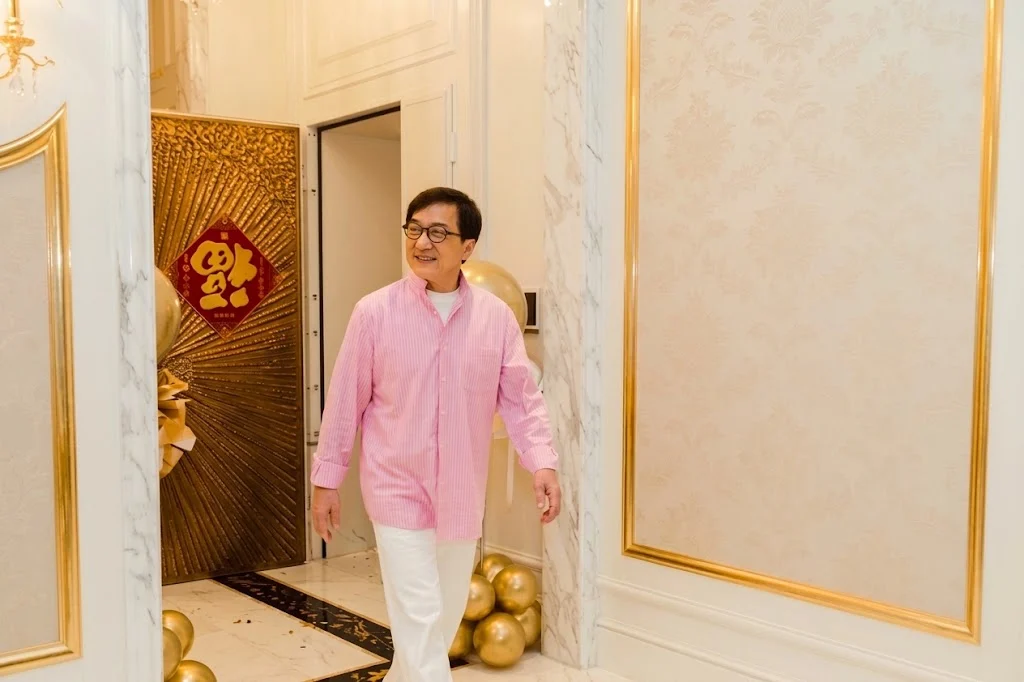
The properties have quietly become landmarks in their own right. Tour guides reportedly point them out during Peak-area excursions, and fans occasionally visit the neighborhoods hoping for a glimpse. There has been occasional speculation about the future of his properties and collections. Some have suggested they could eventually open as a museum or cultural center — a permanent tribute to his contributions to both film and Chinese heritage preservation. Whether that comes to pass remains to be seen, but the foundation for it already exists in every room, every artifact, and every hidden space behind every mirror.
FAQs
Where is Jackie Chan’s house in Hong Kong?
Jackie Chan has maintained multiple Hong Kong properties over the years. He grew up at Victoria Peak on Hong Kong Island, where his parents worked at the former French Embassy on Barker Road. He has been widely reported to own a mansion in Kowloon Tong, and is known to have created a private hideout inside a converted factory in a Hong Kong industrial district. The exact locations of his current residences are not publicly disclosed.
What is Jackie Chan’s secret hideout?
Jackie Chan’s most unusual property is a private retreat hidden inside an old factory building in a Hong Kong industrial district. The multi-level space reportedly features hidden rooms behind mirrors and walls, a two-story underground wine cellar, a gym, offices, and a large entertainment area. From the outside, it’s indistinguishable from a typical industrial building — which is entirely the point.
How much is Jackie Chan’s Hong Kong house worth?
His former Kowloon Tong mansion was widely reported at approximately $21 million. The value of his other properties, including the factory hideout, is not publicly known. However, given the extensive custom renovations, personal collections, and Jackie Chan’s modifications, his properties would be substantial even by Hong Kong’s extraordinary real estate standards.
Did Jackie Chan grow up at Victoria Peak?
Yes. Jackie Chan spent his first approximately six years living at Victoria Peak, where his parents worked at the former French Embassy on Barker Road. His father, Charles Chan, was a cook, and his mother, Lee-Lee Chan, was a housekeeper. This period of his life is documented in the biographical film Traces of a Dragon: Jackie Chan & His Lost Family.
Does Jackie Chan own other properties?
Yes. Jackie Chan is reported to own multiple properties across Asia, including in mainland China — a residence near Hangzhou has been widely discussed online. He also owns a converted warehouse in Hong Kong dedicated to preserving antique Chinese architectural elements and structures.
Is Jackie Chan’s house open to the public?
No. Jackie Chan’s residences are private and are not open for public visits. His warehouse collection has occasionally appeared in media features, but his living spaces remain strictly private.
Has Jackie Chan’s house appeared in any films or TV shows?
While his residences haven’t been prominently featured in his films, elements of his personal collections and design aesthetic have surfaced in interviews, documentaries — including Traces of a Dragon and Jackie Chan’s Hong Kong — and media profiles over the years.
Conclusion
Jackie Chan’s approach to where and how he lives tells a story his films can only hint at. Behind the spectacular stunts and billion-dollar box office numbers sits a man deeply invested in his cultural heritage — someone who channels decades of success into preserving the craftsmanship and traditions of China’s past.
From his childhood at a foreign embassy on Barker Road to a conventional luxury mansion in Kowloon Tong to a secret Batman-inspired hideout behind the facade of an old factory, his properties reflect a life lived with intention and personality. They’re not trophy homes collected for status. Each one serves a purpose — privacy, preservation, identity, legacy.
The factory hideout, in particular, captures something essential about Jackie Chan. Even in his private life, he gravitates toward the unexpected. The most famous action star in the world chose to hide in plain sight — and made the ordinary extraordinary in the process. It’s the kind of story that sounds like it belongs in one of his movies. The difference is, this one is real.