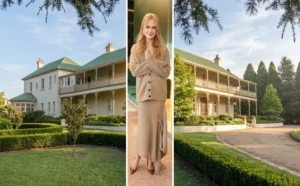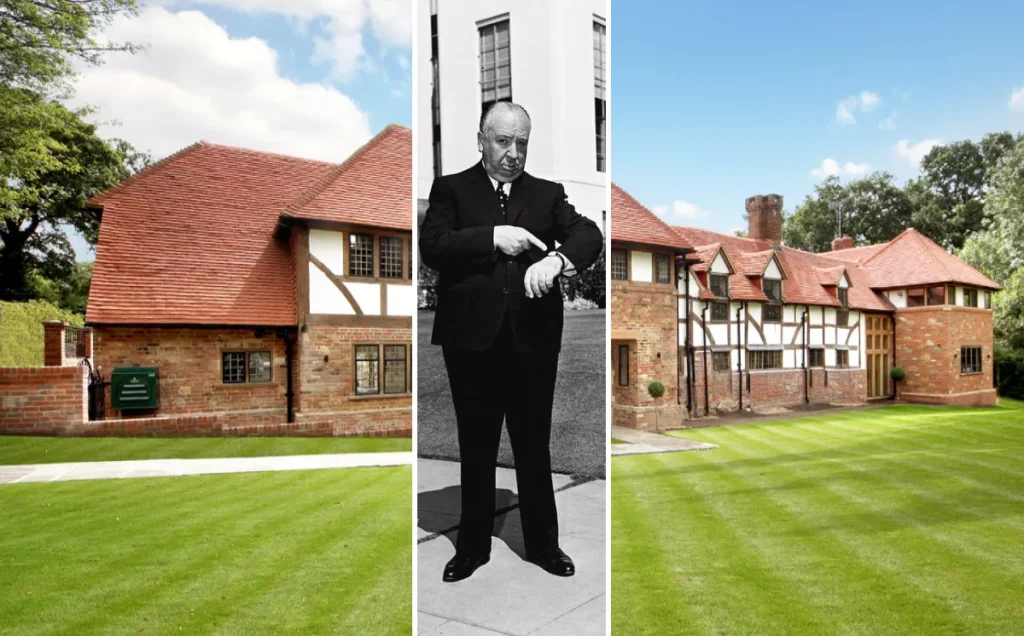
Alfred Hitchcock owned two houses that matter, and they could hardly be less alike. One was a single-storey house in Bel Air, bought in 1942, where he lived for thirty-eight years until his death in 1980 and where his wife Alma died two years later. The other was a 200-acre estate in the Santa Cruz Mountains, bought in the autumn of 1940, with a Monterey Spanish house, flower gardens and a tiled mosaic by Georges Braque.
The Bel Air house sold in 2023 for just over $8.8 million, above its asking price. The Santa Cruz estate is now a working vineyard producing Pinot Noir under the name Heart O’ the Mountain.
This guide covers both properties, what he paid, what became of them, and why the second is the more interesting of the two.
Hitchcock’s two houses
| Property | Location | Key figures | Status |
|---|---|---|---|
| Single-storey house on about 0.64 acres | Bel Air, Los Angeles | Built 1942; bought by Hitchcock, reportedly for $40,000; listed 2023 at $8.25 million; sold for just over $8.8 million | Private home, sold in 2023 |
| Estate of 200 acres, main house about 5,000 sq ft | Scotts Valley, Santa Cruz Mountains, California | Bought in autumn 1940 from Bruce and Helen Cornwall | Now the Heart O’ the Mountain vineyard and winery |
Who was Alfred Hitchcock?
Alfred Hitchcock was an English film director, born in London in 1899, who established himself in British cinema before moving to Hollywood in 1939. His American work includes Rebecca, Notorious, Rear Window, Vertigo, North by Northwest, Psycho, and The Birds.
He married Alma Reville in 1926. She was an editor and screenwriter, worked on his films throughout his career, and is generally regarded as the most important collaborator he had. He died in April 1980; she died in 1982.
The relevant point for a property article is the timing. He arrived in California in 1939 and bought both of these properties within three years, and then never moved again.
The Santa Cruz estate, bought first
In the autumn of 1940, barely a year after arriving in America, the Hitchcocks bought a 200-acre estate near Scotts Valley in the Santa Cruz Mountains, from Bruce and Helen Cornwall. The property had been established in 1881 by the California pioneer Pierre Cornwall and was known locally as Heart o’ the Mountains.
The main house ran about 5,000 square feet in the Monterey Spanish style, white plastered walls under a red tiled roof, with side patios and flower gardens. Among its features was a tiled mosaic of about twelve feet square by Georges Braque, the French cubist painter, which is an extraordinary thing to find in a California country house.
It functioned as a weekend retreat and a place to entertain close friends rather than as a working base. He used it on and off until 1970, which means the Hitchcocks held it for roughly thirty years.
Northern California’s coastal mountains have drawn film people to buy land for the better part of a century, sometimes for the seclusion and sometimes for what will grow there, a pattern set out in the account of Max Thieriot’s Sonoma County ranch.
The Bel Air house
The Los Angeles house was built in 1942 by the designer-builder Carlton Burgess, and Hitchcock bought it new. The price is generally reported at $40,000, which in 1942 was a substantial sum for a house and is a useful reminder of what has happened to Los Angeles property since.
It is a single-storey house on a plot of about 0.64 acres, bordering the Bel-Air Country Club golf course. Room counts differ between accounts, appearing as both four and seven bedrooms, which is not unusual for a house that has been reconfigured over eighty years. It has consistently been described as secluded, which was evidently the point.
He lived there from 1942 until he died in 1980, and Alma remained until she died in 1982. Nearly forty years in one house is a long tenure by any standard, and by Hollywood standards it is remarkable.
What happened to both properties
The Santa Cruz estate left the family and, in 1978, was acquired by the Robert Brassfield family, who planted and produced wine there under their own label for many years. Since 2014, Brandon Armitage and Armitage Wines have run the winery and vineyard operations, and the estate produces Santa Cruz Mountains Pinot Noir under the Heart O’ the Mountain name.
That is an unusually good outcome for a director’s country house: rather than being subdivided or demolished, it became a functioning agricultural business that still carries the name it had when he bought it. Scotts Valley also runs a Hitchcock festival, which keeps the local connection alive.
The Bel Air house stayed private. It was listed in 2023 at $8.25 million and sold for just over $8.8 million, above the asking price, to a corporate entity linked to the Dutch media figure Reinout Oerlemans, founder of the production company Eyeworks.
Selling above asking price is unusual at that level and says something about the appeal of a genuinely intact Old Hollywood house on a golf course frontage, a category that keeps shrinking. Comparable properties from the same era are covered in the account of Bing Crosby’s houses.
Where do Hitchcock’s houses stand now?
Hitchcock died in 1980, so the question of where he lives does not apply. Both of his properties survive, which is more than can be said for many houses in this genre.
The Bel Air house is a private residence, sold in 2023, and is not open to the public. This article does not publish its street address, which appears in listing material; the current owners have no connection to Hitchcock.
The Santa Cruz estate is a commercial vineyard and winery. That means it is the one property associated with him that members of the public can engage with directly, by buying the wine made on land he owned for three decades. Whether the Braque mosaic survives is not addressed in the material reviewed here.
Sources
- Robb Report on the 2023 sale of the Bel Air house at just over $8.8 million, its 2023 asking price and the buyer.
- The Alfred Hitchcock Wiki on the autumn 1940 purchase of the Scotts Valley estate, the sellers, the house’s style and size, the Braque mosaic and his use of it until 1970.
- Scotts Valley Hitchcock Festival on the estate’s history and the family’s time there.
- Heart O’ the Mountain and Armitage Wines on the estate’s later ownership and its current operation as a vineyard.